This is the second of three articles in a series entitled “Living Kingdom”. We will examine the importance of choosing to abide by YHVH’s commands as we consider the choices of individuals in Scripture. The Good News (Gospel) is about YHVH’s kingdom. Salvation is necessary for Kingdom Living, but it is a part of the process, not the goal. We face the same challenges as the Israelites: recognizing and obeying our King.
In the first article (Law-Abiding Citizens?), we examined the importance of following YHVH’s commands. Obedience provides rewards and disobedience incurs punishment. We who claim to belong to YHVH must recognize that we serve a King. The words of YHVH in 1 Samuel 8:7 ring just as true today as they did then. “Do everything they say to you,” the LORD replied, “for it is me they are rejecting, not you. They don’t want me to be their king any longer.”
We sometimes stray from following YHVH without realizing it. We, like many Israelites, are more easily influenced by physical and worldly rather than spiritual and heavenly. We forget that we are on a battlefield and the battle is spiritual, a war being waged between YHVH and hasatan. When we are threatened or suffer injury, we are tempted to build strongholds rather than turn to YHVH. This article provides some examples from Scripture to help us recognize common false strongholds and their pitfalls. First of all, what is a stronghold?
Merriam-Webster defines the word “stronghold” as follows: 1: a fortified place; 2: a place of security or survival; a place dominated by a particular group or marked by a particular characteristic These can be geographical places or places we build within our souls. Strongholds in our souls invite demons to move in so they can more easily torment and manipulate us. Our first example demonstrates this clearly.
YHVH chose Saul to be his human representative because the people had difficulty following a King who is spirit. However, Saul relied on his own judgment and didn’t fully heed YHVH’s instructions, nor was he truly repentant when Samuel pointed out his sin. (1 Sam 15). YHVH removed the Holy Spirit from Saul and placed His Spirit on David instead. When the Holy Spirit departed, a demon of fear entered Saul, followed later by a tormenting spirit. We cannot rely on ourselves; it is YHVH who equips us and supplies all our need. When we deny YHVH access in any area of our lives, we open the door for evil spirits. “I am YHVH, there is no other, besides Me there is no God; I equip you, though you do not know me (Is 45:5).”
Although YHVH selected David to be Saul’s replacement, it was years before David ascended to the throne. During that time, YHVH tested and strengthened David to be a more faithful representative than Saul. David was tempted to build false strongholds, especially reliance on other people and strategic hideouts, but none of these protected him. David learned that it was reliance on YHVH that kept him safe. We are tempted to rely on human leaders or experts to provide solutions to problems with spiritual roots. These are jobs that only YHVH can handle and we must turn to Him and encourage others to do likewise. O give us help against the adversary, for deliverance by man is in vain (Ps 60:11). Thus says the LORD, “Cursed is the man who trusts in mankind and makes flesh his strength, and whose heart turns away from YHVH (Jer 17:5).
Solomon turned to wealth, power and prestige and strayed from YHVH. He allowed his wives to persuade him to engage in pagan worship. And the Lord was angry with Solomon because his heart had turned away from the Lord, the God of Israel, who had appeared to him twice and had commanded him concerning this thing, that he should not go after other gods. But he did not keep what the Lord commanded (1 Kings 11:10). Many of us are racing to acquire bigger, better and more to impress others, but is YHVH impressed by our selfishness? In the end, it doesn’t matter what anyone besides YHVH thinks of us. YHVH is our Judge. How can we impress Him? “Do not neglect to do good and to share what you have, for such sacrifices are pleasing to God” (Heb 13:16). How different might the United States be if the inalienable rights listed in the Declaration of Independence read “that among these are Life, Liberty, and the pursuit of YHVH” rather than “the pursuit of Happiness”?
Throughout history humans have built castles, forts, and other strongholds to keep out the enemy. The people of Jericho relied on their massive walls and sturdy gates to keep them safe from harm. However, the very walls intended to protect them actually destroyed them (Joshua 6). We can build walls to keep others out, but is that our commission from Yeshua? He said we would be known by our love. “By this everyone will know that you are my disciples, if you love one another (John 13:35).” “For I was hungry, and you fed me. I was thirsty, and you gave me a drink. I was a stranger, and you invited me into your home (Matt 25:35).”
Simon Peter used a sword to cut off a soldier’s ear during Yeshua’s arrest. Yeshua warned him that physical violence was not the right choice (Matt 26:52). We can amass armies and weapons of mass destruction, but how will this help us spread the Good News of the Kingdom of YHVH? Yeshua has promised us that we would suffer persecution for following Him and it is YHVH who will avenge us. “ And will not God bring about justice for his chosen ones, who cry out to him day and night? Will he keep putting them off? I tell you, he will see that they get justice, and quickly. However, when the Son of Man comes, will he find faith on the earth (Luke 18:7-8)?”
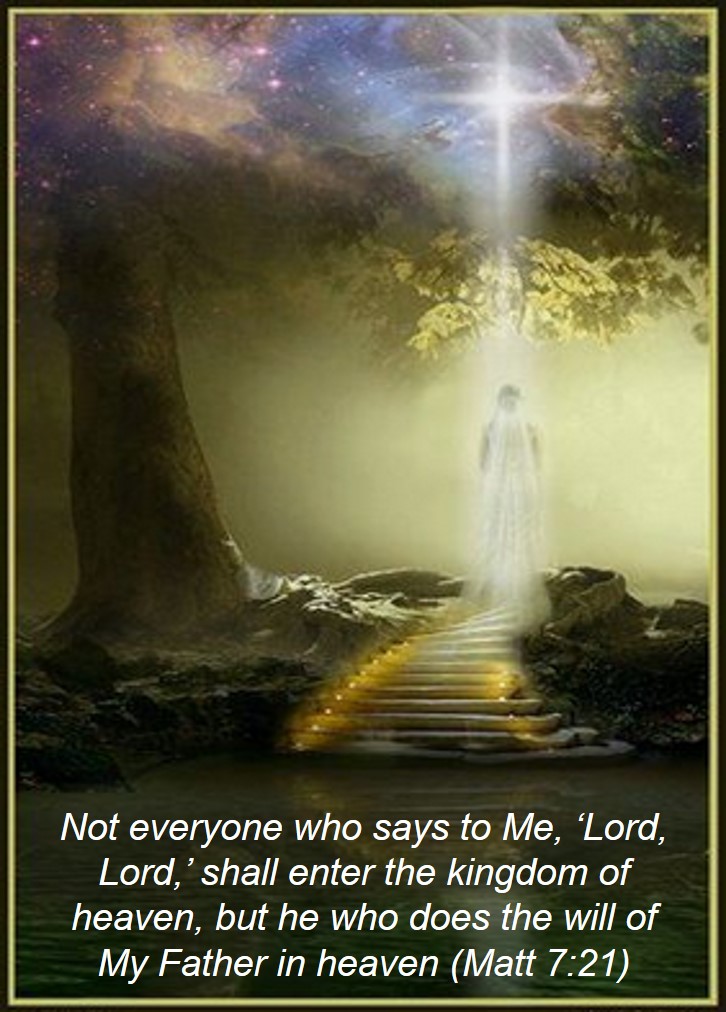
The scribes and Pharisees thought genealogy and man-made traditions were sure guarantees, but they were wrong (Matt 3:9; Matt 15:1-20). It is not who we are biologically but who we worship and how we worship. YHVH tests our spirits and our hearts (Prov 16:2, 21:2). The Jewish leaders had constructed their own religion, adding to and subtracting from YHVH’s commands (Matt 23). Sadly, we have inherited man-made traditions and pagan worship passed down for many centuries (Jer 16:19). Now that we know that Sunday worship, Christmas and Easter are not from YHVH but are perversions of His appointed times, how do we respond? Will our love of traditions, pressure from our families or society prevail over what we now know to be the truth? “Not everyone who says to me, ‘Lord, Lord,’ will enter the kingdom of heaven, but only the one who does the will of my Father who is in heaven. Many will say to me on that day, ‘Lord, Lord, did we not prophesy in your name and in your name drive out demons and in your name perform many miracles?’ Then I will tell them plainly, ‘I never knew you. Away from me, you evildoers (Matt 7:21-23)! ’These are not easy choices, but Yeshua warned us about that. “But small is the gate and narrow the road that leads to life, and only a few find it (Matt 7:14).”
It is time to ask Yeshua to shine His glory light on any strongholds within us. It is time to let go of that which is not of Him. Yeshua relinquished all for us. Now He expects the same of us. False strongholds are the means of withholding ourselves from YHVH and are open invitations for the enemy to move in. YHVH is our one and only true Stronghold (Ps 18:2).
 Since the time of Martin Luther, much emphasis has been put on salvation through Yeshua as a gift of YHVH’s grace and not something we merit. This is true, but it is only a part of the truth. Yeshua taught about salvation and stressed that reunification with YHVH was possible only through Yeshua Himself. However, the majority of Yeshua’s teaching focused on how to live in the Kingdom of YHVH (Matt 5-7; 16:19, 18:3, 29-30, 19:23). Salvation supplies us citizenship in YHVH’s kingdom, but as citizens we must abide by the rules and regulations of our King. Citizens and visitors in all countries on earth are required to obey the rules of the country where they reside or visit. What are the consequences of ignoring YHVH’s teaching and commandments? What are the rewards? Two books of Scripture (Judges and Ruth) present vivid pictures of the two choices and their consequences. As we review the stories in these two books, let us look for insights into kingdom living and see how the Body of Messiah measures up.
 Missing Pieces