All posts by nancyryall

Tending the Garden

producing-fruitAt creation, humans were placed in an enclosed garden and were given dominion of the earth and the assignment of tending the garden.  There was at this point no barrier between YHVH and those whom He created in His image and likeness, so it is fair to assume that there was communication between YHVH and Adam and Eve.  YHVH is a God of relationship.  Among other things, perhaps YHVH was giving advice and guidance on how best to tend their garden home.  After all, He is the Creator of all things and knows how everything best functions.

Since the fall of Adam and Eve, we are assigned another task, an additional garden to be tended, the garden of our souls.  When we are born again, our spirit is perfect and sealed (John 3:6, Eph 4:30, 1 Pet 1:23), but the soul and body remain unchanged and must be renewed or improved by our deliberate cooperation with the Holy Spirit.  Scripture tells us that our bodies will be resurrected and transformed (1 Cor 15:50, 53), but what about our souls?  Our souls are made up of mind, will and emotions.  It is here that we must do our greatest work of yielding to the Holy Spirit (Rom 12:2, Eph 4:22-23, Col 3:1-3).  Just as Satan entered the Garden of Eden with evil intent and deceit, so he sends his workers to enter the garden of our souls to wreak havoc of all sorts, especially through deceit.

Just as Adam and Eve had dominion (management) of the Garden of Eden and therefore could have ousted the intruder, hasatan, we have dominion of our souls and can yield ground either to YHVH or to His enemy.  We must oust the enemy in every part of our soul garden so that YHVH is welcome to reside there with us (Rev 3:20).

The Holy Spirit walks with us each day to provide assistance.  With the Holy Spirit’s guidance, it is our job to remove the weeds of guilt, doubt, fear, envy, selfishness, pride, and strife.  It is in these areas that we “do not do the good I want to do. Instead, I keep on doing the evil I do not want to do.” (Rom 7:19).  We must also seek the Holy Spirit to help us identify and heal soul wounds which are deep emotional pains and injuries.   It is in these areas that the enemy can sow new seeds by planting new lies.

We cannot be totally possessed by the devil when we are born again for there is at least one part of us already sealed and off limits.  However, in areas of our soul where we have built false strongholds, we have created a place to welcome and harbor demons.  What is a false stronghold?  It is any attitude or pattern of behavior where we are still in charge or where we rely on anything or anyone other than YHVH to help us.  Strongholds are built of lies and misconceptions and are places of darkness within the soul.  Demons are active in encouraging us to erect strongholds, for this is a place where they can live and get a solid foothold in their work of stealing, killing and destroying (John 10:10).

If demons have infiltrated and taken possession of part of our gardens, they must be removed through deliverance.  Many people avoid this step because of fear of the unknown.  Also, many have seen the drama that can be involved in deliverance.  It doesn’t have to be that way.  Deliverance under the guidance of the Holy Spirit can be quiet, civilized and completed in a very short time. It is our duty to remove the enemy from our garden.  Afternward, it is crucial that we identify and tear down the false strongholds that we have built.  Thus we destroy any “homes” for the enemy and can invite the Holy Spirit to move into those areas.  It is in dying to ourselves and yielding control to YHVH in every aspect of our mind, will and emotions that our soul gardens will flourish and prosper.

When we are tempted to neglect the tasks involved in tending our garden, we would be wise to read and meditate on the following Scriptures:

So every tree that does not produce good fruit is chopped down and thrown into the fire.  Yes, just as you can identify a tree by its fruit, so you can identify people by their actions (Matt 7:19-20)

Even now the ax of God’s judgment is poised, ready to sever the roots of the trees. Yes, every tree that does not produce good fruit will be chopped down and thrown into the fire (Matt 3:10).

Don’t be afraid of those who want to kill your body; they cannot touch your soul. Fear only God, who can destroy both soul and body in hell (Matt 10:28).

Let us take seriously the tending of our soul gardens and yield good fruit so that our Father may be glorified.

Loving Father

loving-father

For many years I kept my distance from God the Father mostly because He seemed so distant and impossible to please.  Over the years many people I have encountered have revealed that they had or still do regard God the Father as distant and at least somewhat cold and demanding.  Many of us imagine God the Father residing at His ease in heaven, where everything is perfect and there is no hurt or uncertainty.   How could He know what it is like to struggle  as we do?  He has everything, while we have lost much.  Yet Scripture reveals just how loving Abba is and how much he shares in our joys and sorrows.

YHVH, our Father, was not content to remain isolated and aloof in heaven, but rather created people in His own image.  He lovingly fashioned a world that would meet our needs.  He desires not to just view us from afar, but to live among us and share in every moment of our lives.  What could God the Father know of our pain and loss and heartache?  Everything, for by interacting with people, He has suffered as we do.

After establishing His people in their homeland, YHVH fashioned a home for Himself on earth so that He could dwell among His beloved ones.  Always thinking of others, His home was designed to glorify His Son, Yeshua, and to teach us about His plan of salvation.  (see other blogs on Temple and Tabernacle)  Yet, YHVH left His home in Jerusalem when His people rejected Him even after many attempts on His part to reach out to them.  He watched in sorrow as His beloved ones went their own way.  He saw His Temple destroyed three times:  the physical structure in Jerusalem twice and Yeshua’s body as an atonement for our sin.  The special implements from His earthly home were carried off to Babylon and defiled.

YHVH’s desire is to live among His people, yet so many times He has been made unwelcome.  People have denied His existence, blasphemed His name, ignored Him, or blamed Him for the results of their own bad choices or the bad choices of others.

YHVH loved His spouse, Israel, and cared for her even when she scorned His love and turned to false gods.    He knows what it is like to have a spouse leave to run off after another.  He even sent His beloved Son to become one of us so that we could see how much He loves and understands us, but even His Son was rejected.

Scripture is the story of unrelenting love.  Let us examine just a sampling of Scripture verses that describe our Father’s love for us.  “[The Father] guarded [Jacob] as the apple of his eye.” (Deuteronomy 32:10)  “A Father to the fatherless, a defender of widows, is God in his holy dwelling.  God sets the lonely in families, he leads forth the prisoners with singing.”  (Psalm 68:5-6)  “Your Father knows what you need before you ask him.” (Matthew 6:8)  “Your Father in heaven is not willing that any one of these little ones should be lost.”  (Matthew 18:14)  “How great is the love the Father has lavished on us that we should be called children of God!” (1 John 3:1)

How should we respond to our loving Father?  He tells us in His own words in Scripture:

Love Him:  “You shall love YHVH your God with all your heart, and with all your soul and with all your strength.” (Deut 6:5) 

Trust in Him:  “But I trust in Your unfailing love; my heart rejoices in Your salvation. (Ps 13:5)

Obey Him:  “You must love the Lord your God and always obey his requirements, decrees, regulations, and commands. (Deut 11:1)

Keep your promises just as He does: “But whoever keeps his word, in him truly the love of God is perfected.” (1 John 2:5)

Yeshua shows us how to love our Father, for Yeshua did all these things.  He also did one more thing:  He kept His focus on His Father at all times and learned from Him. So Jesus explained, “I tell you the truth, the Son can do nothing by himself. He does only what he sees the Father doing. Whatever the Father does, the Son also does.”  (john 5:19)

If you feel far from Father, let go of your fears and doubts and run to Him.  He is waiting for you with open arms! “But while he was still a long way off, his father saw him and was moved with pity. He ran and threw his arms around him and kissed him warmly”. (Luke 15:20)

Repairing Reflections

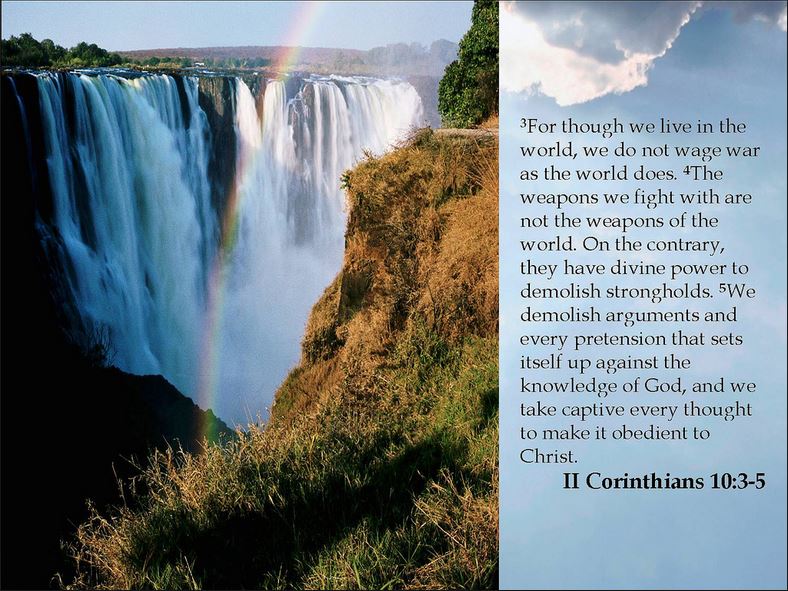
weapons-of-our-warfareThere is great temptation these days to succumb to fear and anxiety.  Yet, Scripture tells us repeatedly not to fear.   Isaiah 35:4,  John 14:27, Joshua 1:9 and Matthew 6:34, are just a handful of examples of YHVH’s teaching on fear. We know that YHVH does not give us a spirit of fear, but of love, power and self-discipline (2 Tim 1:7).  So when trouble seems to loom ahead or is already in our midst, how do we combat those anxious thoughts and feelings that arise?

Our tendency is to tackle the job in the physical realm.  This is a mistake.  Even though our problems are in the physical realm, their source is from the spiritual realm.  The following analogy may help to better illustrate.   Athletes regularly review videos of past games in order to discover what works well and what skills or strategies still need to be honed.  Even though the video reflects what happened during the game, the problems cannot be fixed by editing the video.  Our physical realm is a video or mirror image of what is happening behind the scenes, that is the spiritual realm (Heb 8:5, 1 Cor 13:12).  In order to make effective changes in the physical realm, we have to address the issues in the spiritual realm.

For decades, perhaps centuries, many people have tried to solve the Middle East crisis on the physical level.  There have been numerous treaties, division of land, wars, and discussions.  None of these attempts has been able to resolve the conflicts.  YHVH shows us how He handles the situation.  Prime candidates for terror are experiencing life-changing dreams or visions of Yeshua.  Once these individuals discover Yeshua, their lives are transformed.  Instead of attacking their enemies, they are praying for the salvation and welfare of their enemies!  YHVH is battling in the spiritual realm to resolve terrorism and His work produces everlasting results.

Yeshua came to the earth the first time and demonstrated by signs and wonders in the physical realm that He is the Messiah.  His followers were disappointed and even disillusioned to discover that He did not mean to physically attack the Romans, the physical enemies of that time.   Instead, Yeshua attacked a much more dangerous enemy in the spiritual realm and wrought for all humans a much greater triumph with eternal implications.

Many of Yeshua’s followers today realize that the true battleground is in the spiritual realm and are now publicly engaged in intercession , worship, repentance and reconciliation with others.  In July, evangelical Christians gathered around the Washington Monument to seek YHVH’s help in breaking racism.* Breaking Christian News recently reported that 1,000  “Native American Indian tribes from the United States and Canada collectively forgave the U.S. government for breaking treaties with their ancestors during a public ceremony on the National Mall.”**  There is great power in forgiving others and releasing them from debt.  “Forgive us our debts as we forgive our debtors” (Matt 6:12).

A number of us have experienced the power of forgiveness on a more personal level.  We have discovered that when we truly forgive individuals who have hurt us, amazing things happen.  People who were estranged from us contact us seeking reconciliation.  All we did was take our case to YHVH and tell Him that we forgave and released the person(s) from any debt owed to us.  We did not disclose to anyone, not even the individuals we forgave, that we had taken such a step.  Within a short time the physical realm reflected changes made in the spiritual realm.

When Yeshua returns, His job will be to complete the reconciliation and restoration that we have been addressing (Acts 3:21 NLT).   Our adversary and any one cooperating with him want us to be divided and at odds with each other (John 10:10).  Yeshua said that we would be known by our love for one another.  We certainly want Yeshua to recognize us as His own when He returns. Judging or arguing with others stems from fear.  Yeshua said that He would only recognize those who were reaching out in love to others.  “You have heard that it was said, ‘Love your neighbor and hate your enemy.  But I tell you, love your enemies and pray for those who persecute you (Matt 3:43-44).   Does Yeshua recognize you as one of His sheep?

*   Rees, Steve.  ‘God break racism!’ Evangelicals on D.C. Mall pray for hope and reconciliation, The   Washington Post, July 16, 2016

** Zauzmer, Julie, An Kirkland and Michelle Boorstein.  “Must Read!  Native Americans are ‘Spiritual Sleeping Giants Awakened’ after Incredible Prophetic Act in Washington:  “May Go Down as One of the Most Important Days in American History,” Breaking Christian News,  Oct. 27, 2016, http://www.breakingchristiannews.com/articles/display_art.html?ID=19576


A Time for Joy

shout-to-godScripture mentions joy many times and as we study the “joy” passages, we see many different facets or aspects.  What is joy?  According to Strong’s Exhaustive Concordance, there are a number of Hebrew and Greek words used for joy in Scripture.

The most often used word is Strong’s Hebrew 8057 , simchah, which means joy, gladness, mirth.  There are 95 occurrences of simchah or a variation used.  There is a lot of noisy and vigorous celebration associated with simchah.  Consider the following examples.

  1. Numbers 10:10 “Blow the trumpets in times of gladness, too, sounding them at your annual festivals and at the beginning of each month. And blow the trumpets over your burnt offerings and peace offerings. The trumpets will remind the LORD your God of his covenant with you. I am the LORD your God.”
  2. 1 Sam 18:6 “When the victorious Israelite army was returning home after David had killed the Philistine, women from all the towns of Israel came out to meet King Saul. They sang and danced for joy with tambourines and cymbals.”
  3. 1 Kings 1:40 “And all the people followed Solomon into Jerusalem, playing flutes and shouting for joy. The celebration was so joyous and noisy that the earth shook with the sound.”

Joy is meant to fill us and overflow to others.  We see this in the two occurrences of Strong’s Hebrew 2304, chedvah.

  1. 1 Chron. 15:27 “Honor and majesty surround him; strength and joy fill his dwelling.”
  2. Nehemiah 8:10 “And Nehemiah continued, “Go and celebrate with a feast of rich foods and sweet drinks, and share gifts of food with people who have nothing prepared. This is a sacred day before our Lord. Don’t be dejected and sad, for the joy of the Lord is your strength!”

At times we are to rejoice with vigor and even with reverent awe and trembling before our sovereign King, as we see in some of the 46 occurrences of Strong’s Hebrew gil and its variants.  The word gil can also mean “whirl” or “spin around”.

  1.  Psalm 2:11 “Serve the Lord with reverent fear, and rejoice with trembling.”
  2. Psalm 16:9  “No wonder my heart is glad, and I rejoice.  My body rests in safety.”
  3. Psalm 48:11 “Let the people on Mount Zion rejoice.      Let all the towns of Judah be glad because of your justice.”

The Greek word chara (Strong’s 5479) is used 59 times in the New Testament.

  1.  Matt 2:10  “When they saw the star, they were filled with joy!”
  2. Luke 15:10 “In the same way, there is joy in the presence of God’s angels when even one sinner repents.”
  3. James 1:2  “Consider it pure joy, my brothers and sisters, whenever you face trials of many kinds, …”

When are we to rejoice and be filled with joy?  When we recall the greatness of YHVH (Is. 12:6), in our love for one another (Philemon 1:7), before Yeshua returns (1 Pet. 1:8-9), when we are persecuted (James 1:2-3; Heb 12:2), when we hope and trust in YHVH (Rom 15:13, when we speak face-to-face (2 John 1:12) and when Yeshua returns (John 16:22).  In other words, we are to be joyful at all times and in all circumstances (Phil 4:4).

As we embark on Sukkot, we are commanded to rejoice and be filled with joy (Deut 16:14-15).  We remember YHVH with the Israelites as they wandered in the wilderness and we celebrate YHVH dwelling with us now through His Holy Spirit.  Yeshua has promised to never leave us or forsake us and He will return to us soon to reign over us.   Our Father’s glory will once again be present in Jerusalem.  We will see YHVH face to face (1 Cor 13:12).  We have much cause to rejoice.  Chag Sameach (from simchah) Sukkot!

Healing Our Souls

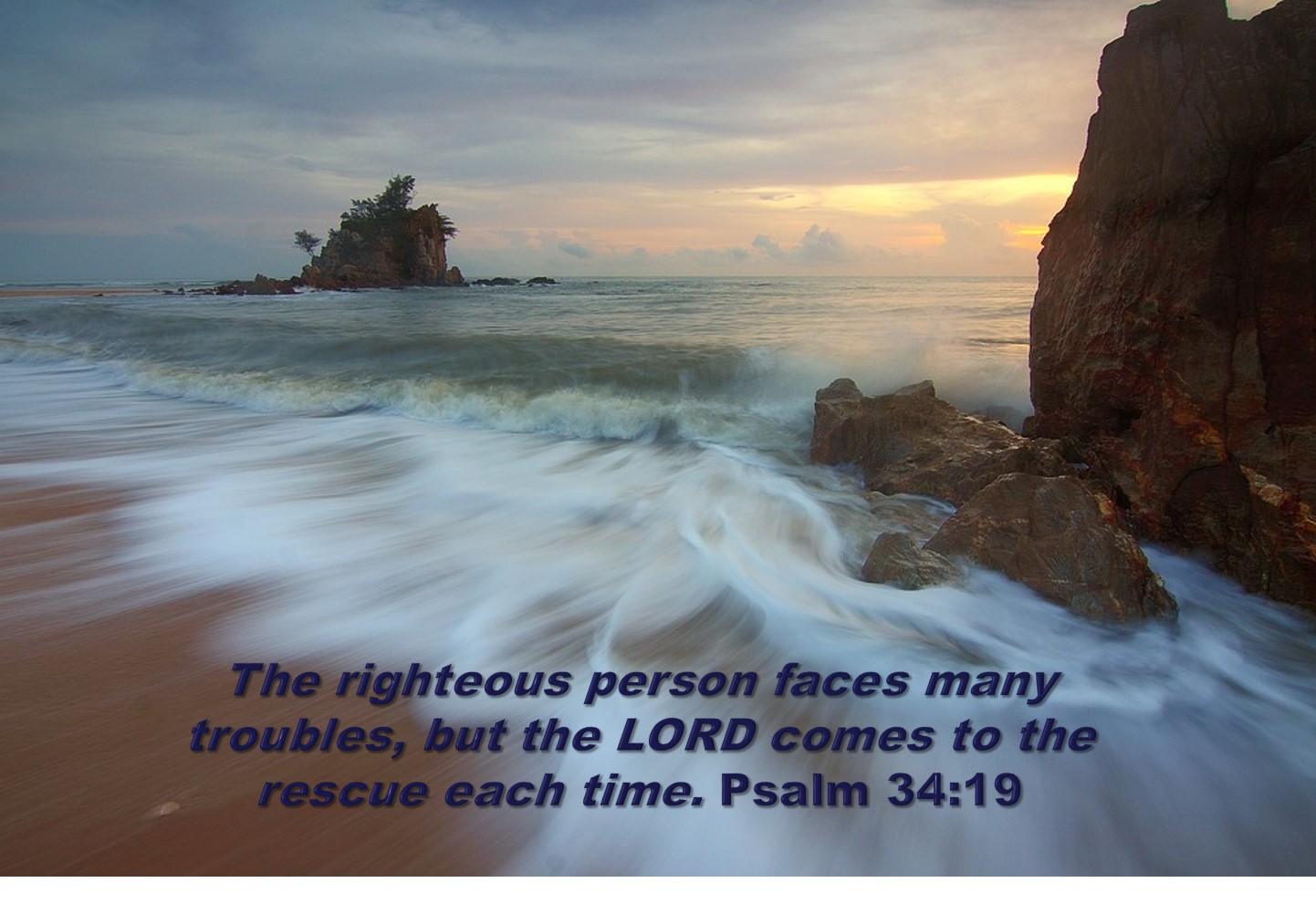
the-righteous-personYHVH tells us in His Word that He is our Healer (Ex 15:26, Ps 103:1-5; Is 53:4-5).  We know through the sacrifice of Yeshua we can be set free from sin.   And that would have been enough, but Dayenu!  We have a God who always does more.  He heals our bodies and souls completely!  Today, let us focus on healing for our soul wounds.

We all have them.  Some are just under the surface and others are buried deep within us.  It is nearly impossible to reside in this fallen world and remain unscathed.  However, it is up to us whether or not we will remain injured and broken.  It is possible for YHVH to heal  all our soul wounds if we are willing to cooperate with Him. This is often easier said than done, but well worth the effort.

What are soul wounds?  Our souls are made up of mind, will, and emotions.  Many types of wrongs can damage to our souls.  In many societies, we feel pressured to bury emotional  pain and proceed as if nothing happened.  Over time, some hurts get buried deep for so long that we seem to forget about them.  Isn’t it best to forget and move on?  It is best to forgive and move on, but it is also necessary to take the time to work on healing the soul wounds that often remain.  We must not confuse forgiving others with healing the wounds they have inflicted.  The two are separate although closely connected.

Just as untended flesh wounds get worse and cause complications, so do untended soul wounds fester within us.  Fear, anger, bitterness, resentment, rejection, pain, or guilt must be dealt with properly.  Holding onto such burdens slows us down and weakens our relationships with YHVH and others.  We build walls or strongholds to “protect” ourselves from being hurt again.  However, the strongholds do not guarantee that we will be safe from future harm;  they actually imprison us, making us more vulnerable to our enemies.

YHVH is aware of all our injuries and promises in His word to restore us to perfect wholeness (shalom).  Let us examine some of YHVH’s promises.

Fear, anxietyPeace I leave with you; my peace I give to you. Not as the world gives do I give to you. Let not your hearts be troubled, neither let them be afraid (John 14:27).

For you did not receive the spirit of slavery to fall back into fear, but you have received the Spirit of adoption as sons, by whom we cry, “Abba! Father!” The Spirit himself bears witness with our spirit that we are children of God, (Rom 7:15-16)

For God gave us a spirit not of fear but of power and love and self-control (2 Tim 1:7).

So we can confidently say, “The Lord is my helper; I will not fear; what can man do to me?” (Heb 13:6)

Fear not, for I am with you; be not dismayed, for I am your God; I will strengthen you, I will help you, I will uphold you with my righteous right hand (Is 41:10).

Anger, bitterness, resentment:  [YHVH] will fight for you, and you have only to be silent.” (Ex. 14:14)

In your anger do not sin, do not let the sun go down on your anger and do not give the devil a foothold.  Get rid of all bitterness, rage and anger, brawling and slander, along with every form of malice.  (Eph 4: 26-27, 31)

Do not say, “I will repay evil”; wait for the Lord, and he will deliver you (Prov 20:22).

Whoever says he is in the light and hates his brother is still in darkness. Whoever loves his brother abides in the light, and in him there is no cause for stumbling. But whoever hates his brother is in the darkness and walks in the darkness, and does not know where he is going, because the darkness has blinded his eyes (1 John 2:9-11).

And after you have suffered a little while, the God of all grace, who has called you to his eternal glory in Christ, will himself restore, confirm, strengthen, and establish you (1 Pet 5:10).

Loss, mourning, rejection: When the righteous cry for help, the Lord hears and delivers them out of all their troubles. The Lord is near to the brokenhearted and saves the crushed in spirit. Many are the afflictions of the righteous, but the Lord delivers him out of them all. He keeps all his bones; not one of them is broken (Ps. 34:17-20)

 He heals the brokenhearted and binds up their wounds (Ps. 147:3).

You have turned for me my mourning into dancing; you have loosed my sackcloth and clothed me with gladness, (Ps. 20:11)

Sin, guiltTherefore, confess your sins to one another and pray for one another, that you may be healed. The prayer of a righteous person has great power as it is working (James 5:16).

Create in me a clean heart, O God, and renew a right spirit within me (Ps. 51:10).

There is therefore now no condemnation for those who are in Christ Jesus (Rom 8:1).

For I will be merciful toward their iniquities, and I will remember their sins no more.” (Heb 8:12)

But when they heard it, they went away one by one, beginning with the older ones, and Jesus was left alone with the woman standing before him. Jesus stood up and said to her, “Woman, where are they? Has no one condemned you?” She said, “No one, Lord.” And Jesus said, “Neither do I condemn you; go, and from now on sin no more.” (John 8:9-11)

How can we cooperate with YHVH to make ourselves whole again?  First, we need to examine ourselves and ask the Holy Spirit to bring soul wounds to our attention.  Next, we take our wounds and lay them at the feet of Yeshua.  Then, we ask YHVH to heal our wounds according to His promises.  We meditate on His promises until they become not mere words, but reality for us.  Healing of soul wounds can lead to physical healing.

Only when we are made whole do we reach the full potential YHVH has planned for us.  During these ten days of awe, let us seek YHVH’s help in examining and healing our souls.

Behind the Scenes

praise-to-yhvh-my-rockIn our book, What’s Missing, we discussed how the story of the Israelites in Exodus is symbolic of the redemption that Yeshua, the true Passover Lamb, brings to all of us.  The story of YHVH actively intervening on behalf of the Israelites to set them free from slavery to the Egyptians and leading them out of Egypt in a miraculous way is an account of real events.  However, these events are a type or shadow of an even greater story of YHVH working on behalf of all humanity to free us from our spiritual enemies.   A phrase or even a single word in Exodus paints a graphic picture of the ongoing battle between YHVH and His adversary.  We must keep in mind that behind the scenes of our daily dramas, YHVH is carrying out His plan to establish His kingdom on earth while His adversary is trying to do the same.  It is the greatest drama of all.

After the tenth and final plague, we find that the Israelites left Rameses, which means “born of Ra”.    Who is Ra?  Ra was the primary name for the sun god in Egypt.  We get a clear picture that those who partake of the Passover Lamb are leaving the kingdom of darkness (ruled by the sun god) and going to Succoth (ruled by the one true God, YHVH).  Succoth is derived from the Hebrew word sakah and carries several different meanings.  Let us examine these meanings to see how our “behind the scenes” picture develops.

One of the meanings of sakah is “covering” as used in 1 Kings 8:7.  Just as the cherubim provided a covering for the ark of the covenant,  YHVH provides a covering for His sheep.  In Ezekiel 28:13, we see the description of YHVH’s archenemy before his rebellion.  He was covered (derived from sakah) in precious gems just as we are covered with Yeshua’s robes of righteousness.  In 2 Kings 16:18, the word is used for the Shabbat canopy.  YHVH stands beside us and is our protective covering (Ps. 121:5 NLT).  Isaiah 1:8 uses the word sukka as a watchman’s hut.  In 2 Samuel 11:11 the same word is used to denote a protective booth for soldiers.  Leviticus 23:41-42 and Deuteronomy 16:13 require all Israelites to construct temporary shelters (sukkot) for themselves for a week each year to commemorate YHVH dwelling among them.

All those who have left the kingdom of darkness for YHVH’s kingdom of light are protected by YHVH Himself.  However, all of us are also called to be soldiers in YHVH’s campaign to establish His kingdom on earth as it is in heaven.   YHVH is fully capable of eradicating His enemies and establishing His kingdom by Himself.  However, He purposely gave dominion of the earth to humans and expects each of  us to participate in the great spiritual battle for the earth.  We are not left to fight the battle alone for YHVH Himself is our leader and protector.  It is imperative for us to get off the spiritual milk and onto meat (1 Cor 3:2) as soon as we are able so that we can fully participate in the role that YHVH has assigned for each of us.

The word selected in Exodus 12:41, 51 (tsaba) refers to the Israelites and those who joined them in the flight from Egypt as armies or hosts.  In most other places the people are referred to as Israelites or the children of Israel (b’nei yisrael). In Exodus, 13:17-18, the picture becomes crystal clear.  YHVH takes the Israelites on a detour because they are not yet ready to do battle with their Egyptian enemies.  However, YHVH still has them leave Egypt “like an army ready for battle”.  A short time later they would have the opportunity to do battle for the land promised to them.  They were still not ready and thus the nation of Israel spent 40 years wandering in the desert.  The battle must and will be fought at some point.

The children of Israel would have to fight their enemies in order to take over the land that YHVH promised them.  The children of YHVH will have to fight our enemies to reclaim the earth for YHVH.  In both cases it is YHVH who will go ahead of us and be our covering.  What role are you called to play in this great drama?

What’s Wrong?

whats-wrong

After reading Exodus 10:1-20 recently, a few insights came to mind, especially in light of events going on around me.  It may seem that I am repeating myself in this article.  However, the message is so vital that it bears repetition.  Hopefully, those of us who need to hear, will take heed.

First of all, let us review Exodus 10:1-20.  Moses and Aaron are once again confronting Pharaoh to release the Israelites so that they may go and worship YHVH.  The first message from YHVH to Pharaoh is “How long will you refuse to submit to me?”  His second message to Pharaoh is a command, “Let my people go so that they can worship me.”  YHVH’s third statement to Pharaoh is a warning, “If you refuse to let my people go, tomorrow I will bring locusts into your territory.”  Even Pharaoh’s servants try to persuade him to comply.  Then Pharaoh makes his compliance conditional; only the men may go and worship.  Pharaoh refuses to obey and YHVH sends the promised locusts.  Vegetation in the land was destroyed, so Pharaoh summoned Moshe and Aaron, admitted that he had sinned against YHVH and asked Moses and Aaron to intercede for him.  He makes an interesting statement that shows the condition of his heart: “Please forgive my sin just this once and intercede with YHVH your God so that he may take this plague away from me.”  Pharaoh was willing, under the circumstances, to admit to one sin, but what about any other sins in his life?  As soon as the plague was removed any “remorse” expressed by Pharaoh vanished.

Within my own little sphere of family, friends and acquaintances there have been numerous adversities in the past few weeks including:  illness, natural disasters, broken or dysfunctional relationships, drug abuse and death from drug overdose, and employment issues.  Perhaps some of you are experiencing challenges of your own. When adversity strikes, we may be tempted to ask what YHVH is doing about these problems.  Why is He allowing these things to happen?  Is YHVH to blame?  Are we asking the right questions?

Let us examine the points made in Exodus 10 and see if or how they may apply to our own situation:

  • YHVH asks Pharaoh how long he will refuse to submit to YHVH? Have you accepted Yeshua as your Lord and Savior?  Is Yeshua king over the particular area in question or are you?
  • Are you obeying YHVH’s commands? At first glance, we are often tempted to say “of course”, but careful examination sometimes reveals otherwise.
  • Do we “conditionally” obey YHVH, rationalizing or amending His commands?
  • Is your current dilemma a result of your own stubbornness or disobedience? In other words, is there any way that you could have brought this on yourself?
  • Are you sorry that you are suffering the consequences of your choices or are you sorry for making poor choices?
  • When a problem arises, how do we react? Do we cast blame, have a pity party, or ask YHVH for help and guidance?
  • Is there some area in your life where you are sorry long enough to perhaps persuade YHVH to help you, but not sorry enough to change your ways?

It is often distressing for us to ask ourselves these questions honestly.  It seems much more comfortable to blame someone or something else for our troubles.  I have been guilty of such reactions.  However, once we get to the point of admitting that the problem just might be due to our own faulty choices or attitudes, then we can begin to make corrections.  YHVH will accept our repentance and help us to change.

Sometimes we are faced with problems that are not our fault, but our reaction can either help or hinder the situation.  Within the last two weeks, I found myself in a crisis situation, my panic rising by the second.  While wavering between feeling sorry for myself and wanting to cast blame, the Holy Spirit gently reminded me to ask YHVH for help.  I asked YHVH for help and the situation was soon resolved.  Seeking YHVH should always be our first choice.  We must cooperate with the Holy Spirit until it becomes our first reaction when we feel threatened or overwhelmed.

Releasing Love

God's Love

Many of us have accepted Yeshua as our Lord and Redeemer, yet we are unable to trust what He has accomplished for us.  Yeshua bore our punishment for all time so that we could maintain a relationship with YHVH and be a part of His family and His kingdom.  We have all heard this message preached, taught, argued and dissected until the words have perhaps become meaningless to us.   Words are not enough; each of us must experience the love of YHVH.

Too often Yeshua’s sheep silently struggle with guilt, regret, and shame that bog us down and block us from enjoying our Father’s overwhelming love.  Instead, we are inundated with misery that YHVH never intended for us to experience.  Do we believe that if we suffer enough, we can somehow make up for our sins?  Truly, there is no way that we can pay for even one sin.  It doesn’t seem right to us that we can repent and walk away free.  Perhaps that is why we find it so difficult to forgive those who have wronged us.  If others have made us suffer, then we feel justified in wanting them to suffer also.  We do not see things from YHVH’s perspective.  We forget how He rejoices over recovering the lost sheep (Luke 15:1-7) or re-uniting with the prodigal son (Luke 15:11-32).  When things go wrong, we think that YHVH is punishing us, even when we have repented and turned away from sin.  It is right to loathe the sin, but we must not loathe ourselves.

Our experiences in this world color our perception.  We assume that YHVH loves the way people love:  half-heartedly, sporadically, conditionally, and so on.  Over the last several months, I have encountered numerous others who are struggling to see themselves as YHVH sees them.  I, too, tend to see myself from a worldly perspective rather than as YHVH sees me.  YHVH loves us extravagantly not because of us, but because of who He is.  What does it mean to us that God is love?   1 Cor 13:4-7 provides some helpful insights.

YHVH does not keep a record of our wrongs and is not easily angered.  He is focused on us, not on Himself.  He believes in us, trusts us and hopes in us.  He is willing to endure all things so that we might be loved into reaching our full potential.  Derek Prince in a work entitled “The Divine Exchange” has provided a beautiful illustration of YHVH’s love through Yeshua’s sacrifice.  Below is a summary of “The Divine Exchange”.

  1. [Yeshua] was punished that we might be forgiven
  2. [Yeshua] was wounded that we might be healed
  3. [Yeshua] was made sin with our sinfulness, that we might be made righteous with His righteousness
  4. [Yeshua] tasted death for us that we might share His life
  5. [Yeshua] was made a curse that we might receive the blessing
  6. [Yeshua] endured our poverty that we might share His abundance
  7. [Yeshua] bore our shame that we might share His glory
  8. [Yeshua] endured my rejection that I might have His acceptance with the Father
  9. He was cut off that we might be joined to [YHVH]
  10. Our Old Man was put to death in Him that the New Man might come to life in us

Sin causes damage and loss.  In John 10:10, Yeshua tells us that the thief comes to steal, kill and destroy.  Yeshua came so that we might have abundant life.  Yeshua came to recover, restore, replace, re-unite and revive.   Let us throw off the temptation to dwell on the past, on what has been lost or destroyed, and focus instead on what Yeshua has done, is doing, and will do.

YHVH’s love releases us from every burden and barrier, so that we are free to release His divine love to others, including ourselves.  When we are truly set free by His love, we will be able to love as YHVH loves.


Fire Proof

Fire proves person's valueScripture mentions the word “fire” over 600 times.  What is the significance of fire in Scripture?  One of the major themes that runs through Scripture is that fire is used to destroy evil and refine and strengthen the good.  What are we to learn from these passages and how does it apply to us?

We know that fire consumes evil, as we see in Genesis 19 with the destruction of Sodom and Gomorrah. Isaiah 30 beginning at verse 27 presents another example, “Behold, the name of the LORD comes from a remote place; Burning is His anger and dense is His smoke; His lips are filled with indignation And His tongue is like a consuming fire; His breath is like an overflowing torrent, Which reaches to the neck, To shake the nations back and forth in a sieve, And to put in the jaws of the peoples the bridle which leads to ruin.”  Fire consumed the burnt offerings, on which were placed the sins of the people.  “Lay your hand on the animal’s head, and the Lord will accept its death in your place to purify you, making you right with him” (Lev. 1:4).

We also know that fire is also used as a purifier in Scripture, as we see in Psalm 66:10-12, “For You have tried us, O God; You have refined us as silver is refined.”       Isaiah 48:10 states, “Behold, I have refined you, but not as silver; I have tested you in the furnace of affliction. What does this mean for us?  How can we be sure that we will withstand the fire of affliction?

When the Israelites came before YHVH, they were not to come empty handed.  They were to bring some of the best of the products of their labor.  One day soon we will appear before YHVH (Deut 16:16).  We will not be expected to bring garden produce and animals, for these were merely a prototype of the real fruit that we are expected to produce.   YHVH is looking for the fruit of our labors as workers in His spiritual harvest.  How have we contributed to the building of His kingdom?

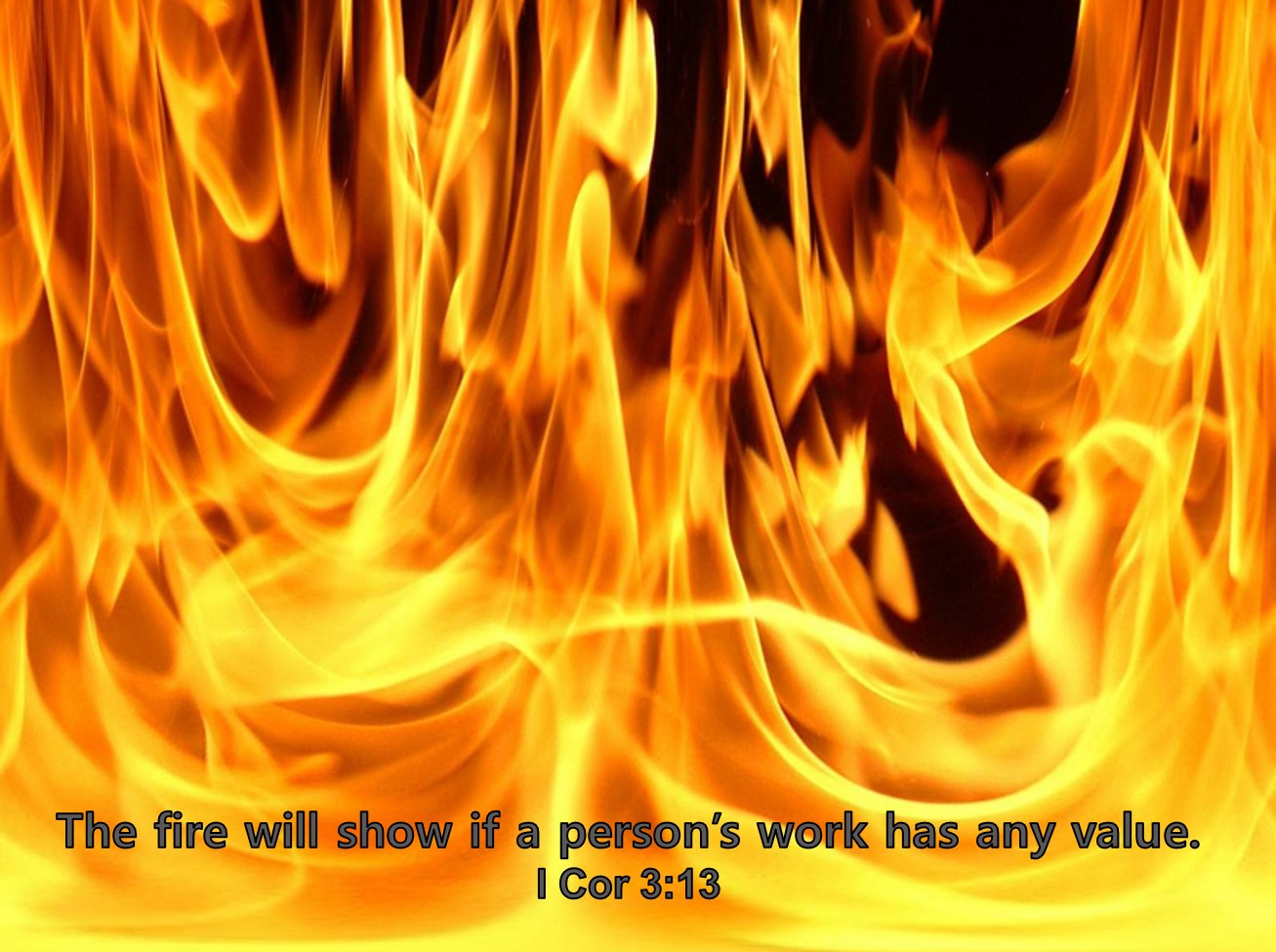
We see in Acts 2:3, that when the disciples of Yeshua were baptized with the Holy Spirit, that tongues of fire appeared over each person.  The Holy Spirit provides fire for us, to help us discern that which is pleasing to YHVH and that which is not.  We must follow the guidance of the Holy Spirit in choosing and performing our works for the kingdom.  What we deem as useful may appear only as straw in YHVH’s eyes.  In 1 Corinthians 3:13, Paul tells us that any of our works that are deemed useless will be burned up in the fire.  All we will have left to present to YHVH are the works that withstand the purifying fire.  Peter also warns us about the coming fire of judgment.   

However, the Day of the Lord will come “like a thief.” On that Day the heavens will disappear with a roar, the elements will melt and disintegrate, and the earth and everything in it will be burned up.   Since everything is going to be destroyed like this, what kind of people should you be? You should lead holy and Godly lives, as you wait for the Day of God and work to hasten its coming. That Day will bring on the destruction of the heavens by fire, and the elements will melt from the heat” (2 Pet 3:10-12).

Are we choosing each day to follow the guidance of the Holy Spirit?  When we follow the guidance of the Holy Spirit, we are sure to have something of value to present to YHVH.  We will be sure to have works that withstand the purifying fire of YHVH.

How Can We Live?

The key to your lifeIn last week’s blog we examined why Torah is still valid.  This week, I would like to add some additional thoughts and clarification on this subject.  Understanding what YHVH expects of us is important.  Some may argue that YHVH loves us no matter what.  That is true, but just as parents love their children, they still have household rules and expectations.  It is more than just obeying YHVH; it is about becoming all that He intends for us.

Peter and I became aware of our Hebrew roots and Torah about twelve years ago.  At the time, we were in our late forties and our children were all grown.  We attended church regularly, were involved in Bible study, and participated in various outreach programs.  We considered ourselves to be mature Christians.  When we began seriously looking into our Hebrew roots and Torah, we realized that we were finally at the grownups’ table.  It was an epiphany for us.  We were finally off the milk and into the meat (1 Cor 3:21).

Faulty translation and unclear terminology can confuse us and distort our perception of the truth.  Peter will expound more fully on these topics in next week’s blog.  For now, however, it is important that we know that YHVH’s purpose in establishing His kingdom on earth is to have relationship with us.  Torah is more than just law; it is instruction and guidelines as well.  YHVH’s desire is to have relationship with us and His Torah shows us how to draw ever closer to Him.  Those who think there is no need for law, ignore it and drift away from YHVH.  Those who try to keep the law “perfectly” do not understand that the Torah is meant to “perfect” us; that is, to make us whole and complete.  They focus on the letter of the law and also drift from YHVH.   The word “perfect” in Hebrew is shalom shalomShalom means wholeness and completeness, reaching full potential.

YHVH calls us to be holy, just as He is holy (Lev 20:26).  To be holy means to be set apart from those who do not follow YHVH.  Ultimately, we are to be set apart from demons and anyone else who is adamant about operating in the kingdom of darkness.  The Israelites were called to be set apart.  They were to follow Torah and be a light to the nations.  For the past 2,000 years, people from other nations have been called to follow Yeshua (the living Torah) and have been grafted in to the olive tree known as Israel.  They, too, are to be set apart and learn how to live in YHVH’s kingdom.

Romans 11:17 can be a touchy subject for Jews and non-Jews alike. We are all called to follow and obey YHVH, regardless of our ethnicity (Gal 3, Col 3 CJB).  YHVH keeps His promises.  If He has made promises that are specifically for physical members of the twelve tribes of Israel, He will keep them.  If He has made promises to anyone else, He will keep those promises also.  It is helpful to remember that we are spirit-beings who reside in a physical body (James 2:26, 1 Thess 5:23).  Galatians 3:26-29 CJB points out that our trust and obedience are what matters; not our ethnicity, gender, or socioeconomic status.

It is crucial that we always keep in mind the big picture.  YHVH is working through the process of salvation and kingdom building on earth that began either before or at creation (Rev. 13:8).  Everything in Scripture is about that process.  YHVH reveals only what is necessary at each phase of the process since YHVH’s enemy, hasatan, is ever vigilant about destroying or interrupting YHVH’s work (John 10:10, 1 Pet 5:8).  YHVH’s kingdom is already established in heaven and hasatan was exiled from YHVH’s heavenly kingdom for trying to take it over.  Now hasatan is trying to do the same with YHVH’s kingdom on earth.

YHVH created the earth and its inhabitants to be a reflection of His heavenly kingdom.   It has always been about establishing His kingdom on earth as it is in heaven.  Humans are created in YHVH’s image and likeness (Gen 1:26).  However, we are fallen since the sin of Adam and Eve.  Therefore, YHVH often has to work through and around our ignorance and stubbornness.  We, in our limitedness, tend to lose sight of the big picture and focus only on the latest phase of YHVH’s plan.  As more of His plan and process are revealed, we tend to think that anything that came before is automatically obsolete.  If we are capable of taking one verse of Scripture out of context, then we are certainly capable of taking one action of YHVH’s out of context.  YHVH is not doing away with former phases; rather, He is building on to former phases.

In summary, our focus is to be on loving and obeying YHVH, so that we can become all that YHVH intends for us to be in His kingdom.  YHVH is in control and will keep all His promises.  As always with YHVH, He will exceed even our wildest expectations.  Dayenu!  Now that is truly living!