All posts by peterryall

Unknown's avatar

About peterryall

My wife (Nancy) and I have been Messianic believers in Yeshua for 20 years now and continue to glean revelations from our God (Yehovah) through His Holy Spirit (Ruach HaKodesh).

Will You Inherit YHVH God’s Kingdom?

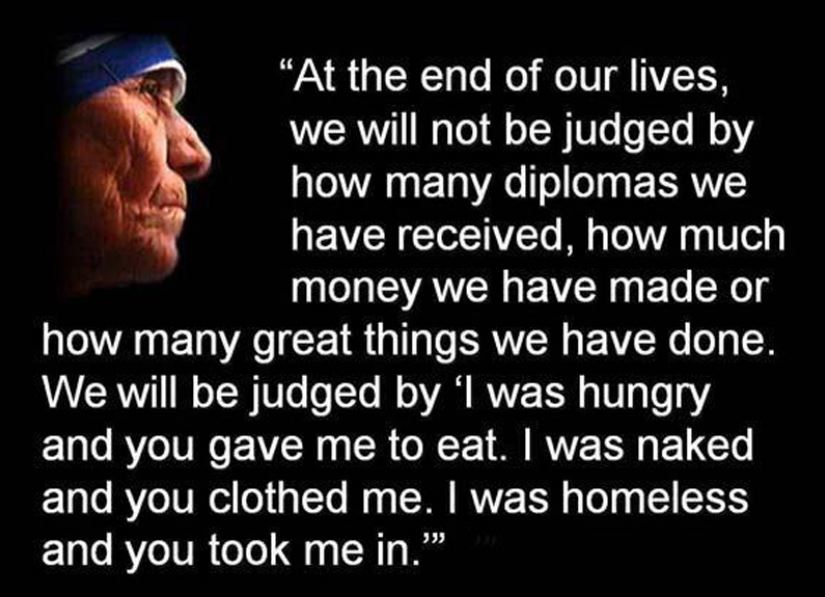
I was hungry and you gave me food“Then the King will say to those on His right, ‘Come, you who are blessed by My Father, inherit the Kingdom prepared for you from the foundation of the world.” Matt 25:34

So wait a minute – what is Yeshua (Jesus) saying to his disciples in this passage? Who are the people He speaks of who are blessed by His Father (and ours)? And what did He mean two verses earlier when King Messiah Yeshua said that He will “…separate the sheep from the goats” (Matt 25:32)? In verses 35-36, Yeshua goes on to say: “For I was hungry and you gave me food, I was thirsty and you gave me drink, I was a stranger and you welcomed me, I was naked and you clothed me, I was sick and you visited me, I was in prison and you came to me”.

If we go back to the Tanach (Old Testament) we can see prophecies of the warnings and future judgment Yeshua was speaking of in Matthew 25:

  • Ps 37:22 – For those blessed by Him shall inherit the earth, but those cursed by Him shall be cut off.
  • Isa 58:7 – Is it not to share your bread with the hungry, and that you bring to your house the poor who are cast out; when you see the naked, that you cover them, and not hide yourself from your own flesh?
  • Eze 18:7 – …but have given their bread to the hungry and covered the naked with clothing.
  • Eze 34:17 – And as for you, O My flock, thus says the Lord God: “Behold, I shall judge between sheep and sheep, between rams and goats”

These verses seem disjointed and not directly related to Yeshua’s words in His Olivet discourse, until you look at the full context surrounding these verses. You might wonder, for instance, why YHVH would be judging between sheep and sheep. Let’s look at the passage in Ezekiel 34 preceding Verse 17. YHVH had just been speaking (through Isaiah) about how He would judge the false shepherds who were mistreating the flock and leading them into pagan practices (vv. 7-10). Then in Verses 11-16 He speaks of seeking out His sheep and bringing them back from all the nations of the world where they have been scattered, so that He can bring them to a place of comfort and peace: “they shall lie down in a good fold and feed in rich pasture” (Eze 34:15).

Then in Verse 16 He says: “I will seek what was lost and bring back what was driven away, bind up the broken and strengthen what was sick; but I will destroy the fat and the strong, and feed them in judgment.” Abba is promising here to take care of His obedient sheep; those who were led astray by the false shepherds but now desire to follow the true Shepherd. But He will judge those sheep who are continuing to follow the way of the false shepherds and are not willing to trust in YHVH and follow His way.

So how do we recognize someone who is following YHVH’s path and trusting Him with their whole heart? According to Isaiah 58, Matthew 7 and other passages, we will know them by their fruit (see Matt 7:20). It is clear that in Matthew 25:35-36, Yeshua is referring back to the words YHVH was speaking to His people through Yeshayahu (Isaiah) In Isaiah 58:7. In the Isaiah passage, YHVH was instructing His children that it was far more important to Him that they care for the poor and needy, than that they follow their religious rituals.

As we have said many times before, our spiritual journey is all about relationship with YHVH. If you truly want to be pleasing to YHVH and walk in His path, then you need to learn what pleases Him. More to the point, you need to get to know Him personally, not just learn about Him. As you draw closer to Abba Father and His Son Yeshua, you will get to know what is at the core of their heart. When you dig down deep, you will find love, compassion, understanding and empathy for the oppressed and downtrodden among their people. So you might say to this: “how do I help all the poor and hungry, oppressed and abandoned people; how do I visit all the prisoners, take in all the homeless, and clothe the naked; how do I care for all the orphans and widows if the earth? This is much too daunting a task and far too overwhelming for one person.”

If you have a true relationship with YHVH, though, as your closest friend and trusted counselor, then He will show you where He wants you to help His children. Most likely He will start you off with something small, for example, working at a local soup kitchen, visiting shut-ins or elderly people in nursing homes, helping needy widows with small tasks around their homes, or a host of other things. Abba will not only point you to the places He wants you to help, but He will give you all the gifts you need for the task, however great or small. Go to Abba and ask Him what is on His heart; when you seek Him with your whole heart, you will find what is in His heart.

ALL or nothing

how long o you peopleHow committed are we in our relationship with YHVH? What is it worth to us?  How much are we willing to risk? In theory, most of us would say that we would be willing to sacrifice everything. We know what the answer should be. However, in practice what do we risk? Are we willing to tithe our income or share with others when money is tight? Are we willing to endure rejection and criticism from our family and friends because of our relationship with YHVH?  How bad would it have to get before we crumble?

A few years ago, I thought I was strong in my relationship.  However, after only two weeks in harsh conditions with demonic forces all around, I was beginning to lose it. It was an eye-opener for me. It is one thing to sit in comfort and ease at home and imagine how you would handle hardship, persecution, and danger. It is quite another matter to actually live it.

For YHVH and His Son, our relationship is worth the deepest sacrifice.  YHVH sacrificed His only child, His beloved Son. To lose a child is a parent’s worst nightmare, especially to watch an innocent child die an excruciatingly painful death at the hands of one’s worst enemies.  If YHVH wanted a perfect human, He already had one.  It wasn’t enough. He risked what was most precious to Him for the hope of relationship with all of us.

Yeshua is YHVH’s only begotten Son. He was entitled to all the praise and adoration that creation could muster. Yet, He was asked to sacrifice all in order to gain those who had been created for His pleasure, but who were now His enemies. By the time He was arrested, He had been deserted even by his closest friends. He could offer salvation, but would anyone accept it? Yeshua focused solely on YHVH’s promises instead of all the abuse and agony heaped upon Him. Even His closest friends did not comprehend what He was doing for them. If He relied solely on what His five senses told Him, the prospects were bleak.

Yeshua sacrificed all that He had and, as a result, He gained those who believe in Him.  If He had not been willing to risk His comfort, His dignity, the clothes on His back and even His life, He would have gained nothing and we would be lost forever. Only Yeshua and His Father could see the potential in us.

He relinquished everything He had to reclaim those who had lost everything.

We are called to give all of ourselves to Yeshua, for in Him we have all that He has earned for us: relationship with YHVH, eternal life, and restoration of all we have lost. If we do not give our all to Yeshua, then we have nothing.

In approximately one-third of the world today, our brothers and sisters are giving their all to Yeshua. They suffer oppression, trials, and persecution, even torture and death for the sake of their relationship with Yeshua. The rest of us, who live in relative ease and freedom may one day be called to do the same. In the meantime, we can support our brothers and sisters by speaking out on their behalf, by interceding for them and by sending funds to sustain them.

Maybe through our prayers and actions on their behalf, we will be strengthened so that we will endure if we are required to give our all.

Fountains of Living Waters

Out of their heart

“for the Lamb who is in the midst of the throne will shepherd them and lead them to fountains of living waters. And God will wipe away every tear from their eyes.” Rev 7:17

In last week’s blog about YHVH’s Feast of Shavuot, I talked about YHVH giving us His written Torah, and then pouring into our hearts the living Torah when He gave us His Holy Spirit (Ruach HaKodesh) at Pentecost (Shavuot). In Scripture, water sometimes represents the Holy Spirit. In several passages, YHVH uses the images of living or flowing water, or pouring out of water (see John 54:10-11;7:38, Joel 2:28, Zech 14:8, Rev 7:17). There is even a related scripture where YHVH speaks judgment over His people who have abandoned Him “…,Because they have forsaken the LORD [YHVH], the fountain of living waters.” (Jer 17:13)

Abba is saying that His Holy Spirit is not only active but constantly in motion, inspiring us and empowering us to flow in the gifts that He blesses us with. The clearest scriptural confirmation of this is in John 7:39, right after Yeshua said “If anyone thirsts, let them come to Me and drink. The one who believes in Me, as the Scripture has said, out of their heart will continuously flow rivers of living water.” In verse 39, John [Yochanan] commented on Yeshua’s offer to pour out His Holy Spirit on His people when he said: “But this He spoke concerning the Spirit, whom those believing in Him would receive; for the Holy Spirit was not yet given, because Yeshua was not yet glorified.” This passage also reminds us of the most beautiful prophecy about the giving of the Holy Spirit in Joel 2:28: “…I will pour out my Spirit on all flesh.”

Yehovah did not want us to miss His prophecies on the giving of the Holy Spirit, so He even wrote this message in the stars. If you grew up in the 60’s, you probably know the worldly (or New Age) significance of the Zodiac sign called Aquarius. Regrettably, the original meaning of this sign has been corrupted by pagan mythology and worldly Greek philosophy. From the original Hebrew name of this sign, “poured forth” or the pourer forth of water”, we can see that YHVH was telling us that He (The Pourer Forth of Water) would in the future be pouring out the Holy Spirit on his children. We now know that this is what happened at Pentecost [Shavuot], which was the fulfillment of Joel 2:28.

As we meditate on the beautiful message in Joel of the One who pours out His Spirit on all flesh, we remember to look to the One who is doing the pouring, and receive from Him what he desires to give us. But receiving this outpouring (or infilling) of Yehovah’s Ruach HaKodesh into our hearts through the baptism of the Holy Spirit is only the first step. How can we be active vessels of His Holy Spirit, allowing the Ruach to flow through us continuously like rivers of living water (John 7:38)? Jeremiah speaks about YHVH’s judgment on His people: “My people have forsaken me, the spring of living water. And they have dug wells, broken wells that can’t hold water.” (Jer 2:13)

Even though we are leaky vessels as imperfect humans, YHVH can use us in powerful ways when we are flowing in the power and gifts of His Ruach [Holy Spirit] within us. An active, functioning well is one that responds when someone primes the pump: the water flows out to those who need it. In the same way, we need to be open to the prompting of the Holy Spirit and ready to pour out His living water into the lives of others. The Ruach pours wisdom, gifts, and power into us – we have opportunities every day to use His gifts and power to help and disciple others.  How will you use the living waters of the Holy Spirit to bear fruit in this needy world?

Why is Shavuot (the Feast of Weeks) Important?

I will put my spirit within you

One of the least known and understood Biblical feasts of YHVH is the Feast of Weeks, Shavuot in Hebrew or Pentecost in Greek.  As believers in Yeshua the Messiah, you are probably well aware of what happened on the Pentecost following Yeshua’s resurrection and ascension.  The great outpouring of the Holy Spirit came upon Yeshua’s disciples in Jerusalem, and over 3,000 souls were added to the believing Body of Messiah on that day alone.

You are probably also familiar with the Holy Spirit-inspired miracle that occurred during that Shavuot, when the disciples started speaking in tongues of other languages, and each of the thousands of pilgrims in Jerusalem that day understood them in their own language (see Acts 2:11).  Also well known is the fact that this miracle (which represented the overturning of the confusion of languages from the Tower of Babel) was the beginning of the fulfillment of Joel 2:28-32, where YHVH prophesied through Joel that the Spirit would be poured out on all flesh.

When we dig down a little deeper into this appointed feast day of YHVH, though, we realize that many questions are raised and mysteries unveiled when we seek answers through the Holy Spirit. We know that this day of Shavuot happened 50 days after Yeshua was raised from the dead, as we have many confirmations of that time period in Scripture. It is stated clearly that Yeshua was on the earth and appeared to over 500 people during the 40 days following His resurrection (1 Cor 15:6). Then, Yeshua clearly told His disciples to wait in Jerusalem until the Holy Spirit came upon them (Luke 24:49):  “I am going to send you what my Father has promised; but stay in the city until you have been clothed with power from on high.” (also see Acts 1:4-8)

You may have studied the similarities between Pentecost and the Shavuot on Mt. Sinai when many Jews believe the Law (Torah) was given to the Israelites.  There is the obvious analogy of fire falling from heaven in both events, first on Mt. Sinai and then on each recipient of the Holy Spirit’s outpouring.  A somewhat less obvious analogy is the giving of the Torah on both occasions (once in written form and once as the Holy Spirit bringing the living Torah to dwell inside of us (see the chapter on the Baptism of the Holy Spirit in our book).  Another similarity is the loud sound (YHVH’s voice on Mt, Sinai, which compares to the loud sound from heaven as of a mighty rushing wind. (Acts 2:2)

What you may not have considered is that the Torah was written on tablets of stone at Mt. Sinai, but Abba said He would write His Torah on our hearts: “I will put My law [Torah] in their minds, and write it on their hearts; and I will be their God, and they shall be My people”. (Jer 31:33) And how did YHVH plan to accomplish this miracle? By the power of His Holy Spirit within us: “I will give you a new heart and put a new spirit within you; I will take the heart of stone out of your flesh and give you a heart of flesh. I will put My Spirit within you and cause you to walk in My statutes [Torah]” (Eze 36:26-27)

Here is the connection: when the Holy Spirit was poured out on the people at Shavuot and they received the baptism of the Holy Spirit, YHVH wrote His Torah on their hearts.  When we receive the Holy Spirit to live inside us and guide us, He causes us to walk in His Torah.  A better way to say this might be that He continuously helps us to renew our minds and hearts so that we are transformed into His likeness.  As we go through this transformation, we desire to follow His instructions because we love Him and want to be one with Him as Yeshua said He wanted to be one with us before He left the earth (John 17:21-23)

Spend some time studying God’s word this Shavuot, praising the living Word (Yeshua) and giving glory to Abba Father who sent the Holy Spirit to dwell inside us.  As you do this, you might want to meditate on how you can draw even closer to all three persons of Yehovah God by keeping the Torah that they wrote on your heart, which is kept alive and powerful by the Holy Spirit who lives within you.

Where is Your Heart?

where your heart is“For where your treasure is, there your heart will be also.” Matthew 7:21

In the first installment of this series on the “Sermon on the Mount”, I talked about righteousness being the main focus of Yeshua’s Kingdom message. I also showed how He focused on the heart as opposed to head aspects of righteousness. In this message I want to illustrate exactly what Yeshua means by keeping the Torah and walking in righteousness at the heart level.

In order to understand how Yeshua (and therefore Abba Father) wants us to walk in righteousness in Yehovah’s Kingdom of light, we first need to dig down to a deeper level of scripture study. On the surface of these passages, it appears that Yeshua is saying things like: don’t focus on accumulating wealth (Matt 6:24), don’t judge others (Matt 7:1), don’t worry about your life (Matt 6:25), don’t show off when you’re helping out the poor (Matt 6:1), and don’t be a hypocrite about your fasting and praying (Matt 6:5,16).

However, when we dig down to the heart level of Yeshua’s message, we can quickly see that He is really talking about building healthy relationships as we are following the Torah and walking in righteousness. Let me give you a couple of brief object lessons to illustrate what I mean. Imagine for a moment that you are a member of a large congregation, and that every week when you go to worship services, you spend a few minutes before and after service saying hello and shaking hands with people that you either don’t know, or you know only as once-a-week acquaintances. You might even ask these people how they are doing or whether everyone is healthy in their family, but are you just going through the motions or sincerely reaching out to these people?

In the same way, let’s say you work with “Meals on Wheels” and take meals to home-bound people every day, but you never speak to them or show that you care about them in any way (other than just doing your job to help the poor because you know you’re supposed to). Do you think those people are going to think of you in a kind and caring way? Or will they just see that you are doing this out of obligation and you don’t really care about them personally? What is your heart motive in this scenario – are you doing this to feel good or look good, or do you truly look for ways to bring Yeshua’s love to them?

The key point Yeshua was addressing in His message is that you can be the most righteous person on earth from a human perspective (as many of the Pharisees were), doing good works every moment of the day. However, since Yehovah looks on the heart, from His perspective you could be like a whitewashed tomb (Matt 23:27), appearing to be good and righteous on the outside, but inside you are nothing but filthy rags (Isa 64:6). In this case, Yeshua could rightly say to you: ‘…I never knew you; depart from Me, you who practice lawlessness!” (Matt 7:23).

YHVH requires that we “…do justly, love mercy, and walk humbly with our God” (Micah 6:8). He certainly wants us to follow His instructions in the Torah, but He judges us by our heart attitudes and motives more than by our actions. We would do well to examine ourselves from His perspective, following His word in our hearts and not just our heads.

Seek First the Kingdom of God [Elohim]

But seek first the kingdom of God“And He came down with them and stood on a level place, with a great crowd of His disciples and a great multitude of people from all Judea and Jerusalem and the seacoast of Tyre and Sidon, who came to hear Him and to be healed of their diseases…” Luke 6:17-18

What was happening in Yeshua’s ministry on earth when He spoke the messages in the “Sermon on the Mount”? What we know from Scripture is that the Pharisees were angry with Yeshua because His teachings did not follow theirs and because He was drawing large crowds wherever He went. So what was He teaching that was so radical, and that went against the Pharisees’ teachings? Yeshua was teaching about the Kingdom of God (also called the Kingdom of Heaven) and how they could not only be a part of the Kingdom on earth, but that the Kingdom was now within them!

Yeshua spoke about righteousness as the main theme of the Kingdom in Matthew 6:33: “But seek first the kingdom of God and His righteousness, and all these things will be added to you”. Also in Matthew 5:6,10 and 13:43, Yeshua says that “the righteous will shine like the sun in the kingdom of their Father.”  The Pharisees spoke about righteousness, but their form of righteousness was from following the Law (Torah) according to their interpretation of the Law, which included all of their man-made laws. Yeshua wanted to clearly distinguish between the righteousness that God expected in His gracious Kingdom and the righteousness of the Pharisees’ legalistic (man-made) kingdom.

Yeshua followed the Torah instructions in every way, and told us that He still wanted us to follow them. In Matthew 5:18 Yeshua states that not one jot or tittle will pass away from the Torah until heaven and earth pass away.  Yeshua had a very different interpretation of how an obedient follower was to keep the Torah.  For instance, the oral law of Moses said that a man could divorce his wife by simply giving her a certificate of divorce (see Matt 5:31).  However, Yeshua said that “whoever divorces his wife for any reason except sexual immorality causes her to commit adultery” (Matt 5:32). Obviously Yeshua did not follow the oral law or any of the codes of law that were added to the Torah by the Pharisees (since He already said above that nothing in the Torah would or could be changed).

The Pharisees believed in keeping the Law with their heads but not their hearts.  Yeshua said in Matthew 12:34 that the Jewish leaders were speaking and doing good, but at the same time thinking evil in their hearts.  Yeshua, on the other hand, was teaching Abba Father’s interpretation of the Torah: that His children are to keep His Torah in their hearts and not just in their minds.  Here are a few examples of heart obedience that Yeshua gives in Matthew and Luke:

  • Matthew 5:21-26: murder begins in the heart
  • Matthew 5:27-31: adultery begins with lust which comes out of the heart
  • Luke 6:36: “Be merciful, even as your Father is merciful.” (speaking of loving our enemies)

Yeshua’s underlying guidance on how to live our lives is the same as the Father’s – follow Torah with our minds and our hearts. Our gracious God has not only given us instructions for living life to the fullest, but He forgives us when we slip up. He wants us to have a genuine relationship with Him and with each other.  A true relationship involves the heart as well as the mind.

How Old is the Earth?

For in six days YHVH made the heavens and the earth

“…for in six days the LORD made the heavens and the earth, and on the seventh day He rested and was refreshed.” Ex 30:17

My first posting on the topic of God (Elohim) as Creator discusses why we should believe that YHVH is the Creator of everything in the universe. In my second posting on this topic, I talked about the vast storehouse of evidence that points to a super intelligent Designer for our universe. One of the most controversial and divisive topics in the creation-evolution debate, even within the Christian community, is the actual time-frame for the creation of the world.

The best place to begin our study is Genesis 1. It is significant that the Hebrew word for Genesis is bereshit, which means “beginnings”. Starting with Genesis 1:5, each passage that describes an element of God’s Creation uses the Hebrew word yom (day), plus a number (1,2,3..). The Hebrew word yom is used over 2300 times in the Tanach (Old Testament). Outside of Genesis 1, yom plus a number (used 410 times) always refers to an ordinary day, that is a 24-hour time period. The words “evening” (erev) and “morning” (boker) are used together 38 times in the scriptures, and always denote an ordinary day. Finally, when yom + “evening” or “morning” or yom + “night” (Hebrew lailah) are used in scripture, they also denote a 24-hour day.

Since yom is used in one of these ways every time it is stated in Genesis 1, it is evident that the author meant 24-hour periods. The references to “evening” and “morning” make no sense unless they refer to a literal 24-hour period. This literal translation of yom was the standard interpretation of the Creation passages in Genesis 1:5-2:2 until the mid-1800’s when a paradigm shift occurred within the scientific community (based on the theories of Sir Charles Lyell and others), and the earth’s sedimentary strata layers were reinterpreted to show long ages of time (millions instead of thousands of years). Whereas previously the rock layers were interpreted as evidence of Noah’s flood, the flood model was thrown out by the scientific community and the rock layers were reinterpreted as evidence for an excessively old earth. Some well-meaning but very misguided Christians then sought to reconcile this new anti-flood, anti-biblical interpretation with the Genesis account by reinterpreting yom to mean vast, unspecified periods of time.

Scientific research over the past 50 years reveals that the sedimentary rock layers in the crust of the earth formed very rapidly and under catastrophic conditions. This would be an expected result of a global, catastrophic flood (see Five Evidences for a Flood, Brad Forlow). A strong indication of the wide-spread scale of this catastrophe is the scope of the rock layers which, in some cases, cover an entire territory such as the Rocky Mountain, Midwest, and Ozark states of the US. Another strong piece of evidence for a global flood is the sedimentary rock layers and marine fossils found at the top of the highest mountain ranges in the world.

Dramatic geologic formations around the world, such as the Grand Canyon, also show evidence of catastrophic flooding. Although there are 5,000 feet of layered strata stacked on top of one another in the Canyon, the fact that they are sedimentary and twisted into very dramatic formations within a short space indicates that the rock layers were laid down underwater, with a large volume of water rushing through the area at a high velocity. A modern-day illustration of the power of water is the eruption of Mount St. Helens in 1980. Although this was a local catastrophe, the incredible earth reshaping damage was mostly water-related. When it was heated, the glacier on top rapidly liquefied, and the super-heated torrent of water raced down the mountain as a mighty flood, eroding soil rocks, trees and anything else in its path. When the eruption and ensuing floods were finished, up to 600 feet of sediments had been deposited, forming layers made up of plant and animal remains. The sediments have now hardened, forming a “mini Grand Canyon”.

In addition to rock layers, there are many other evidences for a young Earth and solar system, including (see Thousands…Not Billions, Dr. Don DeYoung): rapidly decaying magnetic field, number of years that the Sun could continue to burn intensely; lack of dust on the moon; lack of sediments and salts in the world’s oceans; soft tissue and DNA found in “ancient” fossils; helium in radioactive rocks; and Carbon-14 found in fossils, coal, and diamonds, to name a few. For many years, scientists have realized that Carbon-14 particles are found in places where they should not exist according to the evolutionary timeline. With a half-life of about 5,700 years, measurable levels of Carbon-14 should not be found within ancient fossils, coal or diamonds, which are supposedly millions of years old.

The evidence cited above for a young earth (thousands and not billions of years old) is amazing, but it is far more amazing when we think of a God who could create all of this in only six days. This amazingly creative God, who is our Father and Lord, loves us and wants to spend time with the humans He created to be in His image. Give it a try – spend time with YHVH – you have nothing to lose and everything to gain!

Ultimate Struggle in God’s Star Pictures

Scorpio2

Many scriptures describe Yeshua’s conflict with and victory over the great adversary (HaSatan). These “good vs. evil” conflict scriptures lead us into the third major sign in the Zodiac: Scorpio, or Akrab in Hebrew which means “the Redeemer’s conflict”. The word pictures in this sign and its three related constellations clearly depict the Messiah as our Redeemer, who comes to save us from the power of the enemy.

The first and most familiar allusion to Messiah’s great battle with the enemy is in Genesis 3:14-15, where God curses the serpent (the devil) and says to him that He will “…put enmity between you [the serpent] and the woman, and between your seed and her seed; He [Messiah] shall bruise your head, and you shall bruise His heel”. This prophecy from YHVH set in motion the spiritual battle between HaSatan and the children of Eve that continues through the ages. Hebrews 2:14 describes how Yeshua, through His death, destroyed the one who has the power to bring death (the devil). Because of Yeshua’s victory over the enemy, we as YHVH’s children now have His authority to defeat the power of HaSatan in our lives (Luke 10:19, Romans 16:20, Psalm 91:13 and Revelation 12:11).

The Scorpio star-pictures graphically illustrate each of these scripture prophecies. In a couple of previous “Gospel in the Stars” postings, I discussed how Yeshua (Jesus) represents the strong man in Psalm 19:5. In this star sign, there are two images representing the Messiah as the Strong Man: El Gibbor (which means “Mighty God” as in Isaiah 9:6) and Ophiuchus, derived from a Hebrew word meaning “Mighty One”. In Scorpio, these Strong Men characters are actively engaged in warfare with the enemy, and are winning the battle! We see the serpent (Serpens) struggling vainly with Ophiuchus. Although the serpent [HaSatan] stole the crown from Adam in the Garden, he is not able to steal the crown from Messiah Yeshua in the ultimate battle between YHVH and the enemy. At the same time Ophiuchus is treading on the heart of the Scorpion, which is the bright star Antares, meaning “the wounding” (from Arabic) or “the heart of the scorpion” (from its Latin name).

In this star-picture, the Mighty God, El Gibbor (paganized to Hercules by the Greeks) has His foot positioned over the head of Draco the dragon (which also represents the devil in Revelation 20:2-3) ready to crush him with His foot. The finality of Messiah Yeshua’s victory over the evil one is shown in Revelation 20:1-3, 10 (“And He [Yeshua] seized the dragon, that ancient serpent, which is the devil and Satan,…and threw him into the pit…and the devil who had deceived them was thrown into the lake of fire and sulfur…where [he] will be tormented day and night forever and ever”). In the end, HaSatan is thrown into the lake of fire and will never again return to deceive and torment YHVH’s children.

Many people in our modern society seek to know the future by studying the stars from a pagan perspective (astrology) or other means of worldly prophecy. However, we can know the truth of the future from the beautifully accurate stories YHVH painted into the stars from the beginning of His creation. The message in the Scorpio star-pictures has helped confirm for us the scriptures which prophesied Messiah’s victory over the enemy, as well as our authority to tread on the enemy (serpents and scorpions, from Luke 10:19) and to trample the serpent [HaSatan] under our feet (Psalm 91:13).

We pray Abba’s blessings over you to seek and know the truth of Abba’s word (both in writing and painted in the sky). We pray that this new revelation will help you grasp ahold of the authority that YHVH has blessed us with, that in the name of our Lord Yeshua HaMashiach we can defeat the fiery darts of the enemy that come against us in our daily lives.

Fear and Glorify His Name

great is your mercy toward me

In my previous postings about God’s name, I talked about the many scripture passages relating to speaking, fearing, and trusting in YHVH’s name [Yehovah]. YHVH goes beyond just saying that we are honoring and pleasing Him when we do these things. YHVH also pours out His blessings on us when we fear, glorify, praise, and trust in His name.

The banner verse for this posting from Psalm 86:12-13 states “…I will glorify Your name forevermore. For great is your mercy toward me, and You have delivered my soul from the depths of sheol.” David knew he deserved to be cast off forever and doomed to hell for his sin against Uriah. The prophet Nathan assured David that YHVH had taken away his sin and delivered him from hell. David knew that God’s mercy towards him was awesome and unconditional. In the verse before this (Psalm 86:11), David says “I will walk in Your truth; unite my heart to fear Your name.” And then in verse 12 he says: “I will glorify Your name forevermore.” Clearly David understood the importance of fearing and glorifying YHVH’s name.

In Isaiah 52:6, YHVH says: “Therefore My people shall know My name; therefore they shall know in that day that I am He who speaks: ‘Behold, it is I’” (Isa 52:6). The word translated as “behold, it is I” is hineni in Hebrew, which is what Isaiah answered to YHVH when He first called him to be a prophet (Isa 6:8): “Here I am [hineni], send me.” This is a very powerful promise to people who know His name (Yehovah), that He will be right there for them – it essentially means “Here I am, waiting for you.”

One of the greatest blessings King David ever spoke over his people was in 2 Sam 6:18 – “And when David had finished offering burnt offerings and peace offerings, he blessed the people in the name of the LORD of hosts [Yehovah Tzava’ot].” You are truly blessed when someone blesses you in the name of YHVH. Numbers 6:27 confirms this truth. Immediately following the Aaronic blessing YHVH says: “So they shall put My name [Yehovah] on the children of Israel, and I will bless them.” (Num 6:27)

Although all of YHVH’s promises are powerful to meditate on, the passage in Malachi 3:16 is especially meaningful to me, as Yehovah speaks directly about blessing His people because they are fearing and meditating on His name: “Then those who feared the LORD [Yehovah] spoke to one another, and the LORD listened and heard them; so a book of remembrance was written before Him for those who fear the LORD and who meditate on His name.”

YHVH provides the perfect follow-up to the verse above in the next chapter of Malachi: “But for you who fear my name, the Sun of Righteousness will rise with healing in His wings. And you will go free, leaping with joy like calves let out to pasture.” (Mal 4:2) From the study of Messianic prophecy, we learn that this verse points to the healing miracles Messiah Yeshua would perform when He came to earth the first time. The “wings” spoken of here are Kanaph in Hebrew, which literally means the fringes of the garment which all observant Jews wore. This prophecy was fulfilled in Matt 9:20, when the woman who had the flow of blood for 12 years came up behind Yeshua and touched the fringes of His garment.

This woman had faith in the scripture promise that she would be healed if she “feared His name” (trusted in Yehovah). It was her faith (trust) that healed her more than the physical act of touching the fringes of Yeshua’s garment. What about us? Will we trust in His name the way this woman did, laying our life on the altar and risking everything we have to follow Him? If so, Yehovah is faithful to keep His promises.

Is God Weak?

God's emotions

When we think of God’s nature or character, what comes to mind? We certainly think of His supernatural qualities (omnipotent, omniscient, omnipresent), since they are astonishing to us as mortal humans.  Next we might think of His qualities in interacting with His creation, such as His love, compassion, mercy, kindness, and forgiveness. These qualities are not quite so amazing to us, since He wants us to learn to take these on personally as we grow closer to Him. The most awesome aspect of these qualities is their absolute perfection within our Creator (e.g. unconditional love).

There is a tendency to think that emotions attributed to YHVH are only mentioned in scripture to help people relate better to Yehovah. In other words, some scriptural commentators teach that the apparently human emotions ascribed to YHVH in His Word are meant to be merely anthropomorphic, as we wouldn’t understand Yehovah’s words and actions if we didn’t bring His character down to a human emotional level.

However, if the scriptures are inspired by the Holy Spirit of YHVH, then they would not lie to us or mislead us by wrongly ascribing contrived human emotions to the Creator and Redeemer of the universe! As we have said in other postings, Yehovah Elohim is all about relationship, both within the triune Godhead and between Himself and all of His human children on earth. So, wouldn’t He want us to know His emotions as well as His will, His heart, His intellect and other aspects of His character? Nancy and I believe that YHVH has powerful and awesome emotions which He exhibits all through His Word. It is apparent from even a simple perusal of the passages where He shows strong feelings that He has good reason for His emotions, and understanding those emotions helps us to know Him better and draw closer to Him.

We know that we are made in Yehovah’s image (Gen 1:27), so it makes perfect sense that our emotions are reflective of His emotions. The only difference is that we are subject to sin whereas He is sinless. For example, He gets angry but does not sin, unlike us. Yehovah is pleased with us sometimes (1 Kings 3:10), but at other times He can be angry with us (Deut 1:37); He is truly grieved at times, with His heart full of pain (Ps 78:40), but at other times He is full of joy (Jer 33:9). We even see YHVH laughing (Ps 2:4) and also weeping as illustrated passionately by Yeshua in John 11:35 and Luke 19:41.

Here are a few other key examples illustrating Yehovah’s emotions in scripture: He was “moved by pity” (Judges 2:18), had “compassion on His children” (Ps 103:13), “rejoices over them [His people] with singing” (Zeph 3:17), shows great anger – Isa 54:8 “In a surge of anger I hid my face from you for a moment..”, and even has regrets – “So the LORD was sorry He had ever made them and put them on the earth. It broke His heart” (Gen 6:6). We also know that Yeshua was fully human and fully divine (Heb 2:17; 4:15), representing YHVH on this earth (Immanuel, literally “God with us”). Being fully human means that Yeshua has a mind, will, heart and emotions just like any created human, except that He is without sin. Yeshua also said that if we have seen Him we have seen the Father, so Yeshua’s emotions cannot be attributed merely to His being human.

Recognizing that YHVH has emotions helps us understand YHVH better, and there is comfort in knowing that He identifies with every one of the emotions we feel, because they originated from Him and He feels every one of them just as we do (Heb 2:17).   When we search for evidences of Yehovah’s Kingdom being manifested here on earth as Yeshua prayed in Matthew 6:10, we need to look for YHVH-like qualities in people. We can certainly see people’s actions easily – but how do we see their heart motives underneath as YHVH sees them? One of the best ways is through the emotions they’re exhibiting. Are they God-like – kind, compassionate, patient, gracious, and caring more about others than themselves?

When I think of the best movies and books I’ve enjoyed over the years, I realize that they are the life stories of people who have struggled with various human issues and eventually overcome the sinful nature and frailties of character that we are all born into this fallen world with. So what touches us about these stories? Is it the great victories these people won, or the relationships that were healed, or the way they have (or God has) changed their lives for the better and overcome their sinful natures? It is all of these, but what really touches us (from my experience anyway) are the powerful, passionate emotions shown by these people as they are going through these life-changing experiences and transformations in their character and their relationships.

Yehovah is a God filled with emotions, and one of the best ways to get in touch with His emotions is to spend time with Him. When we praise and worship Him in Spirit and truth (John 4:24) we draw close to Him and learn to empathize with His emotions and His heart. This may result in physical manifestations like weeping or feeling an electrical current flowing through our body, or in a deeper spiritual connection with the Creator of the universe, lining up our emotions with His emotions and feeling what He is feeling.

Our Western society does not value or respect human emotions, and many people (like myself) grew up in families where it is considered wrong or weak to show emotions. I find it so comforting to know that my capacity to feel and show emotions comes from our Abba Father, who is God that expresses Himself through His emotions. Since we know that YHVH is not weak in any way, then the emotions we feel can no longer be seen as a human weakness but rather as a strength that allows to connect with our Creator in a deeper way.