Category Archives: Nancy’s blogs

Pursuing Righteousness

Righteousness2Yeshua took on our sinfulness so that we might have His righteousness (Rom 5:6, 10; 8:1). He became like us and put to death all that is wrong in us, so that we might become like Him and share in His glory. We have heard words similar to this many times, perhaps so many times that we no longer pay much attention to them.

How much have we taken on the righteousness that Yeshua offers us? Just how like Yeshua are you? I ask myself this question from time to time, especially in moments when I’ve caught myself being very much unlike Him. It is good to spend time in Scripture and in prayer searching for the righteousness of Yeshua.

What has Yeshua revealed to us about Himself? For one, He has a unique relationship with His Father (Matt 11:27, John 6:46). He came to reveal His Father to us, so that we might call His Father our Father (John 17:24-26). Are we growing in our relationship with our Father? When did we last introduce someone to our Father?

Yeshua loved others into the kingdom (Mark 2:17, Luke 15:2). He reached out to others whom many would go out of their way to avoid. He did not approve or encourage sinfulness or join in the wayward lifestyles of others, but He saw the person who needed love, forgiveness and encouragement. He saw the potential in sinners that was not obvious to others, just as He sees the potential in us. Are there categories of people that we avoid? Have we written them off as hopeless? How can we love them as Yeshua does?

Yeshua interceded for others and continues to intercede for all of us (Rom 8:34). Do we pray for others even when it is not comfortable or convenient? Do we pray for others even when it seems hopeless? Do we spend some of our nights in prayer with our Father as Yeshua did?

Yeshua taught others in large groups, but also in one-on-one encounters (Matt 5-7; John 3-4). We may or may not be called to address large crowds, but we all have opportunities with individuals. Are we tuned in to catch those “teachable moments” and act upon them as Yeshua did?

Yeshua was totally guided by the Holy Spirit, and therefore always did His Father’s will, not His own will (Matt 4). He saw what His Father was doing and He did the same (John 5:19-30). Are we so spiritually tuned in that we can see our Father at work? Are we doing the works our Father does?

Yeshua paid a heavy price so that we could share in His righteousness. What price are we willing to pay to pursue that righteousness?

Our Darkest Hours

Light

Life is full of challenges and often we are able to rise to the occasion and overcome our trials.  However, there are times when we feel overwhelmed by our circumstances.  During these times, we realize that we are weak and vulnerable.  What causes these dark times to happen?  What can we do?  Scripture provides some insights for us.

Sometimes our suffering is a direct result of our own poor choices, such as when David succumbed to temptation and slept with another man’s wife.  He continued to yield to temptation by attempting to cover up his sin with various schemes.  At last, David confessed and repented of his sins, but there was the consequence of losing a child.  It was only after David confessed his sin and repented that he was set free from his guilt and was able to finally move forward (2 Sam 11-12) .

At other times we need to adjust our focus.  A good example is found in the book of Job.  Job was living in fear and focusing on the negative.   His fear became his focus and performance became his “god”.  “What I feared has come upon me; what I dreaded has happened to me” (Job 3:25 NIV). Only when he experienced the loss of family, health, goods, and reputation did his focus change. He met YHVH personally and YHVH became his focus.   And now, dear brothers and sisters, one final thing. Fix your thoughts on what is true, and honorable, and right, and pure, and lovely, and admirable. Think about things that are excellent and worthy of praise.  Keep putting into practice all you learned and received from me—everything you heard from me and saw me doing. Then the God of peace will be with you (Phil 4:8-9 NLT)

Another source of adversity is when we build false strongholds.  We rely on something or someone else besides YHVH to protect us.  When we are threatened or injured, we tend to develop strategies and attitudes to keep from further injury.  The strategies become our “god” and the attitudes, instead of insulating us from further hurt, only trap us and make a dark place for the enemy to reside.  We know from Yeshua that “[t]he thief comes only to steal and kill and destroy; I have come that they may have life, and have it to the full (John 10:10 NIV).  Through deliverance and inner healing, we can remove the darkness and step into the light.

 Yeshua promised us that we would endure persecution for following Him (Matt 10:16-23).  The apostles suffered much persecution and many of our brothers and sisters today are suffering severely.  We must be ready to endure whatever is required of us (1 Pet 3:13-17).  Yeshua endured tremendous persecution during his time on earth, yet He kept His focus on His Father and Abba’s promises to Him.  As a result of His faithfulness, He is exceedingly glorified and we are tremendously blessed (1 Pet 3:18-22).

Whatever the cause of our darkness, the solution is always to turn to YHVH and put our trust in Him.  YHVH will take what is meant for evil and produce glorious good for us (Gen 50:20; Rom 8:28).

More Than Salvation

Eye has not seen

There is a traditional song for Passover entitled Dayenu that means “it would have been enough”.  It begins this way:  “If He had brought us out from Egypt, and had not carried out judgments against them Dayenu, it would have sufficed us!  If He had carried out judgments against them, and not against their idols Dayenu, it would have sufficed us!”  The song goes on to recount all that YHVH did for the Israelites relative to their exodus from Egypt and their move toward the Promised Land.  Actually, all that YHVH did was needed to accomplish His purpose!

For many of us, salvation seems to be all that we need.  To be forgiven for our sins and to be restored to relationship with YHVH is monumental and is far more than we have any right to expect.  Even though it seems sufficient, Yeshua’s suffering and death provide us  much more.  YHVH has so much more that He wants to accomplish.

When we accept Yeshua as our Lord and Redeemer, we are freed from slavery to hasatan and become children of the Most High God.  We are clothed in the righteousness of Yeshua, a righteousness so holy and pure that none of us could attain it on our own.   This seems more than sufficient, but there is still more.

During His first coming, Yeshua demonstrated the gifts He came to bring us.  He healed multitudes of people from physical, mental, and emotional damage and He even restored life to some who had died.  Yeshua also delivered many people from bondage to demons.  What He provided then, He provides to this day.  This should certainly be sufficient, but the blessings continue.

Yeshua taught us by His example and His words how to be effective citizens of the Kingdom of Heaven.  He explained Abba’s values to us and told parables to make His lessons easier to comprehend. He fed the hungry with a small bit of food that was miraculously multiplied.  He met everyone’s needs and He wants to meet our every need also.  Surely this is sufficient, isn’t it?  Ah, but there is still more.

Not only has Yeshua provided all these things for us, but He has empowered us to share the gifts with others.  Yeshua temporarily relinquished all His power as the second Person of the Triune God and was empowered solely by the power of the Holy Spirit in order to demonstrate to us how we could do the works He did and greater.  For many Christians this news is too good to be true, so many of YHVH’s gifts are denied and rejected and much of the work needed to build the Kingdom of YHVH is left undone.

A 2009 Barna survey reveals that the majority of Christians do not believe that Satan or the Holy Spirit are actual living entities.  Even though YHVH is spirit and we are to worship Him in spirit and in truth, many of us aren’t doing that because we deny the existence of a spiritual realm or are confused that there is a spiritual realm.  How much are these brothers and sisters in Yeshua missing because of blindness and/or stubbornness?

YHVH overflows with mercy, compassion, and generosity.  He knows that even though we have received our citizenship to the Kingdom of Heaven, we still reside in the Kingdom of Hell. YHVH provides for us not just a bright future, but a delightful present.  YHVH did not liberate the Israelite slaves in Egypt just to abandon them in the wilderness.  Instead, He worked with them to show them His ways and to prepare them to live as His special people in the land He provided just for them.  Likewise, YHVH does not provide us escape from the kingdom of darkness without equipping us to be effective citizens in the kingdom of light.

YHVH provided protection and sustenance (manna, quail and water) for the Israelites.  As long as they obeyed and trusted Him, they were not sick and even their clothing did not wear out over a 40-year period.  YHVH gave the Israelites His commandments and teachings, so that they could live in harmony and prosperity and all would be treated fairly.  He wanted them to be a light to all the other nations.  YHVH taught them how to worship Him.  The feasts He provided were meant to commemorate what they had experienced as well as to prepare them to recognize and receive their Messiah, who was coming to bring them even greater gifts than they had already received.  We read in the book of Exodus how the Israelites wanted to pick and choose among the gifts offered, and even rejected the gifts sometimes.  Many times they not only refused to live in the light, but were unable or unwilling to share that light with others.

We often shake our heads at their blindness and stubbornness, yet we fail to first remove the plank from our own eyes.  Yeshua has offered us forgiveness, salvation, His righteousness, eternal life, health, protection, teaching through Scripture, His example and the Holy Spirit, deliverance from bondage to demons, and empowerment to do the same works He did.  We fail to recognize that every single thing that Yeshua provides for us is absolutely essential to us for both our well-being and the building of YHVH’s kingdom.  Yeshua not only shares what He has with us, but He sacrificed Himself so that we might have all that He offers.  Will we continue to insult Him by devaluing some of His gifts?  Yeshua humbled Himself in every way to obtain for us what we could never get for ourselves.  Are we too proud and foolish to admit that we need what He offers?  It is not sufficient (dayenu) that we pick and choose only what appeals to us.

Tzur Chayeinu (Rock of Our Lives)

for they drank froim the RockThroughout all creation there are many signs that witness to us about Yeshua, telling us who He is and teaching us about all that He has done and will do for us. As Peter has pointed out in some of his blogs, the stars tell us the story of salvation and Yeshua’s triumphant return to reign on the earth. The sacrifices that our loved ones make for us, the love between a husband and wife, the seed that must fall to the earth and die in order to produce much fruit, are all signs and teachings that we have with us daily.

One sign that perhaps we have overlooked are rocks and stones. Stones and rocks are mentioned numerous times in Scripture. Abraham and his descendants set up stones as  memorials of significant events Gen 28:18, 35:14, Josh 4:9). After Jacob’s dream or vision and YHVH’s promise to give him the land, Jacob set up his stone “pillow” as a memorial and anointed it with oil. Yeshua is our Anointed One, our Messiah. Yeshua referred to Jacob’s vision when he met Nathaniel. He said that Nathaniel would see angels ascending and descending and that He Himself is the staircase that Jacob saw (John 1:50-51 NLT). A mound of stones was used as a witness of a treaty between Jacob and Laban (Gen 31:47).

Sometimes stones have negative connotations. One example is when YHVH said that He will remove stony hearts and replace them with hearts of flesh. In this case, YHVH is speaking metaphorically to demonstrate hardened or insensitive hearts. Israelites who were guilty of certain sins, such as adultery, were to be stoned to death. In Joshua 7:26, rocks were piled up over the grave of the offenders who had been buried after being stoned to death for their offenses.

YHVH wrote His Ten Commandments (or summary of Torah) on stone tablets. Yeshua is our living Torah. Yeshua tells us in Matthew 7:14 that “everyone who hears these words of mine and puts them into practice is like a wise man who built his house on the rock.” We as believers in Yeshua are referred to as living stones and Yeshua is our Chief Cornerstone (Eph 2:20-22, 1 Pet 2:4-8). If we living stones fail to proclaim Messiah, then even the non-living stones will cry out (Luke 19:40).

In the second chapter of the book of Daniel, Nebuchadnezzar had a dream that none of his astrologers could interpret. Daniel, aided by a vision from YHVH, was able to explain the dream and how the different parts of the statue represented four kingdoms. During this time, YHVH would be setting up His own kingdom and the rock not cut by human hands represented YHVH’s kingdom (Ex 20:25). This “rock” of course is Yeshua. The altars used for worship and sacrifice were to be made of rocks that were not hewn, thus providing for us another picture of Messiah.

In Matthew 6:18-19, if you study the Greek text, you will find the word petros for Peter which means a small piece of a rock or stone. The small rock is movable, and shifting. The word “rock” upon which Messiah would build His church, is the Greek word petra, which means a cliff or solid formation that cannot be moved or shaken. In the English translation, rock is used in both instances and this very important distinction is lost. In Hebrew, the word for Peter is keifa, which means small rock or stone and tzur is the cliff or solid formation.

YHVH is often referred to as our Rock. Some examples are: YHVH is our rock, our fortress and deliverer (David Ps. 18). But his bow remained taut, and his arms were strengthened by the hands of the Mighty One of Jacob, by the Shepherd, the Rock of Israel (Gen.49:24). For in Scripture it says: “See, I lay a stone in Zion, a chosen and precious cornerstone, and the one who trusts in him will never be put to shame” (1 Pet 2:6).

Let us as living stones, forever boldly proclaim our solid Rock!

Who Is in Control?

who is in controlIn my last blog we looked at the story of Jacob, Leah, and Rachel to examine how people rely on themselves and their own devices instead of trusting YHVH. The Bible is packed with such illustrations for good reason. There is one true stronghold (YHVH) and one false stronghold (self) and for each person there is a lifelong battle between the two.

Since the fall of Adam and Eve, evil has infested our planet and now many people agree that we are in or near the end times when evil increases (2 Tim 3:1-17). Although Yeshua clearly stated that no one knows the hour of His return except the Father, predictions and rumors (often conflicting) are more rampant than ever. Many of us feel the need to be informed and prepared, and so we should. However, we should not be concerned with the predictions and the rumors, but rather with Scripture. YHVH admonishes us to be ever vigilant (1 Peter 5:8). This verse applies to us and all the generations after Peter regardless of when the end comes. Our focus should be on the spiritual realm, not the physical realm. If we are obeying YHVH’s commands, keeping ourselves focused on Him, and doing the work that Abba has assigned us in the harvest, then we need not live in fear even if the end comes in our lifetime (Luke 12:36-48)

Many of us are racing around to prepare for any type of disaster that may befall us. We are buying up silver and gold, hoarding food and water and other necessities, and watching every move and speech in the political scenario. Why? There is no biblical mandate to do these things. In fact, the Bible clearly tells us that hoarding is wrong (Prov 11:24, Eccl 5:13, Luke 12:34, 1 Tim 6:7). We may justify our actions by saying that when things get bad, we will share with others. Right now, things are really bad for some people, so why not give to them now? Our Father has promised to take care of us and has put it in writing (Matt 6:25-34). Do we really believe what Yeshua tells us? Our actions very clearly reflect what we believe.

It is true that the Israelites left Egypt well-stocked with silver and gold and clothing. This may have been compensation for all the hard work they had done for the Egyptians. It may have been a necessity for buying what they needed from other countries as they passed through. At any rate, the gold became a god for them. If you feel that the Ruach is prompting you to collect silver or gold or to store food, just be very careful that it is the Ruach’s voice you are hearing and not some other voice. And be very careful that your hoard does not become your god.

What about the political scenario? What about human leaders? What does Scripture say about that? Insofar as we are able to without violating YHVH’s laws, we are to obey whoever YIHVH has put in charge (1 Pet 2:130-14, Mark 12:17, Col 3:22-25). When human laws would force us to violate YHVH’s laws and commands, then we must follow YHVH (Acts 5:29).

Over the years, most of us have gotten used to taking charge of ourselves and our situations. In the United States, we live in a culture that values such attitudes. We vote for our leaders and we express our opinions freely. We do what we think is best to provide for ourselves and our loved ones. These are the values of our culture, but are they the actions our Father wants us to learn? The story of the Israelites in Exodus answers our questions graphically. YHVH was teaching the Israelites how to live according to His ways. They were in a wilderness where conditions were tough and sometimes life-threatening. The Israelites had two choices. Either they could go to YHVH with their requests and rely on Him or they could grumble and complain and take matters into their own hands. Read through Exodus carefully and note when YHVH blessed the Israelites for their choices and when He punished them. We, too, are living in a wilderness of some sort especially as evil increases, and we have the same choices.

YHVH is teaching us, as He taught the Israelites, that He is in control. Can we influence His decisions at times? Moses did, but then Moses was close to YHVH because Moses was obedient to YHVH and willing to follow orders, no matter how tough the situation. We may not be leaders of people, but we can be obedient and trusting toward YHVH. We can take our concerns to YHVH and try to persuade Him through our prayers. However, we are not to take matters into our own hands and determine our outcome. This will lead to a disastrous outcome for us as it did for those who worshiped the golden calf.

What is our best course of action in these times? The same course of action that YHVH gave to the Israelites in Deuteronomy 6:4-9. When we meditate and pray through His words, we begin to understand His perspective. If we do not stay focused on His word, we can easily slip into a worldly perspective. The Israelites were sojourners and foreigners in other lands, just as we must be sojourners and foreigners on the earth until Yeshua’s return. We are citizens of the kingdom of YHVH and our King must be our first priority, not the happenings in this foreign land. We are answerable to Him and what a blessing that is, for He is ultimately in control and He is the only one we can truly trust.

Strongholds

Strongholds2What do you do when faced with a crisis or a difficult situation? Do you try different strategies, talk it over with friends, search online, or seek the advice of experts? Do you take it to YHVH in prayer? Going to YHVH in prayer should be our first reaction, but often it isn’t. If we aren’t turning to YHVH first, we need to ask ourselves if we have developed a false stronghold. In truth, YHVH is our only true stronghold. [YHVH] is my rock and my fortress and my deliverer, my God, my rock, in whom I take refuge, my shield, and the horn of my salvation, my stronghold (Ps. 18:2 NLT).

The story of Jacob, Leah, and Rachel provides some important lessons on the importance of turning to YHVH first. Let us closely examine Genesis 29:16-30:24. Jacob desires Rachel from the start. When Laban offers him wages for his work, Jacob strikes a bargain to work seven years for Rachel’s hand in marriage.   There is no mention at any time that Jacob sought YHVH’s guidance as to his marriage partner. Rachel was attractive and that was enough for Jacob.

Leah is pawned off onto Jacob through Laban’s dishonesty. Jacob confronts Laban, but does not take the matter to YHVH. Leah, on the other hand, is in a most awkward and painful position. She is married to a man who is disgusted with her and with being tricked into marrying her. A week later, Jacob gets his beloved Rachel as his wife and Leah is pushed into the background.

YHVH sees Leah’s distress and comforts her with four sons. Each time she is grateful to YHVH and names her sons to reflect her gratitude and praise. Leah wants to be loved by Jacob, as is evidenced by her comments on each successive son’s birth.

Rachel sees that Leah is bearing and she is not. Rachel does not go to YHVH, but confronts Jacob. Jacob tells her that he is not God. He does not offer to pray for her. Rachel ignores the possibility of going to YHVH and seeking help. She comes up with her own solution. She will give her maid to Jacob and have sons through her maid. The firstborn, Dan, will father a tribe of Israel, but in the end this tribe will no longer be recognized as part of Israel (Rev 7). The tribe of Dan was the first of the twelve tribes to fall into idolatry (Judges 18:1-31).

When Dan is born, Rachel says that YHVH has judged her case and heard her voice. It is unclear whether she sought YHVH or she came to that conclusion on her own. When Naphtali is born through her maid, Rachel is concerned about competition with her sister and that she is gaining on Leah.

Leah now sinks to Rachel’s competitive level. She gives her maid to Jacob and has two sons through her maid. She does not mention YHVH when Gad is born, but instead says that “fortune has come”. When Asher is born, Lean talks of her happiness, but once again does not credit YHVH. Had Leah stopped bearing because she had fallen away from YHVH?

There is no mention of Jacob ever praying to YHVH for his wives, that the sisters might be reconciled or that either or both of them would bear children. Ignoring a problem or living in denial is a powerful stronghold. What would have happened if Jacob had sought YHVH concerning his wives?

Later, the two sisters bargain over some mandrakes (another false stronghold) that Reuben has gathered for his mother. Leah apparently was eager to bear more children. Rachel bargains for the mandrakes and says Leah can sleep with Jacob that night. Leah gets pregnant again and credits YHVH with rewarding her for sharing her maid. I believe that YHVH is clearly demonstrating that this is a matter He controls, and mandrakes have no power. If Rachel used the mandrakes and slept with Jacob, it did not avail, for she did not become pregnant.

We see that after Leah has borne six sons and a daughter, Rachel finally decides to cry out to YHVH (Then God remembered Rachel, and God listened to her and opened her womb. (Gen 30:22 NKJV). Rachel names her son Joseph, hoping that YHVH will add to the number of sons she bears. She correctly prophesies that she will bear another son (Benjamin).

It is clear from this story, that when we cry out to YHVH and trust in Him, He hears and responds with love because we have opened ourselves to receive His blessing. When we turn to others means (false gods or false strongholds), YHVH does help us because we have closed the door to Him. How is YHVH teaching you to look to Him alone and trust Him? If we are looking to anything or anyone else, we are building a false stronghold. YHVH is our only true and ever faithful stronghold.

Is Persecution part of YHVH’s Plan?

persecuted for righteousnessRemember the word that I said to you, ‘A servant is not greater than their master.’ If they persecuted Me, they will also persecute you…” (John 5:20)

What do you think of when you hear the word persecution? Do you think it is something God sanctions as part of His plan, or something He is working to eliminate? Listen to Sha’ul [Paul] when he is speaking to the Corinthians (II Cor 11:21-26):

“…But whatever they dare to boast about—I’m talking like a fool again—I dare to boast about it, too…I have worked harder, been put in prison more often, been whipped times without number, and faced death again and again. Five different times the Jewish leaders gave me thirty-nine lashes. Three times I was beaten with rods. Once I was stoned. Three times I was shipwrecked. Once I spent a whole night and a day adrift at sea. I have traveled on many long journeys. I have faced danger from rivers and from robbers. I have faced danger from my own people, the Jews, as well as from the Gentiles”.

This was part of a long passage where Sha’ul was boasting in what Yeshua was doing through him – not that he was boasting because of his own merit or abilities, but because YHVH had blessed Him to be able to survive and endure through trials and unjust persecution.

So what does YHVH Father say about persecution (speaking through Yeshua, since we know that Yeshua speaks only His Father’s words (John 12:50) and that He is One with Abba Father (John 10:30). In Matthew 5:10-12 He says:

“God blesses those who are persecuted for righteousness, for the Kingdom of Heaven is theirs. God blesses you when people mock you and persecute you and lie about you and say all sorts of evil things against you because you are my followers. Be happy about it! Be very glad! For a great reward awaits you in heaven. And remember, the ancient prophets were persecuted in the same way”.

In the verse at the top of this blog (John 5:20), Yeshua says that persecution is a natural result of being His follower. Why would we not be persecuted, since He was persecuted so viciously, and as His servants we are no greater than our Master?

Sha’ul says he was persecuted by his own people, the Jews, as well as by the Gentiles (the Romans). This time period (64-68 AD) was also the beginning of the first government sponsored persecution of Christians. This was during the reign of Nero, and began a long succession of cruel and merciless tyrants who ruled the Roman Empire from the 1st – 3rd centuries AD. Nero was the last of the Caesar’s and was known for his hatred of the Christians. Tacitus the historian wrote that Nero was strongly suspected of setting the great fire in Rome (64 AD). He went on to lay the blame on the Christians, which justified his subsequent persecution of believers: “Nero fastened the guilt and inflicted the most exquisite tortures on a class hated for their abominations, called Christians” (Tacit. Annals XV).

By the mid-2nd century AD, mobs could be found willing to throw stones at Christians, and they might be mobilized by rival sects. The Persecution in Lyon in which Christians were mass-slaughtered by being thrown to wild beasts under the decree of Roman officials for reportedly refusing to renounce their faith (according to St. Irenaeus) was preceded by mob violence, including assaults, robberies and stonings.

The persecutions culminated with Diocletian and Galerius at the end of the third and beginning of the 4th century. The Great Persecution is considered the largest. Beginning with a series of four edicts banning Christian practices and ordering the imprisonment of Christian clergy, the persecution intensified until all Christians in the empire were commanded to sacrifice to the Roman gods or face immediate execution. Over 20,000 Christians are thought to have died during Diocletian’s reign. This persecution lasted until Constantine I came to power in 313 and legalized Christianity.

Over the last 1700 years, persecution against Jews has been rampant and widespread across the world, but persecution against Christians, although strong in Islamic nations and Godless nations such as China and India (and historically Russia) for many years, has greatly intensified in the Middle East over the past 10-15 years. Christians in America have not generally known true persecution, but we are now seeing the atrocities of it reported daily in places like Iraq, Syria, Pakistan and Saudi Arabia. We are seeing beheadings like we have never known in our lifetimes, and detestable acts of cruelty against men, women and children that are too horrible to even describe.

This could be a sign that the End Times are drawing closer, as Yeshua described in Matthew 24, but it could also be a warning to all believers that they will be persecuted: “Yes, and all who desire to live godly in Messiah Yeshua will suffer persecution”. (II Tim 3:12) How will you prepare yourself to be stand firm in the face of persecution – will you be able to face the worst form of persecution, and will YHVH be able to say of you that you were one of the martyrs who: “… overcame him by the blood of the Lamb and by the word of their testimony, and they did not love their lives to the death”? (Rev 12:11) The best way to prepare yourself is by strengthening your relationship with YHVH.

Esau’s Blessing

choice between life and deathMost of us are familiar with the narrative of Jacob and Esau who were twins. Esau was the firstborn, but as he emerged from the womb, Jacob was holding onto his heel. Esau was very casual about his birthright (traded for a bowl of lentils) and rebellious when it came to following YHVH’s commands (marrying a pagan woman). We recall how Jacob tricked his father into giving him Esau’s blessing as the firstborn son. These stories can be found in Genesis 25-27.

When we read the story of Jacob and Esau, we tend to dwell on the rivalry between the brothers, Jacob’s deception, and family dysfunctions with Isaac favoring Esau and Rebecca favoring Jacob. We focus our attention on Jacob and shove Esau into the background. Do we realize that Esau’s story is our story? Do we comprehend what YHVH (through Isaac) was saying to Esau (and to us)? Let us examine Esau’s blessing closely, for in it lays a gem of hope, the greatest hope for us all.

The blessing consists of three sentences and is translated incorrectly in many English versions. The English Standard Version (ESV) and the New Living Translation (NLT) have a more correct translation. The first sentence, “You will live away from the richness of the earth, and away from the dew of the heaven above.” So far this doesn’t sound like much of a blessing and indeed it isn’t. Esau will not enjoy the abundance and blessings that YHVH provides for us in the earth. Even what he has, he will not enjoy. This is not something new for Esau, because he never really enjoyed or appreciated what he had. He could not see the true value in his blessings.

Although Esau was the firstborn and was entitled to receive a double inheritance, he traded it for instant gratification in a bowl of lentils. His carnal nature, his flesh, dominated his decision making. So it is with us when we are still in sin and in the kingdom of darkness. Even what we have on this earth, we cannot fully enjoy and appreciate while we are blinded by the enemy.

The next sentence of the blessing states, “You will live by your sword, and you will serve your brother.” Esau would serve Jacob, his younger brother. What does this mean for us? We live in a world of violence and deception. We end up serving those who are crafty enough to foil us. Our concern is to gain what we can, often by any means, and protect it at all costs.

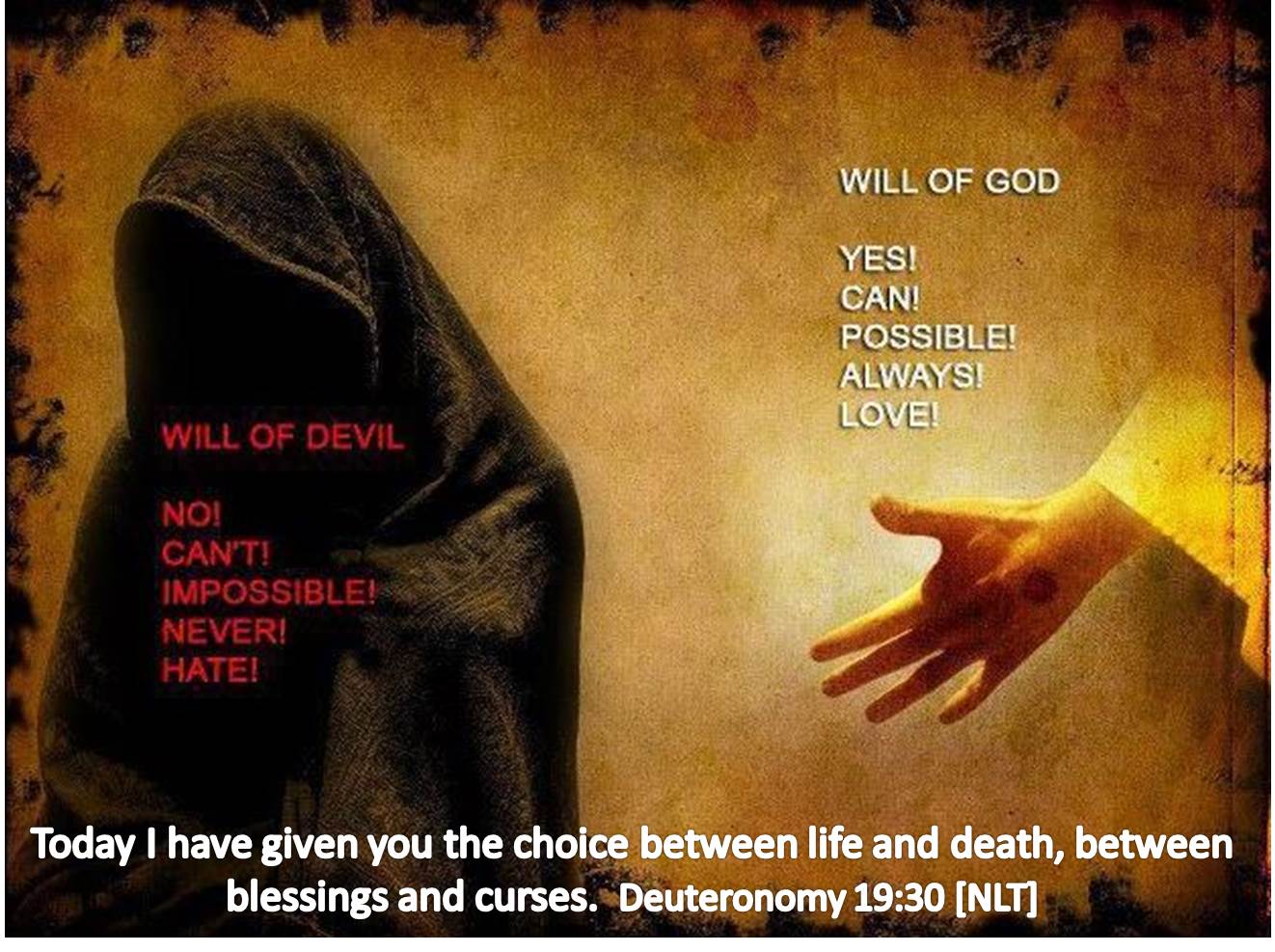
So where is the hope in all this? It is contained in the last sentence, “But when you decide to break free, you will shake his yoke from your neck.” How was Esau to break free? How are we to break free? We must make the same decision that YHVH presented to Esau. We must choose to stop serving hasatan and the humans who follow the ways of the kingdom of darkness.

When we decide to break free, we can be restored to our birthright which is relationship with YHVH . We have this option because of the love and sacrifice of Yeshua, our Messiah. We throw off the yoke of Satan and accept the yoke of Yeshua. It is an easy yoke. We serve others, not because we are forced to, but out of love and gratitude to YHVH. Our older Brother serves us and we serve Him. Our brothers and sisters serve us just as we serve them. We no longer haggle over the abundance of the earth, but share and enjoy all that YHVH provides, which is far more than enough for us all.

Scripture tells us that “all have sinned and fall short of the glory of God.” If you aren’t Yeshua, you fit into this category with all other humans. Whether we know it or not, we are serving Satan when we don’t serve YHVH. Just before I prayed for salvation for myself, I distinctly recall inwardly chafing at the idea of turning my life over to Yeshua and serving Him. The idea of being a servant seemed foreign to me. I thought I was my own person, making my own decisions. Only sometime later would it become crystal clear to me just how much I had been in bondage to Satan all my life. My greatest joy is to serve Yeshua now that I realize all that I have gained by serving Him.

If you have not yet made the decision to break free from the yoke of Satan, do not wait any longer. Perhaps you don’t feel that you are in any type of bondage. You are your own person and you live your life the way you see fit. This was precisely what Esau did when he married a pagan woman. He did not consider YHVH’s commands or his parents’ teachings. This was precisely what I did and my life was a mess before I threw off Satan’s yoke.

Tell Yeshua that you no longer want to work for Satan, but you want to work for YHVH. Tell Him that you are ready to trade your cumbersome yoke of bondage for the easy yoke of Yeshua. Embrace Yeshua’s precious gift of salvation and let Him embrace you with His overwhelming love.

Oil vs. Oil

precious oilFor when the foolish took their lamps, they took no oil with them,…(Matt 25:3)

If you have been wise enough to heed James Corbett’s documentary (How Big Oil Conquered the World) relating the history of how the oil industry has taken over medicine, finance, education, and agriculture, then you know that Satan once again has his counterfeit of YHVH’s genuine provision.

Satan’s workers have manipulated events, industries, and perceptions in order to attain wealth for themselves at severe and often devastating cost to others. Yeshua warned us to be wise to the enemy’s ways, to understand how the enemy works. “Behold, I am sending you out as sheep in the midst of wolves, so be wise as serpents and innocent as doves.…” (Matt 10:16)

Yeshua also warned us about the values of the kingdom of darkness. “What is highly valued among men is detestable in God’s sight” (Luke 16:15) Those who desire to attain this world’s wealth have made crude oil their god and it will lead to destruction. Those of us who follow Yeshua must pursue another type of oil. This Oil is our God, better known as the Holy Spirit. Yeshua set aside His power to show us the power and glory of His Oil. Philippians 2:1-11 shows us how to use this Oil properly. Yeshua did not grasp the power that was rightfully His, but emptied Himself to show us how to thrive in YHVH’s kingdom.

The Spirit of the Lord is upon Me, because He has anointed Me to preach the gospel to the poor. He has sent Me to heal the brokenhearted, to preach deliverance to the captives and recovery of sight to the blind, to set at liberty those who are oppressed. . . . (Luke 4:18)

The world’s oil is pursued by a few to enrich themselves, thus resulting in impoverishing many.  YHVH’s Oil is intended for all who pursue Him and is designed to enrich all.

When one day we stand before the Judge, crude oil and all that it can buy will be as dung. If we have selfishly pursued building our own kingdom instead of pursuing YHVH’s kingdom, we will stand condemned even if we were revered by the world.

Those of us who have pursued YHVH’s kingdom and His Holy Spirit with reckless abandon will be rewarded with treasures far superior to any treasures the kingdom of darkness can offer. Kingdom of darkness treasures will wear out, but Kingdom of light treasures will never be destroyed.

 “Do not store up for yourselves treasures on earth, where moths and vermin destroy, and where thieves break in and steal. But store up for yourselves treasures in heaven, where moths and vermin do not destroy, and where thieves do not break in and steal.  For where your treasure is, there your heart will be also.” (Matt 6:19-21)

How is it that the masses have been so gullible and allowed themselves to be manipulated and deceived? Is it possible that the majority of those who profess to follow Yeshua have not pursued His Oil with a fraction of the vigor and zeal that Satan’s servants have demonstrated in pursuing the world’s oil? How active have we been in increasing YHVH’s kingdom on earth and teaching His values? Yeshua has restored dominion of the earth to His followers, but how zealous have we been to restore the earth to Yeshua? If we have dominion over the earth, then through Yeshua’s power and authority, we can change the very atmosphere of our environment.   Our Oil enables us to blaze forth to vanquish the darkness that currently prevails.

 Of course, there is great risk in promoting values that oppose the world’s current culture. Yeshua Himself suffered the consequences for doing so and warned us to expect the same treatment. Remember what I told you: ‘A servant is not greater than his master.’ If they persecuted me, they will persecute you also. If they obeyed my teaching, they will obey yours also (John 15:20).

These are harsh words to ingest, especially for those of us who have been nestled in our comfort zones for so long. Our comfort zones provide nothing more than a delusion that we are secure. We must renew our minds and realize that our only security lies in risking all for YHVH’s kingdom. We will only be able to carry out our assignments if we have the Oil that YHVH provides.

 “But when they arrest you, do not worry about what to say or how to say it. At that time you will be given what to say, for it will not be you speaking, but the Spirit of your Father speaking through you.” (Matt 10:19-20)

There has long prevailed a distorted teaching that the Holy Spirit and all that He brings are “not for today, but was provided only to get the church established.” Actually it is YHVH’s kingdom that needs to be established and when we call it “church” we seem to lose sight of the true goal.  If we are not guided by the Holy Spirit, we will be guided by earthly values and our efforts will merely contribute to Satan’s kingdom.   Yeshua’s words in Matthew 25 refer to the Holy Spirit as the Oil that will prepare us for the Bridegroom’s return. Since the Bridegroom has not yet returned, we should be diligently pursuing the Oil of the Holy Spirit, lest we are caught unawares and be shut out forever. May the Bridegroom find each one of our lamps brimming with Oil when He returns.

Who Is YHVH?

Jesus is GodIn last week’s blog, Peter pointed out that Yeshua is YHVH. Why is it so important to make this point? Does it change your perspective of Yeshua? There is a tendency in many of us to rank God the Father as superior to Yeshua. It has even been taught in some circles that we are only to address the Father in prayer, and that it is wrong to pray to Yeshua. When Yeshua taught His disciples how to pray, He addressed the Father rather than Himself. And yet, Yeshua also tells us “Whatever you ask in My name, that will I do, so that the Father may be glorified in the Son. “If you ask Me anything in My name, I will do it (John 14:13-14). Yeshua glorifies the Father, and the Father glorifies His Son, Yeshua (John 8:54, 17:1; John 17:5).

Over the past two centuries, there have been various creeds and teachings denying that Yeshua is God. This type of heresy continues today. In fact, in some circles Yeshua is considered to be merely a thought or spiritual representation of YHVH.  Yeshua is clearly identified as YHVH’s Son in Scripture (1 Cor 15:28; Ps 2:7; Heb 1:5; Matt 3:17; John 1:14; 1 John 4:10; John 5:26; 1 John 5:9). Even we mortals produce children and they are certainly more than just a thought or a representation of us. If the name of YHVH had been known and if Scripture in its entirety had been correctly understood, then these debates would not have surfaced or, if they had, could have been quickly dismissed.

In order to get a more complete picture, it is best to start at the beginning and work from there. John 1:1-2 helps us to get started.  In the beginning was the Word, and the Word was with God, and the Word was God. He was with God in the beginning. Through him all things were made; without him nothing was made that has been made.” . This verse takes us back to the first chapter of Genesis. The Word spoke creation into being. Later the Word would speak to Abraham in front of his tent (Gen 18) and to Moses in the burning bush (Ex 3). We learn in John 1:14 that the Word became flesh and dwelt among us.

The Word not only became flesh, but put Himself in the same position as the rest of us. For a time He set aside His power and entered the world in total dependence on the Father. Who, being in very nature God, did not consider equality with God something to be grasped, but made himself nothing, taking the very nature of a servant, being made in human likeness (Phil 2:5). He showed us what we could do when empowered by the Holy Spirit as He was. “Very truly I tell you, whoever believes in me will do the works I have been doing, and they will do even greater things than these, because I am going to the Father.” (John 14:12-14)

The Jewish leaders understood that to be the Son of YHVH meant equality with YHVH.    For this reason they tried all the more to kill him; not only was he breaking the Sabbath, but he was even calling God his own Father, making himself equal with God (John 5:18).  Yeshua told them that he saw the Father at work and did the same work as His Father.  Yeshua went on to clarify the relationship between His Father and Himself (John 5:19-23).

YHVH tells us that His thoughts are above our thoughts, and His ways above our ways (Is 55:8-9). It is difficult to understand how three separate persons can be so united and act as one. Yet, YHVH has provided an example for us. The three persons of YHVH are echad, just as a husband and wife are echad.  The husband and wife can become one flesh, but they can also think and act in unity. Even so, they remain two distinct people.  In Hebrew, echad can not only mean “one” as in the number one, but it can mean thinking and acting together as one. The example we have of husband and wife is not perfect, and sometimes far from it.  But we can see how the ideal would be when a husband and wife are aligned in their thinking and acting.

The third Person (Holy Spirit) of the Godhead has been sent to us to help us understand YHVH’s thoughts and ways.  Yeshua tells us in John 16:12-14:

“I have many more things to say to you, but you cannot bear them now. “But when He, the Spirit of truth, comes, He will guide you into all the truth; for He will not speak on His own initiative, but whatever He hears, He will speak; and He will disclose to you what is to come. “He will glorify Me, for He will take of Mine and will disclose it to you.…”. 

We see clearly that the Holy Spirit is also a Person, for Yeshua refers to the Spirit repeatedly as He, not it.  Yeshua states that the Holy Spirit will not speak on His own initiative.  If Father, Son and Holy Spirit were all the same Person, there would be no need to make such a statement.  The three persons of YHVH are perfectly aligned at all times and, therefore, may seem to be only one.   Each person of the Godhead, YHVH, is wholly divine and wholly deserving of our worship, awe, and devotion.