Tag Archives: Heart

Trust in YHVH with all Your Heart

trust-in-yhvhTrust in the Lord with all your heart, and lean not on your own understanding; in all your ways acknowledge Him, and He shall direct your paths. Do not be wise in your own eyes; fear the Lord and depart from evil. It will be health to your flesh and strength to your bones.” Proverbs 3:5-8

I had memorized this well-known passage in proverbs 3:5-8 many years ago and still repeat it often in many different circumstances.  I would like to be able to say that it always calms my nerves or worries, but I can’t truthfully say that.  I usually have to spend some time with Yeshua remembering all the promises He gave us, that we are not to fear or be anxious for anything.  This tells me then that trust is not just about knowing the Scriptures that tell us God is faithful to watch over and take care of us in all situations.  It is far more about personally knowing the Living Word [Yeshua] who inspired the written Word, than it is about just knowing the written Word.

As believers, we often talk about having faith, more faith, or enough faith to endure whatever trial we are experiencing.  Unfortunately though, faith has become an overused and even watered down concept in our modern society.  Nowadays, we can have faith in Santa Claus, the Easter Bunny or the Tooth Fairy.  So what do we really mean when we say that we need to have strong faith in God?  Yeshua told his disciples that they could have cast the demon out of the young boy if they even had the faith of a grain of a mustard seed (Matt 17:20).  It is clear from this story that what they needed was not more faith, but rather a solid foundation of trust to back up the faith they had.

As human beings, we understand what it means to trust someone at a much deeper level than just having faith in someone.  Think about yourself for a moment and how you feel about trusting your neighbor. You may trust your neighbor enough to lend them your lawnmower, but do you trust them to watch out for your house when you go on a trip?  Would you trust them enough to give them a key so they can take of your plants when you are away?  Would you trust them to take care of your children for a weekend?

I would like to illustrate this point through a true story about a man named Charles Blondin, who was the greatest tightrope walker of his time, in the mid 1800’s.  He gained great fame in 1859 when he became the first person to cross Niagara Falls on a tightrope.  Charles and his friend and manager, Harry Colcord, strung a 2” diameter hemp rope from an oak tree on the American side to a large rock on the Canadian side, and used a series of guy ropes every 20’ (anchored to the shore) to keep the rope as steady as possible.  The greatest risk was the 50’ section in the center of the 1300’ span that could not be reached by anchor ropes.  The incredible thing was that Charles was able to navigate his way across the Falls without any mishaps.  He traversed the Falls a number of times over the next few weeks, carrying props such as a camera and a griddle on which he cooked an omelet, pushing a wheelbarrow, and even doing a backflip on a couple of occasions.

The most daring feat of all, though, was when he carried his manager Harry on his back during one of his crossings.  This is where the rubber meets the road – although the many fans in attendance had faith that Charles was able to cross the Falls (and even bet their money on him), it was only Harry who was able to trust Charles with his life.  A number of guy wires snapped during their crossing, but Charles never wavered.  Harry later told reporters that Charles had coached him to: “look up…you are no longer Harry, you are Charles. Until I clear this place, you are to be a part of me, mind, body and soul. If I sway, sway with me. Do not attempt to do any balancing on your own”.

Here is the essence of trusting God; not just having faith in Him. The spectators watching Charles had faith in him and believed that he was capable of traversing the Falls.  Only Harry, though, trusted him enough to climb on his back and ride across Niagara Falls with him walking on a 2” thick rope.  Is this the kind of trust you have in YHVH – do you trust Him to protect you and care for you and supply all your needs?  Do you trust Him with your whole life – body, soul and spirit – or do you trust more in your own abilities, your financial resources, or your trusted friends? In Psalm 3:6, God promised to direct our paths (keep us going in the right direction) if we would trust and acknowledge Him in every part of our lives.  Are you ready to trust YHVH with your whole heart? He is trustworthy beyond any other person or force in heaven or on Earth.  Go ahead and start trusting Him today – it will be the best decision you ever made!

Does God care about Genes or Jeans (Part 2)?

least of these

In Part 1 of this blog last week, I talked about who are YHVH’s children and those who should keep His Torah, and concluded that it is not Abraham’s biological descendants, but rather those who are His spiritual descendants.  The true children of YHVH’s covenant are those are following His will and trusting Him, keeping His Torah and striving to be pleasing to Him in every part of their lives.  That covered the “genes” part of this 2-part series.  This week I want to focus on what God sees when He looks at us: we know from Scripture that He looks on the inside of us and does not focus on our outer appearance or the level of recognition we merit from the world.  In other words, He doesn’t care whether we wear threadbare jeans vs. classy suits, or how many degrees we have achieved or awards we have won.

What is YHVH truly looking for when He looks deep down inside of our souls?  From Hebrews 4:12, we know that He “discerns the thoughts and intents of our heart”.  But what are His criteria in evaluating our hearts – does He look to see how perfectly we are following His Torah, or how diligently we are working to serve our congregation?  Psalm 58 gives us a beautiful window into YHVH’s heart, and we know that our hearts should line up with His heart as we seek to renew ourselves more into His image every day.

God is conveying a very strong message through Isaiah when He tells Him to shout it out with a shofar blast. (Isa 58:1)  He chastises His people for their false piety – they are trying to impress God by putting on sackcloth and ashes, and afflicting themselves severely when they fast.  The only ones they are impressing are people around them though, not YHVH.  He desires them to fast from their hearts when He says:

“..this is the kind of fasting I want: free those who are wrongly imprisoned; lighten the burden of those who work for you. Let the oppressed go free, and remove the chains that bind people. Share your food with the hungry, and give shelter to the homeless. Give clothes to those who need them, and do not hide from relatives who need your help”. (Isa 58:6-7)

If these concepts sound familiar to New Testament readers, that’s because they are.  Listen to what Yeshua said when He was speaking to the goats on His left and the sheep on His right:

“Then the King will say to those on His right, ‘Come, you who are blessed by My Father, inherit the Kingdom prepared for you from the creation of the world. For I was hungry, and you fed Me. I was thirsty, and you gave Me a drink. I was a stranger, and you invited Me into your home.  I was naked, and you gave Me clothing. I was sick, and you cared for Me. I was in prison, and you visited Me.’  “Then these righteous ones will reply, ‘Lord, when did we ever see You hungry and feed You? Or thirsty and give You something to drink? Or a stranger and show You hospitality? Or naked and give You clothing? When did we ever see You sick or in prison and visit You?’  “And the King will say, ‘I tell you the truth, when you did it to one of the least of these My brothers and sisters,[f] you were doing it to Me!’

“Then the King will turn to those on the left and say, ‘Away with you, you cursed ones, into the eternal fire prepared for the devil and his demons. For I was hungry, and you didn’t feed Me. I was thirsty, and you didn’t give Me a drink. I was a stranger, and you didn’t invite Me into your home. I was naked, and you didn’t give Me clothing. I was sick and in prison, and you didn’t visit Me.’  “Then they will reply, ‘Lord, when did we ever see You hungry or thirsty or a stranger or naked or sick or in prison, and not help You?’  “And He will answer, ‘I tell you the truth, when you refused to help the least of these My brothers and sisters, you were refusing to help Me.’  “And they will go away into eternal punishment, but the righteous will go into eternal life.”

What, then, is truly important to Abba Father when He looks into our souls?  From Yeshua’s words in Matthew 5:7, we know that He desires for us to be pure in heart, not obeying Him out of obligation but because we sincerely want to please Him from the depths of our heart.  And what does He say about those who are pure in heart?  ‘They shall see God’.

This takes us right back to the essence of our relationship with Yehovah – if we want to know Him intimately, we need to align our hearts with His, which means we will automatically do the things that please Him: feed the poor, take care of orphans and widows, shelter the homeless, etc.  In your life, try not to focus on the outward things, but look deep inside your heart.  In the ‘intents and desires of your heart’, after stripping away everything superficial, do you see what YHVH is looking for?

What is True Delight?

delight yourselfMost believers are familiar with the verse in Psalm 37:4 that says “Delight yourself in the LORD [YHVH] and He will give you the desires of your heart.”  What is the first thing that comes to mind when you think of this verse?  Before I understood this spiritual concept completely, I thought it meant that if I worked hard enough at praising and glorifying God, He would answer all my prayers and give me everything I wanted, but later on when I became more spiritually mature I realized I was mistaken.

The first fallacy I discovered with this interpretation was that David was not talking about God satisfying our worldly desires in the verse.  Looking more carefully at the Scripture, we see that he says that YHVH will give us the desires of our heart.  In previous blogs we have talked about what is meant by the “heart” when used in Bible verses.  It is usually used to denote our conscience, or the part of our soul that guides us in knowing and doing what is right in God’s eyes.  Recall verses like Psalm 119:11, where David said that he hid YHVH’s Word in his heart so that he would not sin, and then in Proverbs 23:7, where Solomon [Sh’lomo] says “as a man thinks in his heart, so is he”.

One of my favorite passages on the importance of focusing our heart on YHVH is in Proverbs 4 in verses 20-21 where Sh’lomo shares his wisdom about YHVH’s word: ”My child, pay attention to what I say. Listen carefully to My words. Don’t lose sight of them. Let them penetrate deep into your heart”.  Then in verse 22, Sh’lomo tells us how YHVH blesses us when we do this: “for they (YHVH’s words in our heart) bring life to those who find them, and healing to their whole body”. He shares his final bit of wisdom in verse 23: “Guard your heart above all else, for it determines the course of your life”.

Finally, in Philippians 3:8, Paul (Sh’au)] says that “everything else in life is worthless compared to the incomparable value of knowing Messiah Yeshua my Lord”.  Putting all these passages together, they tell me that if I focus my heart (the deepest inner part of my soul) on YHVH and His word, then the desires of my heart will be fulfilled in knowing Abba Father and His Son, Yeshua, at a deep intimate level that brings joy beyond anything else I can experience in this life on Earth.

So now we have covered the second half of Psalm 37:4 at a deeper level, but what exactly does the first half mean, “Delight yourself in YHVH…”?  The Hebrew word used in this passage for delight is aw-nag, which is in the imperative form, so it is a command from YHVH to delight in Him.  A more complete translation is: ”to be wholly dependent upon God and to derive one’s pleasure from Him”.  It is true that I derive great joy from spending time with YHVH, worshiping Him and fellowshipping with Him, meditating on His word and gaining understanding of who He is and what is in His heart.  However, it is also true that there are times when I desire to watch a mindless TV show or read a book that reveals its plot from the first page.

Another great concept from Scripture that helps us understand what it means to delight ourselves in YHVH comes from Isaiah 58, where YHVH says that if we honor His Sabbath (Shabbat) in everything we do (verse 13), then He will be our delight and He will give us great honor (verse 14).

How do we delight ourselves in YHVH?  How do we keep our minds and hearts focused on YHVH so He is able to give us the desires of our hearts?  We need to stay laser-focused on guarding our heart and mind from being consumed by the desires of this world, keeping ourselves tuned into the Holy Spirit who is able to guide us into all truth and guard our hearts from the wiles of the enemy and the distractions of the world.  He will help us to stay set apart from the world, spending our most precious time in fellowship with YHVH.

What would you do if you were God (Part 5)

LORD is good“Throughout the earth the story is the same— only a remnant is left, like the stray olives left on the tree or the few grapes left on the vine after harvest.” Isaiah 24:13 [NLT]

In the previous installments of this series on God’s ways, I discussed why YHVH does things the way He does and why His plan seems so odd to us sometimes but is actually the perfect plan for our lives.  In this final blog of the series I want to look into the future and see why He has prophesied and planned out such a seemingly bizarre sequence of events for the end of this age.

From our limited human perspective, it may seem odd that the Creator of this universe would aim to judge His creation by destroying a large portion of it through catastrophic events.  Let us look in more detail at a sampling of His end-time prophecies which are spread across many of the minor and major prophets in addition to the book of Revelation.  When researching a news story, we try to answer the four “w” questions: who, what, when, why.  The “How” question is not so important to us when it comes to Abba‘s future plan, as we do not really need to know how He will perform His will, but rather how we fit into it and what we should do to prepare ourselves.

The “When” question is also not critical to us, as we have no control over it anyway, and we need to be spiritually prepared, whether the events start to play out over the next few years, further into the future, or beyond our earthly lifetime.  Yeshua said that no person would know the day or hour of the end time, not even the angels in Heaven, so we should not waste time speculating about the timing of these events (Matt 24:36).  The explanation of “What” is going to happen in the final days is somewhat more important to us, but mainly from the perspective of discerning the signs of the end times, as Yeshua outlined in Matthew 24-25.  If we get too concerned with answering the “When” and “What” questions (such as being drawn into the pre-Trib Rapture belief), then we can easily miss the more crucial truths of Yeshua’s message.

In Luke 18:8, He asks “when the Son of man returns, will He find faith in the Earth?”  Why is our Creator and Savior questioning the faith of His saints?  In Matthew 24:12, He goes on to say that “iniquity will abound and the love of many will grow cold”.  This agrees with statements in 2 Thessalonians and Daniel that speak of the Tribulation period and the 3 ½ year reign of the anti-messiah, when there will be a great falling away and the “antichrist” [anti-messiah] will be revealed.  Daniel says in his end-times prophecies that the anti-messiah will “wear out the saints of the Most High” (Dan 7:25) and “scatter the power of the holy people” (Dan 12:7).  In 2 Thessalonians 2:3, Sha’ul says “that day will not come until there is a great rebellion against God and the man of lawlessness is revealed”.

So how can we as Abba’s children keep our faith and not grow weary from the enemy?  I believe Revelation 12:11 provides us a good answer, as this passage explains how the saints persevered to the end during the Tribulation: “And they overcame him [HaSatan] by the blood of the Lamb and by the word of their testimony, and they did not love their lives to the death”.  YHVH wants our love and devotion to Him more than anything else – we need to walk with Him constantly and keep trusting Him every step of the way in our lives.

Many of the prophets (Isaiah, Jeremiah, Ezekiel, Zechariah, Malachi, etc.) speak of the believing remnant that will be preserved by YHVH in the latter days to dwell with Him in the Millennial Kingdom.  One of the key underlying themes of Isaiah (e.g. Isa 10:20-22, 11:11-16, 24:13, 27:32, 66:20) is that of the judgment of Israel overall as a nation and people, but the protection and restoration of a small remnant of YHVH’s faithful children (both Jew and non-Jew) to dwell with Him in His eternal Kingdom.  A particularly meaningful passage is located in Malachi:16-18.

Then those who feared the Lord spoke with each other, and the Lord listened to what they said. In His presence, a scroll of remembrance was written to record the names of those who feared Him and honored His name. They will be My people, says the Lord of Heaven’s Armies. On the day when I act in judgment, they will be My own special treasure. I will spare them as a father spares an obedient child. Then you will again see the difference between the righteous and the wicked, between those who serve God and those who do not.”

This passage provides us a window into YHVH’s own heart, which is what we desire as His people in relationship with Him.  It shows us that He loves us all, but He especially desires to keep track of the names of those who truly love Him with all their hearts (fear Him & honor His Name).  He wants to draw them near to Him as His special treasure, and preserve them for the last days, when He will reign on the Earth in the person of Yeshua HaMashiach.  When we look at YHVH’s heart from His perspective, we see His overwhelming love for His children, keeping us safe until He can bring us home into His eternal Kingdom.  How could we ever desire or ask for anything more than that – I give thanks and praise to our omnipotent Father who has wisdom and compassion beyond anything we could ever imagine!


What would you do if you were God? (Part 2)

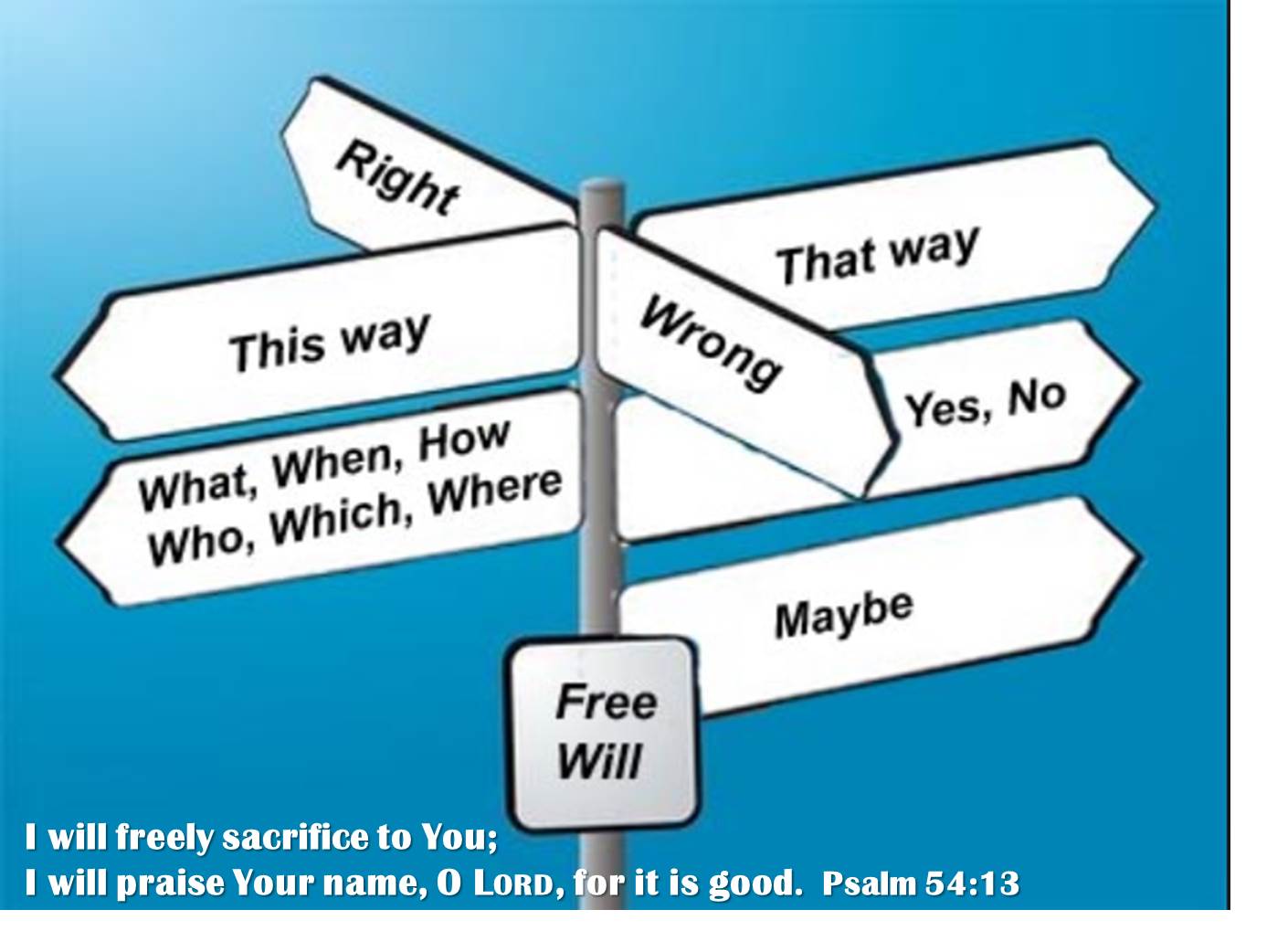
free will      So God created man in his own image, in the image of God [Elohim] he created him; male and female he created them.Genesis 1:27 [ESV]

In the first part of this series a couple of weeks ago, I dealt with the frequent questions about why God was supposedly such an angry, vengeful God in the Old Testament but now is a merciful and gracious God who declares all of His people righteous and holy through the blood of the Lamb, Yeshua HaMashiach.  Please go back and read that episode (What would you do if you were God) to get the full context if you have not done so. In today’s blog, I wanted to delve into the motives and intents of God’s heart in creating human beings, the crowning work of His creation.

When God [Elohim] first created mankind, He said, “Let us make human beings in Our image, to be like Us” (Gen 1:26 – NLT).  The first thing I noticed when I read this passage is that God spoke of Himself as a plural being.  As we have taught before, God [Elohim] is a name for a triune God representing all three persons of the Godhead (Father, Son and Holy Spirit).  So when God says He created us to be like Him, He meant all three persons of Himself.  You could loosely relate the whole essence of our being to these three persons – we certainly have a spirit (relating to God’s Holy Spirit and even able to be filled with the Holy Spirit), and we have a fleshly body, which relates to Yeshua when He came to Earth in the flesh.

But what about our soul – our mind, heart, will and emotions?  The Scriptures speak clearly about the mind of God (Num 23:13, Rom 8:27, Job 12:13, Isa 40:28, I Cor 2:16).  We know from stories like the prodigal son about the loving heart of God the Father (Luke 15:11-32).  We also know that God created us to have emotions like Himself: love, compassion, joy, anger, etc. (see Job 20:23, Ps 74:1; 86:15, Jer 7:20, Isa 62:5, Zeph 3:17).  Finally, God’s will is supreme in the universe, and He wants us to follow His will to the best of our abilities, with the help of the Holy Spirit – in Romans 12:2, Sha’ul says: “…you will learn to know God’s will for you, which is good and pleasing and perfect”.

God not only created us with a will as part of our souls; He created us with a free will to make our own life choices.  Because God is all-knowing, He knew that many of His children would make bad decisions in their lives and damage or destroy their lives.  We see people every day making bad choices that cause them physical and emotional pain either for themselves or others, falling into addictions, committing crimes against others or treating others unfairly.  So why did God give us free will, and “what would you have done if you were the Creator God”?

The Scriptures say that “God is love” and that He is the source of all love.  He created us in His image, to love Him and our fellow brothers and sisters.  Many people choose not to love God or follow His will, but rather they follow their own selfish will.  Because of their bad choices, they cause great pain and suffering to themselves and others.  So what if God had “programmed” our minds and hearts to love Him, so that we had no choice but to love Him.  Everyone would love Him unconditionally, but would God be pleased and rejoice over us?  If I were Him, I would be sad and depressed, knowing that my creation loved me, but they had no choice in the matter, so it wasn’t fulfilling and their love didn’t mean anything to me.

God is a God of relationships, and He created us to be in relationship with Him.  When we love and trust Him as our best friend, Lord and ruler of our lives, we have the greatest joy and fulfillment possible, and God smiles and rejoices over us because we have chosen the best path and because another one of His children loves Him of their own free will and has a personal relationship with Him.

Heart to Heart

that they may be one

There are many reasons why YHVH established Shabbat and the Feasts.  These are His set-apart times for teaching us, preparing us, celebrating with us, and bringing order to His Kingdom.  The end result is that YHVH desires is to be intimate with us individually and corporately.  One of my favorite verses in Scripture is from Deuteronomy 30:19 and the first part of verse 20, in the Complete Jewish Bible translation..

I call on heaven and earth to witness against you today that I have presented you with life and death, the blessing and the curse. Therefore, choose life, so that you will live, you and your descendants, loving [YHVH] your God, paying attention to what he says and clinging to him – for that is the purpose of your life!

Shabbats are very important to YHVH and, whether or not we know it, they are important to us.  The 23rd chapter of Leviticus designates clearly all the days that are Shabbats, whether weekly or during the Feasts.  Later in Leviticus, YHVH points out the consequences for working during a Shabbat.

For six days work is to be done, but the seventh day is a day of sabbath rest, holy to the LORD. Whoever does any work on the Sabbath day is to be put to death (Lev. 31:15).

The consequences for disobedience are harsh and hardly seem an invitation for intimacy, but it is most likely a necessary starting place. In the Exodus account of the Israelites in Egypt, we see a people that are unruly and often wayward. They had been immersed in idolatry and enslaved to cruel taskmasters.   To win their trust, YHVH demonstrated through signs and wonders that He is to be both feared and respected and also that He is able to protect and provide for His people. YHVH was formidable to their enemies, while protecting and providing for the Israelites..

When they were in the wilderness, YHVH gave them new commands and imposed strict consequences for disobedience, so that He would be taken seriously. Despite all the signs and wonders people still complained that He wouldn’t provide for them and tried to return to their idols. There was at least one person who ignored YHVH’s commands concerning Shabbat. YHVH had to follow through with the consequences He had established and the man was put to death (Num 15:30-36).  Were such harsh consequences necessary?

As a former teacher, I quickly learned that at the beginning of a new school year, teachers must be stricter than normal. The more unruly the students the more critical it becomes to establish authority and order. Once the students are settled, a proper atmosphere is established where students can learn and a healthy relationship with the teacher can be fostered.  If teachers are extra strict at the start, the focus can more quickly shift from the rules to learning.

Once each of us comprehends that YHVH is sovereign and is to be obeyed, then we are in a position to learn what He has to teach us. As we progress with our learning and interact more with YHVH, we grow closer to our sovereign King. Over time, we set aside our old ways and take on His ways. We experience His concern for our hearts. Eventually, we are ready to hear what is on His heart.

We make the transition from obeying the “no work” command simply because it is a command to refraining from work because we are eager to spend time with our Teacher.  We value what is important to YHVH.  Sometimes it is necessary to do His work even on ShabbatYeshua demonstrated this when He healed on Shabbat.  He was showing us that the purpose of Shabbat is to be in tune with our Father’s heart. It is not to become fascinated with rules and regulations.

Even as we grow closer to YHVH, we must be mindful that we are dealing with our Creator and our Sovereign. We are not to take His words lightly or take Him for granted. We must maintain a balance between healthy respect and intimacy with YHVH. Otherwise, we will find ourselves slipping from following His heart on Shabbat to following our own concerns. If that happens, our relationship with YHVH will quickly deteriorate as we move away from Him.

Yeshua spent time on Shabbat teaching, being taught, and healing. He was closely aligned with Abba’s heart and could easily transition to whatever His Father desired for Him to do at any given moment. Such intimacy is our Father’s desire for us and the reason He created us.

If we keep in mind the real purpose for our existence, we will remain focused on our Father’s heart and not fall into legalistic traps.  We will reap all the rewards that YHVH intends for us.

Fasting from Your Heart

fasting and praying on knees

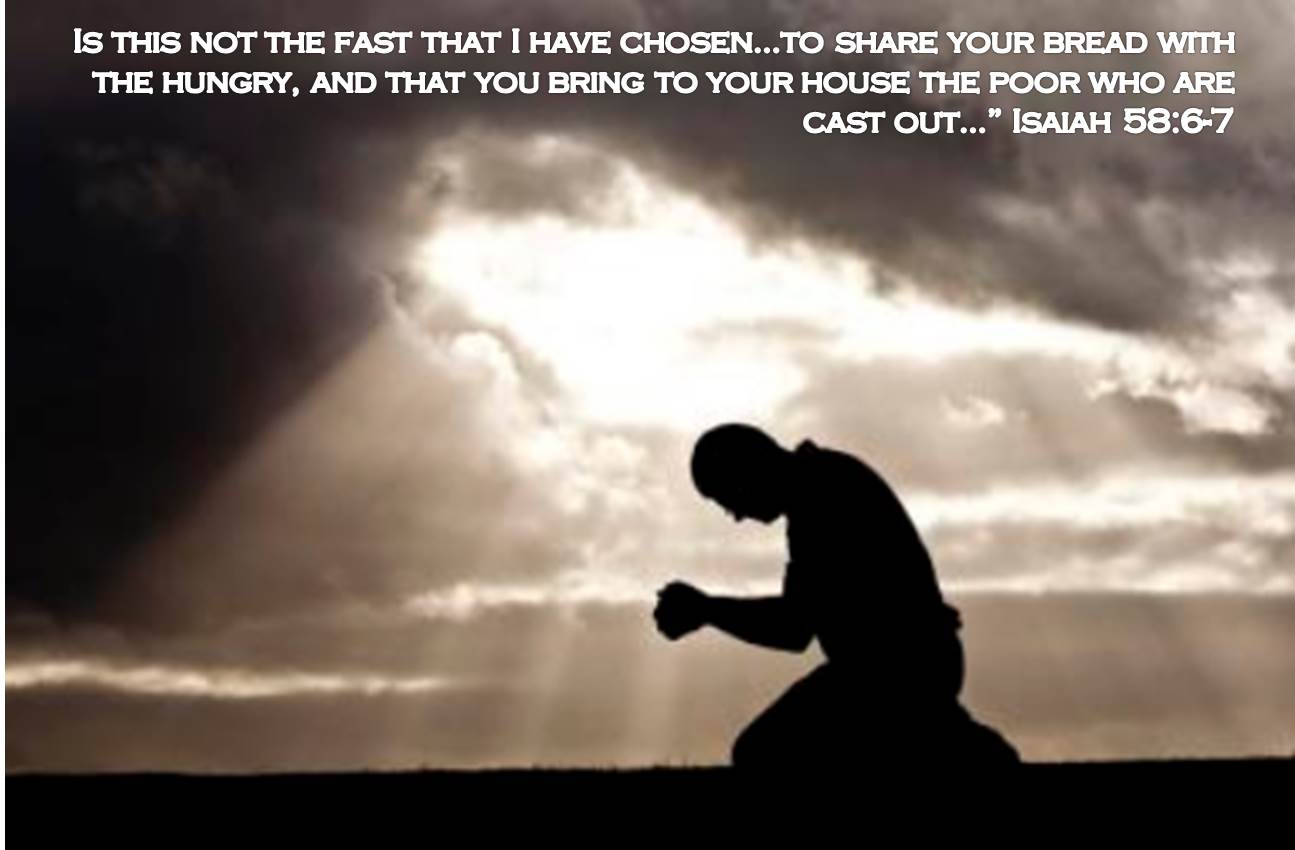
“Is this not the fast that I have chosen: to loose the bonds of wickedness, to undo the heavy burdens, to let the oppressed go free, and that you break every yoke? Is it not to share your bread with the hungry, and that you bring to your house the poor who are cast out; when you see the naked, that you cover them…”  Isaiah 58:6-7

In Isaiah 58, YHVH tells His people Israel that they are not to be hypocrites when they fast, going through the motions with their head and body but not their heart (Isa 58:3-5, Jer 14:12, etc.). In Isaiah 58:6, He is talking about repenting for exploiting their workers. He tells them to turn back to Him and make a genuine change in their lives, showing compassion to others. In verse 7, Yehovah gets more specific when He describes the nature of a truly sincere fast, which would cause the people to exhibit the fruit of the Spirit in their actions, such as taking care of the poor and hungry, and clothing the naked.

To me, this is one of the most beautiful passages in all of Scripture, as YHVH is pointing out to His people how they have fallen short (as we all have in our lives), telling them they need to repent, guiding them (and us) as to what they should be doing, and then promising them wonderful blessings if they will follow His instructions (Isa 58:8-11).

Many Scriptures talk about the positive results of fasting sincerely from your heart:

  • In Joel 2:12, YHVH tells the people to turn to Him with their whole heart, with fasting and weeping; He goes on to say that they are to rend their heart and not their garments, and then Joel says that YHVH is gracious and merciful and will bless them for turning back to Him (Joel 2:13-14). This is similar to what He says through Jeremiah when He tells His people to circumcise their hearts and turn back to Him (also see Deut 10:16 and 30:6).
  • Yeshua adds meaning to these words when He tells people that they need to fast inwardly (in secret) and not outwardly (walking around in sackcloth and showing everyone how they are being so righteous with their fasting). As in Isaiah and other Scriptures, He also says that Abba Father will reward them openly when they fast secretly (Matt 6:16-18).
  • When King Darius had to throw Daniel into the lion’s den because he had broken the decree that no one was to worship a different god than the official god of their kingdom, Darius stayed up all night fasting. When he came down to check on Daniel in the morning, he found him alive and well. What really fascinates me about Darius is that he called Daniel the “servant of the living God” even before he knew that he had been saved from the lions (Daniel 6:18-23). This tells me that Darius was sincerely fasting from his heart and that he was praying to the true living God and not one of his false gods. It is also apparent from this passage that Darius was moved with compassion, which inspired his fasting.

What do these Scriptures teach us about our heart attitude when we are fasting and praying? If we are fasting because we think it makes us a better Christian, or we think it’s the right thing to do to get God to answer our prayers, or we are simply following Abba’s instructions to fast but our heart is not in it, what are we accomplishing? We are only fasting outwardly to convince others (or ourselves) that we are righteous people who are following God’s will. We need to look into our hearts and find out what our true motives are when we fast or pray.

Are we truly seeking to draw closer to YHVH and to be pleasing to Him? If that is true, then the fruit of the Spirit should be evident in our lives, starting with our love and compassion for others.

Look again at Isaiah 58 and ask these questions of yourself: are you helping to undo the heavy burdens of others; are you sharing your bread with the hungry and bringing to your house the poor who are cast out; are you clothing the naked and taking care of the widows and fatherless? If you are, then Yehovah will reward you openly: your light shall break forth like the morning, your healing shall spring forth speedily…Then you shall call, and YHVH will answer; you shall cry, and He will say, ‘Here I am.’ Isaiah 58:6-9

Inside Job

above all elseAs a born-again believer, have you ever tried to explain your experience with YHVH to a non-believer? Have you been met with doubt and misunderstanding or even ridicule?  We can tell others of our experience, but we cannot transfer our experience to another person. No one else can truly experience what another has experienced. They can hear and try to put themselves into the other person’s place, but it isn’t the same thing. They will not truly understand what Yeshua has done for them until they experience His love, forgiveness, and presence for themselves.

At the time I asked forgiveness for my sins and invited Yeshua to be Lord of my life, I was only vaguely aware that I needed Him. It was only after I experienced Him personally that I began to get a glimpse of just how much I needed Him. Through an ongoing relationship with Yeshua for the past 30+ years, I have realized on ever deeper levels just how much I need Him and how much He has done for me. I have learned to love, appreciate, respect, adore, obey and trust my beloved Shepherd. There have been changes in my behavior and attitude that may be perceived by others, but the actual work inside my heart is invisible to others.

When I was baptized in the Holy Spirit, there were outward signs of speaking in tongues and other gifts of the Holy Spirit. The inside work, however, was much more significant. The Holy Spirit worked with me to show me areas where I needed to change and grow, so that I would not be merely a noisy gong as I used the precious gifts I had received. Also, the Spirit emboldened me to step out in faith and take risks in order to work in YHVH’s harvest.

If you have experienced baptism in the Holy Spirit, then you probably understand how difficult it is to convey to others how important it is that they take this step. Many people are satisfied with salvation in Yeshua and are content to have a foot in the door to the Kingdom of Heaven.  We are empowered and equipped by the Holy Spirit in order to develop into harvest workers and soldiers in YHVH’s kingdom. It is not enough to remain spiritual babies any more than we should expect to be human babies forever.

Those of us who have experienced baptism in the Holy Spirit understand what a wonderful gift we have been given, but how do we convey that wonder to others? We cannot convince others by speaking to the intellect. We must speak to the heart and challenge the person to try it for themselves.

The greatest difficulty I have faced is convincing born-again believers of their need for deliverance.   Many believe that once they have been saved, they do not have to worry too much about the enemy.  It is true that Satan had hold of me before I became a born-again believer. He lost control in some areas of my heart after I accepted salvation, but he still had a foothold in areas that I had not yet yielded to YHVH. When I went through prophetic deliverance, I became aware of just how much influence demons still had on me. For one thing, they had clouded my perception of truth. I am now able to see more clearly how demons operate to influence and manipulate us. Now that I better understand how the enemy functions, I have been able to incorporate more effective combat strategies into my spiritual warfare. The greatest discovery for me has been insight into distinguishing the precious person YHVH created from the demon(s) who are working within the person to steal, kill, and destroy in many ways.  However, these experiences and insights are particularly difficult to explain to others.

The best way I can describe it is to ask you to imagine that someone dear to you is being used and manipulated by another person. Wouldn’t you do everything you could to assist that person in getting free? What if the person rejected your every effort and refused to believe that you might have a solution to the problem? What if that person accused you of judging them or criticizing them for getting themselves into such a situation? I experience the same anguish and frustration when I see a demon holding someone I love in bondage. I see the torment that person endures while unwittingly cooperating with the enemy.

If you have not yet repented of your sins and asked Yeshua to be Lord of your life, then I challenge you to try it for yourself. If you have not yet sought the baptism that only Yeshua can offer, then I challenge you to ask Yeshua for this precious gift. If you have not yet sought deliverance so that you can be free from any remaining bondage to Satan, then I challenge you to ask Yeshua to guide you. Yeshua came to set the captives free. The Hebrew name Yeshua means both salvation and deliverance.  We need everything that Yeshua offers to us.  Don’t take my word for it.  Try it for yourself.

I will give you a new heart and put a new spirit in you; I will remove from you your heart of stone and give you a heart of flesh. And I will put my Spirit in you and move you to follow my decrees and be careful to keep my laws (Ezek. 36:26-27 NIV).

Where is Your Heart?

where your heart is“For where your treasure is, there your heart will be also.” Matthew 7:21

In the first installment of this series on the “Sermon on the Mount”, I talked about righteousness being the main focus of Yeshua’s Kingdom message. I also showed how He focused on the heart as opposed to head aspects of righteousness. In this message I want to illustrate exactly what Yeshua means by keeping the Torah and walking in righteousness at the heart level.

In order to understand how Yeshua (and therefore Abba Father) wants us to walk in righteousness in Yehovah’s Kingdom of light, we first need to dig down to a deeper level of scripture study. On the surface of these passages, it appears that Yeshua is saying things like: don’t focus on accumulating wealth (Matt 6:24), don’t judge others (Matt 7:1), don’t worry about your life (Matt 6:25), don’t show off when you’re helping out the poor (Matt 6:1), and don’t be a hypocrite about your fasting and praying (Matt 6:5,16).

However, when we dig down to the heart level of Yeshua’s message, we can quickly see that He is really talking about building healthy relationships as we are following the Torah and walking in righteousness. Let me give you a couple of brief object lessons to illustrate what I mean. Imagine for a moment that you are a member of a large congregation, and that every week when you go to worship services, you spend a few minutes before and after service saying hello and shaking hands with people that you either don’t know, or you know only as once-a-week acquaintances. You might even ask these people how they are doing or whether everyone is healthy in their family, but are you just going through the motions or sincerely reaching out to these people?

In the same way, let’s say you work with “Meals on Wheels” and take meals to home-bound people every day, but you never speak to them or show that you care about them in any way (other than just doing your job to help the poor because you know you’re supposed to). Do you think those people are going to think of you in a kind and caring way? Or will they just see that you are doing this out of obligation and you don’t really care about them personally? What is your heart motive in this scenario – are you doing this to feel good or look good, or do you truly look for ways to bring Yeshua’s love to them?

The key point Yeshua was addressing in His message is that you can be the most righteous person on earth from a human perspective (as many of the Pharisees were), doing good works every moment of the day. However, since Yehovah looks on the heart, from His perspective you could be like a whitewashed tomb (Matt 23:27), appearing to be good and righteous on the outside, but inside you are nothing but filthy rags (Isa 64:6). In this case, Yeshua could rightly say to you: ‘…I never knew you; depart from Me, you who practice lawlessness!” (Matt 7:23).

YHVH requires that we “…do justly, love mercy, and walk humbly with our God” (Micah 6:8). He certainly wants us to follow His instructions in the Torah, but He judges us by our heart attitudes and motives more than by our actions. We would do well to examine ourselves from His perspective, following His word in our hearts and not just our heads.

Out of the Abundance of our Hearts

LawOn-Heart

“A good person out of the good treasure of their heart brings forth good, but an evil person out of the evil treasure of their heart brings forth evil. For out of the abundance of the heart their mouth speaks” (Luke 6:45).

Have you ever wondered why God says in Scripture that His children are to write His Word on their hearts, as in Prov 3:3 and 7:3, where it says that we are to write His Word on the tablet of our hearts. What does a “tablet” make you think of? Certainly, it is a place to record something important, so that you can remember it later – this is true whether it is a paper tablet or a modern-day hand-held tablet computer, iPad or other eReader device.

So, we can think of our hearts as a place to keep God’s word safe and secure, as David said in Ps 119:11, that he would hide God’s Word in his heart that he might not sin. Another example of how important it is to keep the Word in our hearts is in Deut 30:14 – “But the word is very near you, in your mouth and in your heart, that you may do it.” This is why Ezekiel prophesied that God would take the “hearts of stone out of our flesh and give us hearts of flesh”. In other words, God softens and even circumcises (Jer 4:4) our hearts so He can prepare them to receive His Word.

Paul said in 2 Cor 3:3 that the believers in Corinth were like letters “written not with ink but by the Spirit of the living God, not on tablets of stone but on tablets of flesh, that is, of the heart.” Once again, we see how God has prepared the hearts of His people, in this case so that they can go forth to the world and be living testimonies (letters) sharing the Gospel of the Kingdom with all people.

What then is so special about our hearts, that we need to always keep them pure and filled with God’s Word (as in Prov 4:21 where it says we are to keep His Word “in the midst of our hearts”)?   Did God design our hearts in a special way so that they can store and remember His Word, allowing us to keep it in the forefront of our minds whenever a situation arises in our lives that requires us to have His word on our lips and ready to speak.

Fortunately, living in this age of scientific research and technology, we now have confirmation from neuro-imaging that we actually have brain cells (neurons) located around our heart, which function in conjunction with the neurons in the head, and perform unique tasks within our body’s thought processes. From neurological research, we now know that “the heart-brain is composed of about 40,000 neurons that can sense, feel, learn and remember” (Science of the Heart: Exploring the Role of the Human Heart in Human Performance: http://www.heartmath.org/research/science-of-the-heart/introduction.html).

Brain researchers have also learned that the neurons in the heart-brain have both short- and long-term memory, and the signals they send to the head-brain can affect our perception and emotions. A number of scientists who have studied the heart-brain’s behavior and interaction with the head-brain have concluded that our heart-brain actually acts as our conscience, helping our head-brain make the right decisions and take the right actions. So we can truly say that hiding God’s word in our hearts (Ps 119:11) does actually keep us from sinning and keeping His word in the midst of our hearts brings us life and good health (Prov 4:22)!

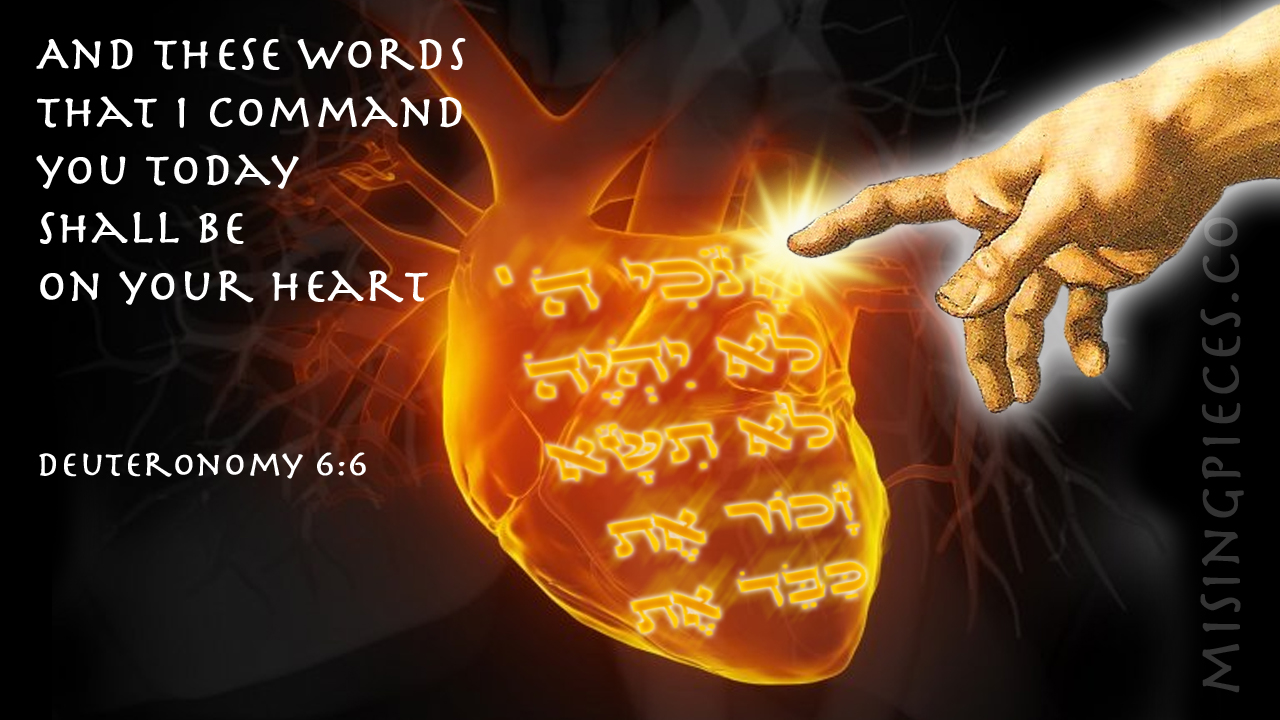
Finally, dear brothers and sisters, “You shall love the Lord your God with all your heart and with all your soul and with all your might. And these words that I command you today shall be on your heart. Deut 6:5-6