Category Archives: Peter’s blogs

Jesus is LORD [Yeshua is Yehovah]

Yeshua is YehovahSo that at the name of Jesus every knee will bow, of those who are in heaven and on earth and under the earth, and that every tongue will confess that Jesus Christ [Yeshua the Messiah] is Lord [YHVH], to the glory of God the Father. Phil 2:10-11

In previous postings on the Name of the sovereign God of the universe, YHVH [Yehovah], I talked about the importance of knowing and speaking His Name, as well as the sad history of the silencing of God’s Name for the past 2300 years. If you recall from those blogs, after the return from exile in Babylon, priests of the Second Temple era decided that God’s name was too holy to pronounce, and they banned the speaking of the Name among the common Jewish people (the priests still knew how to pronounce the Name).

In this blog, I continue this history up into the New Testament period and show how there was even further obfuscation of the Name leading up to the time of Yeshua’s first coming. The first translation of the Old Testament [Tanach] into Greek was the Septuagint, which was completed in 132 BCE. By this time, it was well established that the Name of YHVH was not to be written in any texts (even within Greco-Roman writings). Since the Jews had already been substituting Adonai (Lord) for YHVH, the Septuagint scribes continued the same tradition. When more modern English translators strove to come up with translations that were more faithful to the original Hebrew Tanach Scriptures, they reverted the references to God’s Name (as opposed to His holy title of Lord) back to “LORD”, leaving the other references as “Lord”. Thus, we have a clear way to distinguish God’s Name (YHVH) from his title (Lord) in the Old Testament Scriptures.

When the translators of the Greek New Testament translated the Greek into Latin and modern languages such as English, though, they could not distinguish between the references to the Name YHVH and Lord (as a title). Both words are written as Kurios in Greek. What we have in the New Testament, then, are many verses that are ambiguous as to which meaning is being expressed, God’s Name or His title. I want to focus here on the places in the New Testament where Yeshua is referred to as Lord. Many times this truly is a holy title given to our Messiah and Savior. However, there are quite a few places where Yeshua is being addressed by the Name of God Almighty, YHVH [Yehovah].

Some of the most obvious references to Yeshua as YHVH are quotes or paraphrases of Old Testament verses. The most vivid example of this is the Scripture quoted at the top of this blog, Philippians 2:10-11. Just before this passage (vv. 6-8), the author is saying that Yeshua did not take advantage of the fact that He was in His very nature part of the Godhead, but lowered Himself to be born as a human and then of His own will gave up His life to die on a cross. Then in Verse 9, Sha’ul says that Abba Father gave Him the Name that is above every name. Believers in Yeshua, having the English translations available to them for the New Testament, have always assumed that this Name above all names is Jesus [Yeshua]. However, remember that Yeshua was the name given to the Son of God when He was born on Earth as a human – this name represents His mission, since Yeshua means salvation or deliverance.

Here are a few other verses where it speaks of Yeshua as Lord (which should have been translated as LORD [YHVH]:

  • Rom 10:9-10: ..if you confess with your mouth that Jesus is Lord [YHVH] and believe in your heart that God raised him from the dead, you will be saved. For with the heart one believes and is justified, and with the mouth one confesses and is saved.
  • I Cor 12:3: and no one can say “Jesus is Lord [YHVH]” except in the Holy Spirit.
  • Matt 23:39: [Yeshua said to the people on “Palm Sunday”] – for I say to you, you shall see Me no more till you say, ‘Blessed is He who comes in the name of the Lord [YHVH]!’

Some of these verses include quotes or paraphrases from the Old Testament:

  • Phil 2:10-11 was patterned after Isa 45:3: That to Me every knee shall bow, every tongue shall confess. They shall say, ‘Surely in the Lord [YHVH] I have righteousness and strength.
  • Matt 23:39 was a direct quote from Psalm 118:26 (with LORD in all caps): Blessed is He who comes in the name of the Lord [YHVH]!

You’re probably asking yourself at this stage – so what is the point of all this? Here’s the bottom line – Jesus [Yeshua] was the Messiah’s name when He was on the Earth fulfilling prophecy as our Savior, but His eternal name is the same as the Father’s – YHVH or Yehovah! He is one of the three persons of the Godhead. He existed from the beginning and was there directing the Creation of the universe along with Abba and the Holy Spirit (John 1:3). To know Yehovah the Father is to know Yehovah the Son and Yehovah the Ruach HaKodesh – they are one [echad] in Spirit but different in character and roles.

[We usually address people by using formal titles (Mr, Mrs, Doctor, and so forth) when we don’t know them well, of if they are entitled to a higher level of respect. Only when we have established some degree of intimacy, do we begin calling people by their given names.] For example, if we are Yeshua’s servants, we would call Him Master; but we are His friends so we call Him by His name, Yehovah. If you want to draw even closer to our Creator, Redeemer, Miracle-Worker, and Lord, call on His Name and you will be able to speak to any or all of the holy and awesome persons of the Godhead who created and love us!

Trees of Righteousness

trees of righteousness,

Have you ever wondered how we as humans can be compared to trees? There are a number of places in Scripture where it speaks of people of us as trees (e.g. Ps 1:3, 92:12; Isa 61:3), or our actions as representing the attributes of trees. In Isaiah 61:3, the prophet says that when we are brought back out of grief and mourning into praise and joy, that we resemble trees of righteousness. Psalm 92:2 says that the righteous will flourish like palm trees, and Psalm 1:3 says that when a person delights in YHVH’s Word, then they shall be like a tree planted by the rivers of water…and whatever they do will prosper.

In Proverbs 15:4 YHVH says that our tongue is like a tree of life when we speak gentle words to people. Proverbs 3:18 states that when we embrace YHVH’s wisdom in our lives, we are blessed with happiness and YHVH’s wisdom is like a tree of life to us. In Proverbs 11:30, we learn that when we are walking a righteous path of life, the fruit of the Spirit is a “tree of life“, and we exhibit wisdom when we are winning souls into YHVH’s Kingdom.

What is it that is so significant about trees and that we are like them? Botany and anatomy show us that human skeletons are constructed similar to trees, where our backbone is the trunk that holds our bodies upright and allows us to walk and move about without discomfort or pain. Beyond this obvious physical comparison, though, Scripture says that when we are rooted and grounded in YHVH’s Word, we will be like trees planted firmly in the love of Messiah, with the promised blessing that we will “be filled with all the fullness of God” (Eph 3:17-19).

How do we become like trees of righteousness? After Adam and Eve [Chavah] were cast out of the Garden for their disobedience, angels were placed all around the Tree of Life so that they could not eat from it. It is no coincidence that Yeshua was crucified on a tree. Through His righteous atonement, He allowed us to be righteous and holy before Abba Father, just as we were told to be like trees of righteousness in Isaiah 61:3. When we believe and accept Yeshua’s precious gift, we become righteous like Him.

Yeshua’s atonement provides our new life in Him: “who Himself bore our sins in His own body on the tree, that we, having died to sins, might live for righteousness—by whose wounds you were healed” (1 Peter 2:24). The tree features prominently in the Gospel story, and Yeshua brings righteousness to us through His unswerving obedience to the Father and His willingness to give His life for those who hated and persecuted Him.

When Yeshua spoke to the congregations through John in Revelation 2, He told them that although they had been diligent in doing YHVH’s works, they had lost their first love (Himself). But then He promised that “the one who overcomes I will grant to eat of the tree of life, which is in the paradise of God” (Rev 2:7). Since the time of Adam and Chavah, people had been expelled from the Garden and from being able to eat of the Tree of Life, but in the Millennial Kingdom, the paradise of God will be re-established. Those who keep YHVH’s commandments will “have the right to the tree of life..” (Rev 2:14)

There will be a physical Tree of Life in YHVH’s future Kingdom, which will bear different fruit every month, and its leaves will be for the healing of the nations. However, we believe that Yeshua will be the ultimate Tree of Life who will dwell at the center of the true “paradise of God”. He is the Seed, Root, Trunk, Branches, and Fruit that come from heaven. The first Adam (in the Garden of Eden paradise) lost access to God because of his sin, but the last Adam reclaimed our access by means of His obedience, resisting the power of evil even to the point of death upon the tree (Phil 2:8). His resurrection life is the “firstfruits” of all who put their trust in Him; “For as in Adam all die, even so in Messiah Yeshua shall all be made alive” (I Cor 15:22). Those who have put their trust in Yeshua and continue to keep His commandments to the end will be made alive in Him and will spend eternity in Paradise with Him. Will you be one of those blessed people?

Is that a Bear, a Dipper, or a Sheepfold in the Sky?

one flock one shepherd

We spoke in a previous blog about the Gospel message written in the heavens. When Abba took Abraham outside and showed him the stars, He said “look towards heaven, and tell the stars, if you will be able to list them; and He said to him, ‘So shall your seed be’” (Gen 15:5). As a refresher, the word that is translated tell is actually the same word used for taking a census, and means that Abba not only counted the stars for Abraham, but He told him their names! Similarly in Psalm 147:4, David says of YHVH: “He counts the number of the stars; He calls them all by name”.

As we look out across the night sky, one of the most recognizable constellations is the Big Dipper (and its cousin the Little Dipper). These two constellations are in the Zodiac sign commonly referred to us as Cancer. However, it is very misleading to portray this sign as a crab, as the ancient Hebrew, Arabic, Syriac, Latin, and Greek names for this sign have similar meanings: “to bind together”, “holding” and “encircling”. There was no ancient Hebrew word for crab, as it would have just been included in the general category of unclean creatures not fit for eating. In the center of this sign is a very bright cluster of stars, whose ancient name was Praesepe, which means a multitude or offspring. The names of some of the brightest stars in Cancer have the meanings of: “sheltering”, “hiding place”, “assembled thousands”, and “lambs”. When we put all of these names together, we get a picture of this sign as the fold or sheltering place for a large multitude of lambs.

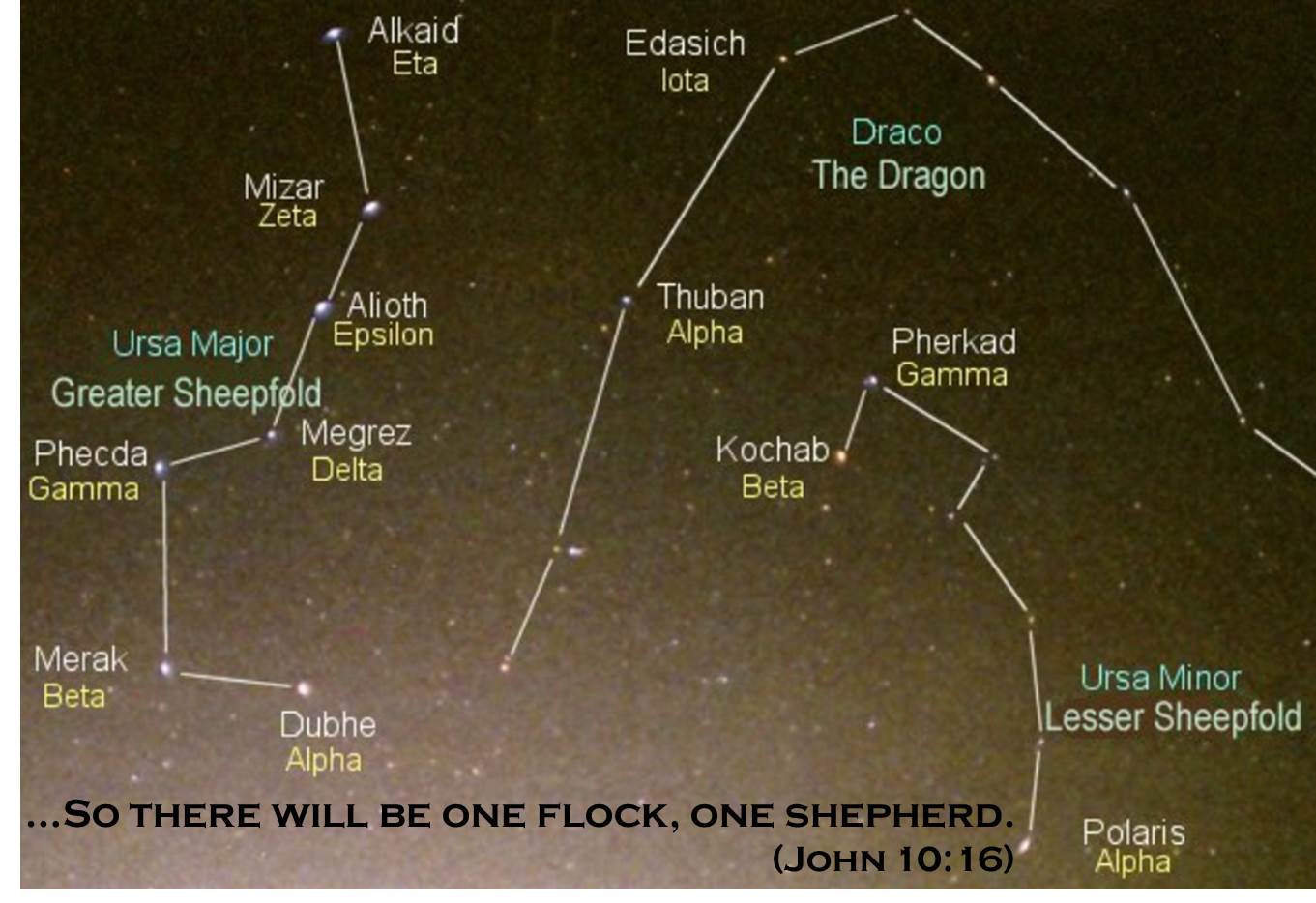
The first of the three constellations within this sign is the so-called “Little Dipper” or “Little Bear” (Ursa Minor). Once again we see many wide-ranging names, images and descriptions of this constellation. Most of the mistakes in interpreting Ursa Minor stem from the source of these names – all the modern-day names are based on the mythological foundation of the star-picture interpretations. All of these are based on pagan gods and were later inventions which began during the time of Nimrod following the great Flood. As we did with the sign of Cancer, we return to the ancient names for the constellations and the stars within them. In the companion constellation, the “Big Dipper”, the brightest star is named dohver in Hebrew, which means “fold” as in sheepfold. It is also translated as rest or security in the Scriptures, and in Judges 5:16 as sheepfolds. This tells us that both the Big Bear/Dipper and Little Bear/Dipper are actually representing sheepfolds! Part of the confusion may be between dohv and dohver in Hebrew (and also in Arabic): dohv means bear whereas dohver means fold.

The major stars in these two constellations, where ancient names have been preserved, help to confirm their meaning as the lesser and greater sheepfolds of the Messiah: “awaiting Him who comes”, “the redeemed assembly”, “the traveling company”, the “stronghold of the saved” and the “flock”. What is the distinction then between the lesser and greater sheepfold? The greater sheepfold (Ayish in Hebrew) is referred to in Job 9:9 and 38:31-32. It is generally translated as “the Bear with her cubs”. However, in other places in the Scriptures, Ayish is sometimes translated as “moth” or “butterfly”, which is in line with our sacrificed Redeemer, Yeshua the Messiah, whose body was transformed into a glorified body in His resurrection and ascension. We know from YHVH’s promises in His word that Yeshua will return to gather together His children. The remnant that He will gather will be his flock from both the lesser and greater sheepfolds.

Based on many ancient star-names, we believe that the lesser sheepfold will consist of the physical children of the tribes of Israel; not only the Jews but the remnant of all 12 tribes of Israel gathered from throughout the Earth. The greater sheepfold, then, will be the remainder of the multitude of people from the nations who believe and trust in Yeshua as their Messiah, Lord, Savior and Deliverer. Only YHVH knows which fold we are associated with, or whether we are part of His flock at all. I want to be part of this remnant flock. Whether I am from the lesser or greater sheepfold does not matter; Yeshua Himself said: “And I have other sheep that are not of this fold. I must bring them also, and they will listen to my voice. So there will be one flock, one shepherd”. (John 10:16) I pray that we as believers in Yeshua will all be part of His flock, and not worry about which fold we are gathered from.

Is Your Brain Wired for Worship?

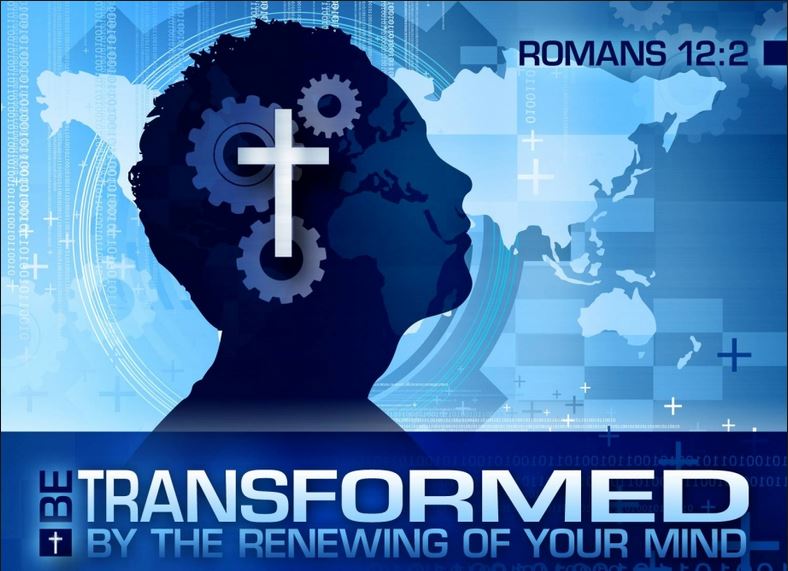
renewing of your mind“For God has not given us a spirit of fear, but of power and of love and of a sound mind.” (2 Timothy 1:7).

The part of this Scripture I want to focus on today is that God has given us a sound mind. He is not a God who wants us to suffer in mind or body, so He has created us with the tools to repair ourselves. It is well-known that certain types of creatures can regenerate parts of their bodies when they are wounded: deer grow new antlers, lizards grow new legs and tails, starfish grow new arms, and worms can grow entire new bodies. While it is true that humans cannot grow new arms or legs (except by the miraculous power of the Holy Spirit), we can regenerate our minds. Let me explain what I mean.

Believers in Yeshua understand the concept of renewing our minds (Rom 12:2) but that seems like a fairly obscure process to most of us, and it is hard to explain to someone how they can go about renewing their minds so they can line up with YHVH’s perfect will. However, when we look at the deeper meaning of the Hebrew word for renewal in this verse (hitchadshut), we see that it actually means regeneration, which is the same word used to describe creatures that grow new body parts. Over the last 30 years, brain research has greatly increased our understanding of how the brain functions physically, but it has also helped scientists’ understanding of the forces outside the physical brain (referred to as quantum mechanics) that trigger the conscious thought processes within the brain.

From a spiritual and Biblical perspective, we would call these external forces the mind or soul, as the mind is what enables our thoughts to be world-centered, self-centered or God-centered. The mind/soul encompasses the intellect, free will, and emotions. From God’s word, we know that we have power over our mind, to be able to renew it to be more God-centered, or to take our thoughts captive to the obedience of Messiah Yeshua (2 Cor 10:5). New scientific findings indicate that when we are actively thinking in our minds, we are actually changing our DNA, switching genes on and off, and causing cells to function differently. These actions do not happen merely by physical functions of the brain – they must be enabled by the mind, or conscious thought processes (see Dr. Caroline Leaf’s “Switch on Your Brain” study for more details on this research: https://drleaf.com/store/switch-on-your-brain/).

Psychologists and therapists have known for many years that the way we think affects our mental, physical, and emotional health. You may be familiar with a famous teaching about the power of our thoughts: “The Power of Positive Thinking” by Dr. Norman Vincent Peale. James 1:21 tells us (paraphrased) that if we lay aside all sinfulness in our lives and embrace God’s implanted word, this will “…save our souls”. Once again, though, we have a concept for renewing our souls which is easy to discuss but hard to implement in our lives.

So how do we go about regenerating our minds to bring healing and wholeness to our bodies and souls? The Holy Spirit is our helper and healer and leads us into all of YHVH’s truth and wisdom. So how do we tap into the Holy Spirit’s healing and restoring power?   We can only learn the Holy Spirit’s wisdom and truth and experience His healing power if we spend time with Him!   It says in James 1:27 that true worship is keeping yourself unspotted by the world. In order to resist the wiles of the devil and the temptations of the world, we must separate ourselves from the world – Isa 52:11 and II Cor 6:17-18: “Therefore go out from their midst, and be separate from them, says the LORD [YHVH], and touch no unclean thing; then I will welcome you, and I will be a father to you…”.

We understand from these Scriptures and others that true worship means setting yourself apart from the world and spending time with the Holy Spirit, praying and meditating on YHVH’s word. You do not have to be in a corporate sanctuary to “do worship”, and you do not have to be alone in your closet. You can be worshipping everywhere you go. What we really need to do is to renew our minds so that we live in a constant state of worship, meaning that we keep YHVH’s presence with us wherever we are, listening to His guidance and constantly interacting with Him through internal dialogue. This will keep our minds stayed on Him, because we are trusting in Him (Isa 26:3). And when we keep our minds focused on Him, then we will be sending positive impulses into all the organs and cells of our body, healing us of all infirmities, anxieties and fears (2 Timothy 1:7).

Our Strength in Battle

be strong

“…Be strong and of good courage; do not be afraid, nor be dismayed, for the Lord your God is with you wherever you go.” (Joshua 1:9)

This verse from Joshua along with Deuteronomy 20:1-4 are well-known battle verses, meant to encourage troops before they head off into conflict. However, what about the daily battles we face, which are not usually against flesh and blood but rather against spiritual enemies and people who are influenced by spiritual forces (demons) from the kingdom of darkness?

Psalm 144:1 contains an even stronger verse relating to preparation for battle: – “Blessed be the Lord [YHVH] my Rock, who trains my hands for war and my fingers for battle—“. When we look further down in this passage, though, we see that David is talking about spiritual warfare as much as physical combat. In Verses 7-8 he says: “Rescue me and deliver me out of great waters, from the hand of foreigners, whose mouth speaks lying words, and whose right hand is a right hand of falsehood.” We see from these verses that David is not getting training in face-to-face physical combat techniques so much as he is learning to trust YHVH his Rock in all situations, knowing that Yehovah will be fighting alongside him and rescuing him from the enemy’s attacks.

Where then do David and other warriors get their courage and strength? Looking back at the Joshua 1 passage once again, we see that Joshua is told to be strong and courageous, but not because of his own prowess or battle-worn experience. He is told that Yehovah will be with him in the battles, and because of that he does not need to fear. In 2 Chronicles 32:7-8 King Hezekiah says: “Be strong and courageous; do not be afraid nor dismayed before the king of Assyria, nor before all the multitude that is with him; for there are more with us than with him. With him is an arm of flesh; but with us is the Lord [YHVH] our God, to help us and to fight our battles…” Verse 8 clearly states that their army is greater than the army of Assyria, but not because of physical numbers. Rather, their strength and numbers are bolstered by having God Himself with them. In fact, God is not only with them, but He is fighting the battles for them!

If we need YHVH to be with us when we fight the physical and spiritual battles of life, then how do we ensure that YHVH is with us? The answer is in a single word, trust. It sounds simple, but it requires us to trust YHVH with our life, which is not simple. We learn this deep level of trust day-by-day by experiencing YHVH’s Hand of victory throughout the trials and conflicts of our lives. One of the clearest testimonies to trusting YHVH is in 2 Chronicles 14:11 when Asa cried out to YHVH and said, “LORD [YHVH], it is nothing for You to help, whether with many or with those who have no power; help us, O LORD our God, for we rest on You, and in Your name we go against this multitude. O LORD, You are our God; do not let people prevail against You!”

Another example of this type of unquestioning trust is in Exodus 33:15-16 when Moses says to YHVH: “If Your Presence does not go with us, do not bring us up from here. For how then will it be known that Your people and I have found grace in Your sight, except You go with us?” In this statement to YHVH, Moses is saying that he knows they will not be successful if YHVH does not go with them, and the Israelites will not have the testimony that they cannot succeed without YHVH.

So, where did these leaders find the strength to go out before their enemies, knowing their armies were physically inferior and that they did not have the courage and strength in themselves to be victorious? They found their strength in YHVH. There are many verses in the Torah, Psalms and Prophets that talk about people putting all their trust in YHVH’s strength. In fact they say that YHVH is their strength (Ex 15:2, Ps 18:2; 19:4; 118:14, Isa 12:2, etc.). I believe David sums this up in Psalm 27:1: “…The LORD [YHVH] is the strength of my life; of whom shall I be afraid?” (Ps 27:1) Even Sh’aul came to this conclusion in all his struggles when YHVH said to him: “…‘My grace is sufficient for you, for My strength is made perfect in [your] weakness’.” (2 Cor 12:9)

I aspire to have this kind of trust, where I have no anxiety or fear when I am going through the severe trials of life; only believing that YHVH will get me through those trials and that He will give me the victory over whatever enemy I am facing, whether physical, emotional or spiritual. My desire is that you will also learn to have this type of unwavering trust in YHVH, the Creator of the universe, and in His Son, Yeshua our Redeemer.

Fasting from Your Heart

fasting and praying on knees

“Is this not the fast that I have chosen: to loose the bonds of wickedness, to undo the heavy burdens, to let the oppressed go free, and that you break every yoke? Is it not to share your bread with the hungry, and that you bring to your house the poor who are cast out; when you see the naked, that you cover them…”  Isaiah 58:6-7

In Isaiah 58, YHVH tells His people Israel that they are not to be hypocrites when they fast, going through the motions with their head and body but not their heart (Isa 58:3-5, Jer 14:12, etc.). In Isaiah 58:6, He is talking about repenting for exploiting their workers. He tells them to turn back to Him and make a genuine change in their lives, showing compassion to others. In verse 7, Yehovah gets more specific when He describes the nature of a truly sincere fast, which would cause the people to exhibit the fruit of the Spirit in their actions, such as taking care of the poor and hungry, and clothing the naked.

To me, this is one of the most beautiful passages in all of Scripture, as YHVH is pointing out to His people how they have fallen short (as we all have in our lives), telling them they need to repent, guiding them (and us) as to what they should be doing, and then promising them wonderful blessings if they will follow His instructions (Isa 58:8-11).

Many Scriptures talk about the positive results of fasting sincerely from your heart:

  • In Joel 2:12, YHVH tells the people to turn to Him with their whole heart, with fasting and weeping; He goes on to say that they are to rend their heart and not their garments, and then Joel says that YHVH is gracious and merciful and will bless them for turning back to Him (Joel 2:13-14). This is similar to what He says through Jeremiah when He tells His people to circumcise their hearts and turn back to Him (also see Deut 10:16 and 30:6).
  • Yeshua adds meaning to these words when He tells people that they need to fast inwardly (in secret) and not outwardly (walking around in sackcloth and showing everyone how they are being so righteous with their fasting). As in Isaiah and other Scriptures, He also says that Abba Father will reward them openly when they fast secretly (Matt 6:16-18).
  • When King Darius had to throw Daniel into the lion’s den because he had broken the decree that no one was to worship a different god than the official god of their kingdom, Darius stayed up all night fasting. When he came down to check on Daniel in the morning, he found him alive and well. What really fascinates me about Darius is that he called Daniel the “servant of the living God” even before he knew that he had been saved from the lions (Daniel 6:18-23). This tells me that Darius was sincerely fasting from his heart and that he was praying to the true living God and not one of his false gods. It is also apparent from this passage that Darius was moved with compassion, which inspired his fasting.

What do these Scriptures teach us about our heart attitude when we are fasting and praying? If we are fasting because we think it makes us a better Christian, or we think it’s the right thing to do to get God to answer our prayers, or we are simply following Abba’s instructions to fast but our heart is not in it, what are we accomplishing? We are only fasting outwardly to convince others (or ourselves) that we are righteous people who are following God’s will. We need to look into our hearts and find out what our true motives are when we fast or pray.

Are we truly seeking to draw closer to YHVH and to be pleasing to Him? If that is true, then the fruit of the Spirit should be evident in our lives, starting with our love and compassion for others.

Look again at Isaiah 58 and ask these questions of yourself: are you helping to undo the heavy burdens of others; are you sharing your bread with the hungry and bringing to your house the poor who are cast out; are you clothing the naked and taking care of the widows and fatherless? If you are, then Yehovah will reward you openly: your light shall break forth like the morning, your healing shall spring forth speedily…Then you shall call, and YHVH will answer; you shall cry, and He will say, ‘Here I am.’ Isaiah 58:6-9

When Yeshua Returns

when Yeshua returns

Is it Rosh Hashanah or Yom Teruah?  What is the meaning of blood moons?  Is this the beginning of the Jubilee of Jubilees? There are currently numerous arguments and speculations concerning the fall feasts and current events.  As we reviewed the Scriptures (Lev 23:23-25, 25:8, Num 29:1) on keeping the feast of Yom Teruah, we began asking questions during our praise and worship time with YHVH.

The Bible indicates that this fall feast is provided so that we may rehearse the sounding of the trumpets as a warning to look inwardly to ensure that we know and are keeping YHVH’s commandments (Neh 8:2-6).  Yom Teruah is not the beginning of another year, but it may signal a new beginning yet to come, the release of all the inhabitants of the land (Lev 25:8-10).  Scripture teaches us that every seven years (smitah) the land must be rested and anyone in the tribes of Israel was to be released from indentured servitude.  Every fifty years is a jubilee (juval) when all debts are forgiven and everything in Israel is restored and every person in Israel is released.  Any land sold to another tribe is to revert back to the original tribe.  All people in Israel are to be set free (Lev. 25:10).  According to the reckoning of others, the next Jubilee will be the 70th Jubilee. Since years were lost during the Babylonian exile, how do we determine which is the correct year to celebrate it?  How will we know?

As we reviewed the Scriptures on Yom Teruah, the shmitah and Jubilee, we began asking questions about how to correctly celebrate the appointed times and how to best understand current events.  We believe that the Holy Spirit provided the following explanation.  Yeshua will return amid the blowing of trumpets and shofars on the Yom Teruah before we are to celebrate the Jubilee of Jubilees (70th Jubilee).  It is Messiah Himself Who will announce release to all the inhabitants not only of Israel, but all the earth.  The King of Kings will judge His enemies and provide covering for His sheep on Yom Kippur.  Our spiritual enemies will be confined for 1,000 years and we will be released from their torment.  There will be joyous celebration and Yeshua will celebrate with us!  We will then know it is time to blow the shofar on Yom Kippur to indicate the Jubilee of Jubilees.  The first time Yeshua came was to provide atonement and a way for us to be released from slavery to the enemy (salvation and deliverance).  The second time, Yeshua will take captive our enemies, both human and spiritual, and remove them from our presence.

We know from Scripture that Yeshua will return to a desolated world (Matt 24:29).  We also know from Scripture that Israel is not to plant or harvest during a shmitah or Jubilee year.  So, if there is much destruction in the land, how will people eat?  Scripture tells us that Israel’s former enemies and oppressors will come bearing many gifts (Is 60:11).  We believe these will be mainly people from the enemy nations who were not personally guilty of oppression against Israel.  We believe the remnants of the enemy nations will be eager to reconcile with Yeshua and with Israel.  Just as the Israelites took possession of Canaan and enjoyed the products of others’ labors, the inhabitants of Israel will now have the products of their enemies’ labors delivered to their doorstep (Is 60:5).

It is useless for us to try to mesh current events and Scriptural prophecy to fit into our own time frame as many people are doing now.  The one thing we know for sure is that YHVH is in control and will do all that He has promised in His own way and in His own time.  It is not our job to predict or even speculate how everything will play out.  It is our job to be working in the harvest and doing our individual assignments from YHVH.  Then, when Yeshua returns, He will find the faithful servants He expects to find (Matt 24:45-51).  What will you be doing when Yeshua returns?

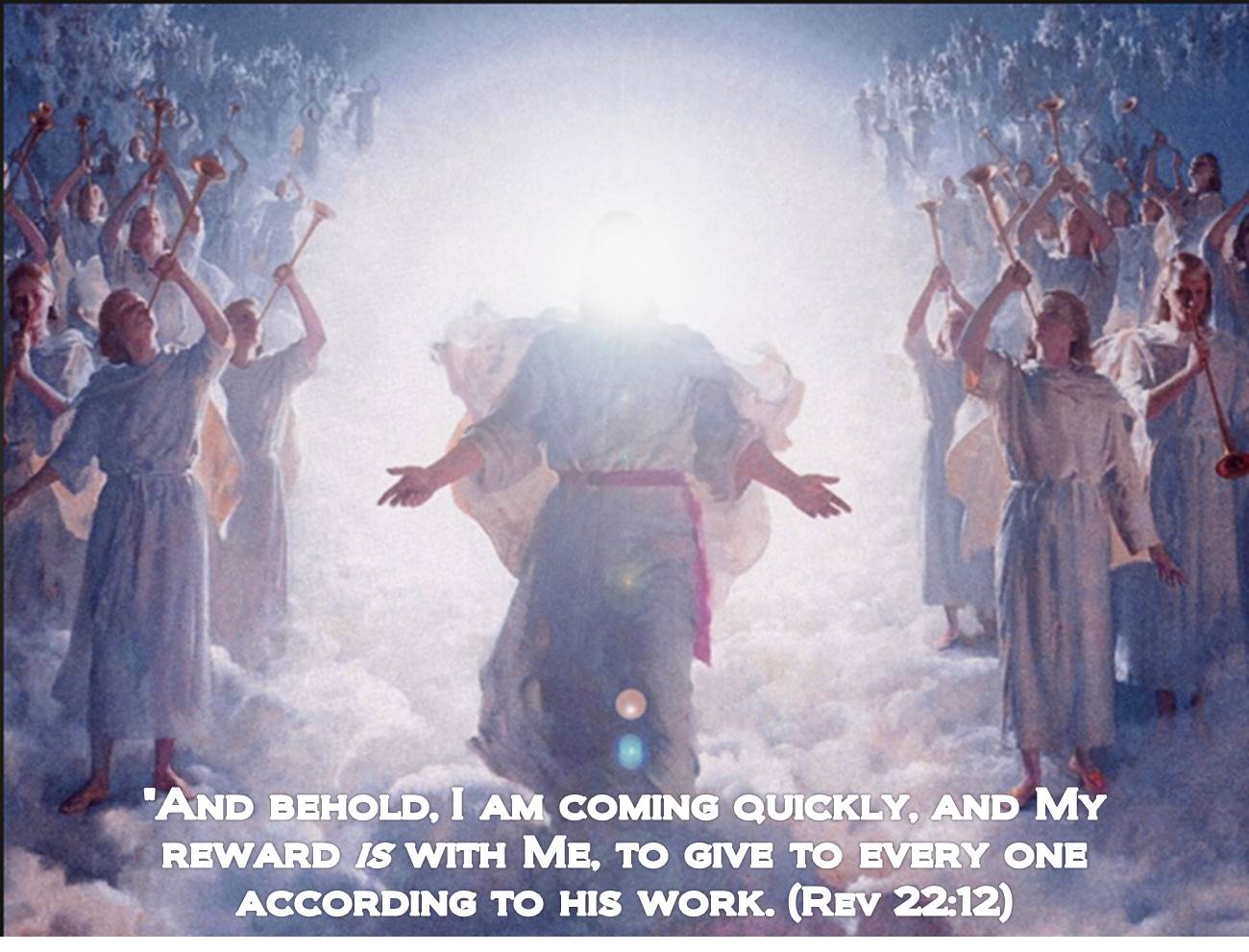
“And behold, I am coming quickly, and My reward is with Me, to give to every one according to his work.  I am the [alef] and the [tav}, the Beginning and the End, the First and the Last.”

 Blessed are those who do [téreó, meaning to keep, guard or observe] His commandments [entolé],  that they may have the right to the tree of life, and may enter through the gates into the city (Rev 22:12-14).

Where do we look on Yom Teruah?

blowing of trumpets

Then the sign of the Son of Man will appear in the sky: all the tribes of the Land will mourn, and they will see the Son of Man coming on the clouds of heaven with tremendous power and glory. He [Messiah] will send out His angels with a great trumpet [shofar] blast; and they will gather together His chosen people from the four winds, from one end of heaven to the other.

Yeshua tells us in Matthew 24:30-31 (CJB) that in the last days, He [Messiah] will sound a great shofar, and send out His angels to gather His Body from all the ends of the Earth. YHVH has provided the Feast of Trumpets [Yom Teruah] as a rehearsal to help us prepare for this great End Times event.

When you see phrases like the “blowing of the trumpets” or “loud shouting”, these are translated from the same Hebrew word, Teruah, which simply means a loud noise. One of my favorite uses of this word in Scripture relates to the moving of the Ark of the Covenant in II Samuel 6:15: “So David and all the house of Israel brought up the ark of YHVH with shouting and with the sound of the trumpet [shofar]”. This same event was described in I Chronicles 15:28: “So all Israel brought up the ark of the covenant of YHVH with shouting, to the sound of the ram’s horn [shofar], trumpets, and cymbals, and made loud music on harps and lyres.” In both descriptions, you see the combination of loud shouting and the blowing of the Shofar, which both come from the word Teruah. An occasion like the moving of the Ark elicited many loud sounds from the people in the procession, both from instruments and with their voices raised in praise to Yehovah.

There are many other passages in Scripture that tell us how the Shofar is used: as a wake-up call to turn people back to YHVH (Jer 6:17, Eze 33:3-6), a call to battle (Isa 18:3, Jer 4:19, Josh 6, Judges 7), or the announcement of an appointed time with Yehovah (Ex 19:16-19, Lev 23:23-25, Num 29:1). These last two verses refer to the blowing of the Shofar and “loud shouting” on the Feast of Yom Teruah, or the Day of the Blowing of Trumpets.

Going back to the original Hebrew, a better translation of Numbers 29:1 would be: “On the first day of the seventh month you shall have a holy rehearsal. You shall not do any ordinary work. It is a day for you to blow the trumpets”. Leviticus 23:24 could also be more accurately translated as: “Speak to the people of Israel, saying, In the seventh month, on the first day of the month, you shall observe a day of solemn rest, a memorial proclaimed with the blast of trumpets, a holy rehearsal”. Why would this and other Fall Feasts be described as rehearsals? Most likely because the Fall Feasts have not yet been fulfilled. Putting all these Scriptures together, it seems clear that Yom Teruah will find its ultimate fulfillment in the “great shofar blast” described in Isaiah 27:13 (and quoted by Yeshua in Matthew 24:31): “And in that day a great trumpet [shofar] will be blown, and those who were lost in the land of Assyria and those who were driven out to the land of Egypt will come and worship YHVH on the holy mountain at Jerusalem”.

So, what does all this mean to us as the Body of Messiah? No matter whether or not end times prophecy is fulfilled this year and this is indeed the Great Shofar blast that signals the return of Yeshua to reign on the Earth, the blowing of the Shofar on Yom Teruah is nevertheless very significant for believers. Yom Teruah is always meant to be a special time of awakening for our souls and repentance for our hearts so that we are prepared to be received by Yeshua as the Bride of Messiah when He returns. So on this Yom Teruah, we need to look at our inner selves and take stock of how we are doing at lining up our souls with our born-again spirits (Rom 12:2). I know I have areas that need work based on my report card – how about you?

Witnessing in Love

the truth in love“Though I speak with the tongues of men and of angels, but have not love, I have become sounding brass or a clanging cymbal. And though I have the gift of prophecy, and understand all mysteries and all knowledge, and though I have all faith, so that I could remove mountains, but have not love, I am nothing. And though I bestow all my goods to feed the poor, and though I give my body to be burned, but have not love, it profits me nothing.” I Corinthians 13:1-3

In a recent blog series, I had spoken about Standing Fast to your Convictions, but at the same time remembering to Speak the Truth in Love (Ephesians 4:15) when you are discipling or confronting someone with the truth of YHVH’s word. This week I want to give you a real-life example of this which is etched into my heart right now due to the passing of my only brother.

Over the 27+ years since I have been a born-again believer in Yeshua, I have witnessed to people within my circle of friends and family, as well as casual acquaintances and strangers. However, the two people I witnessed to most fervently over those years were my father (deceased in 2001) and my brother, who passed on earlier this week. As I felt a special burden from the Holy Spirit to witness to these two significant people in my life, I tried a number of different approaches to spiritual seed-planting, attempting to tear down the intellectual and emotional barriers that kept those seeds from taking root and bearing fruit.

Many of my approaches did not bear fruit, because I was trying to prove the truth of the Scriptures and the existence of a Creator God through intellectual debate, which only spoke to their minds and not their hearts. I was far more effective when I stopped trying to “win the argument” with them, and started giving them my personal testimony of how God changed my life and brought meaning and purpose to my brief existence on this earth. This brought our conversations down to a heart level, and even though they still were not ready to accept all the truths I shared with them, they no longer felt threatened that I was trying to change them or prove them wrong.

While I do not recommend experimenting on your family members with different witnessing techniques, we do need to always remember to speak the truth in love and let our words be seasoned with the salt of grace. Once you learn to keep the focus on your own personal spiritual journey and your relationship with Abba Father and His Son, Yeshua, then you have a greater opportunity to break through all the barriers that inhibit people from receiving the truth. With this approach, the people you are witnessing to feel less threatened and are more receptive to your message, since you are just sharing from your own personal experience.

I will not tell you the specific results of years of witnessing to my father and my brother, but I will say that our spiritual conversations brought us closer together in our own relationships with each other. One great benefit of sharing your personal testimony is that people feel closer to you as you share with them in confidence and they get to know you on a deeper and more intimate level. Although I lived 3000 miles away from my brother and did not get to see him face-to-face more than once every few years, I felt very close to him in spirit and soul in spite of the miles separating us. I feel a great empty space in my soul now that he has left his earthly home, but I also feel great assurance that he is with Abba in heaven and is experiencing joy and Shalom as he never could in the limitations of his physical body.

The central mission of our ministry is to help believers stand firm to their convictions and hold fast to their faith under persecution, equipping them to become the overcomers they always wanted to be – and that the Scriptures promise them they can be. We want you to become all that you can in YHVH’s kingdom, and overcome your fears and self-consciousness so that you can share Yehovah’s love with as many people as possible before you depart this planet.

They Shall Know that I Am Yehovah

they shall know that I am YHVH

So I will make My holy name known in the midst of My people Israel, and I will not let them profane My holy name anymore. Then the nations shall know that I am YHVH, the Holy One of Israel.” Eze 39:7

In my previous postings on the Name of the Creator and sovereign God of the universe, Yehovah, I talked about the importance of knowing and speaking His Name, as well as the sad history of the silencing of God’s Name for the past 2300 years (see There is Power in the Name). If you recall from that blog, after the return from exile in Babylon, priests of the Second Temple era decided that God’s name was too holy to pronounce, and they banned the speaking of the Name among the Jewish population in general and even within the Temple. In this blog, I wanted to present some encouraging words to believers who feel discouraged and helpless, knowing that the Name of Yehovah is known by so few of God’s people, and even a smaller number of people across the Globe.

We know from Scripture that Yehovah wants His name to be known throughout the Earth, by Jews and non-Jews alike (see Ps 91:14, Isa 52:6, Jer 16:21, Eze 12:15; 22:16; 30:26; 36:23; 39:7; Amos 5:8, John 17:6). We also see clearly in Scripture that YHVH wants everyone to speak His name (Gen 12:8; 26:25, Isa 44:5; 54:5, Jer 10:25). While it is true that most people on earth (believers and non-believers alike) do not know what to call YHVH, we have heard recently about how Yehovah is starting to reveal His name to His people in diverse places. We have experienced this especially among non-Jews who are keeping the Biblical feasts and celebrating YHVH’s Sabbaths.

I recently saw a very interesting example of the unveiling of YHVH’s name in a newsletter that comes out Israel on a daily basis. It is called Jerusalem365 and each article is a combination of a Scripture verse (in English, Hebrew, and transliterated Hebrew), and a photo and story of something happening in Jerusalem that relates to the verse (you can subscribe to the newsletter at the Israel365 site: Israel365 Subscribe). The photographers and authors of the articles are all Israeli Jews, many of whom have made aliyah to Israel (meaning they have emigrated there from other countries).

Here’s the thing that fascinated me about some of their articles: whenever the verse contained YHVH’s Name (“The LORD” in English translations), the Hebrew lettering included the vowels and spelled out YHVH so that it would be pronounced as Yehovah. To be more accurate, YHVH was actually spelled out two different ways in various articles: sometimes it was spelled out exactly as Yehovah, and other times they used a common technique of obscuring the exact Name of God (they reversed the first and last letters).

          Here are the two different forms of YHVH [Yehovah] written in Hebrew:The Name There are several amazing things about the Hebrew Name of God being spelled out fully in these articles:

  1. Because of the ban on speaking or writing the fully pronounceable Name of God, Jewish people would be required to spell God’s Name as HaShem (simply “The Name”), Adonai (Lord as a title for God), or one of the abbreviations used for YHVH in the Torah and other ancient Jewish writings.
  2. When the Hebrew was transliterated into English, it was written as Adonai, which would be acceptable to Rabbis and Orthodox Jews.
  3. The Name in the English text is written as “The LORD”, which is the standard translation found in most English Bibles.

The key point here is that God’s true Name, which Jews refer to as the unpronounceable Name of God, is being revealed to individuals in Israel, and is now being communicated out to thousands of people around the world. While it is true that most Christians and many non-Orthodox Jews would not be able to read the Hebrew or understand the significance if they could read it, YHVH is nevertheless revealing His Name to Israel and the Nations as He said He would (Eze 39:7).

In the greatest prayer that Yeshua prayed, He first said that He had glorified the Father by finishing the work that Abba had given Him to do. (John 17:4) And what work had He completed? In Verse 6, Yeshua says that He made YHVH’s Name known to the disciples that Abba gave Him “out of the world”. From this verse we can see that one of Yeshua’s primary missions was to make known the person, character and true Name of YHVH, so that He could glorify God the Father on earth. [Remember that even in Yeshua’s time there was a ban on speaking the Name of God]. Verse 5 says that after Yeshua’s work was done on Earth, then Abba would glorify His Son by bringing Him back to heaven to be with Him again.

So what does all this mean to us as followers of the Way? If Yeshua made Abba Father known to us by revealing His true Name, then I do not want to waste Yeshua’s hard-earned fruit produced while He was here on the Earth. I hope you will also want to know YHVH’s true Name and that you will want to speak it in your praise and prayers to AbbaYehovah wants His name to be known, spoken, praised, feared, and glorified throughout the Earth!