Is Your Brain Wired for Worship?

renewing of your mind“For God has not given us a spirit of fear, but of power and of love and of a sound mind.” (2 Timothy 1:7).

The part of this Scripture I want to focus on today is that God has given us a sound mind. He is not a God who wants us to suffer in mind or body, so He has created us with the tools to repair ourselves. It is well-known that certain types of creatures can regenerate parts of their bodies when they are wounded: deer grow new antlers, lizards grow new legs and tails, starfish grow new arms, and worms can grow entire new bodies. While it is true that humans cannot grow new arms or legs (except by the miraculous power of the Holy Spirit), we can regenerate our minds. Let me explain what I mean.

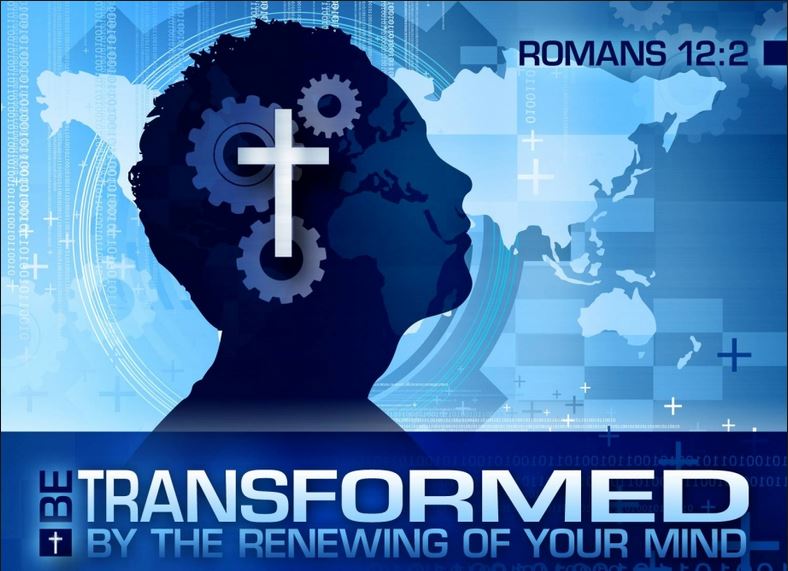
Believers in Yeshua understand the concept of renewing our minds (Rom 12:2) but that seems like a fairly obscure process to most of us, and it is hard to explain to someone how they can go about renewing their minds so they can line up with YHVH’s perfect will. However, when we look at the deeper meaning of the Hebrew word for renewal in this verse (hitchadshut), we see that it actually means regeneration, which is the same word used to describe creatures that grow new body parts. Over the last 30 years, brain research has greatly increased our understanding of how the brain functions physically, but it has also helped scientists’ understanding of the forces outside the physical brain (referred to as quantum mechanics) that trigger the conscious thought processes within the brain.

From a spiritual and Biblical perspective, we would call these external forces the mind or soul, as the mind is what enables our thoughts to be world-centered, self-centered or God-centered. The mind/soul encompasses the intellect, free will, and emotions. From God’s word, we know that we have power over our mind, to be able to renew it to be more God-centered, or to take our thoughts captive to the obedience of Messiah Yeshua (2 Cor 10:5). New scientific findings indicate that when we are actively thinking in our minds, we are actually changing our DNA, switching genes on and off, and causing cells to function differently. These actions do not happen merely by physical functions of the brain – they must be enabled by the mind, or conscious thought processes (see Dr. Caroline Leaf’s “Switch on Your Brain” study for more details on this research: https://drleaf.com/store/switch-on-your-brain/).

Psychologists and therapists have known for many years that the way we think affects our mental, physical, and emotional health. You may be familiar with a famous teaching about the power of our thoughts: “The Power of Positive Thinking” by Dr. Norman Vincent Peale. James 1:21 tells us (paraphrased) that if we lay aside all sinfulness in our lives and embrace God’s implanted word, this will “…save our souls”. Once again, though, we have a concept for renewing our souls which is easy to discuss but hard to implement in our lives.

So how do we go about regenerating our minds to bring healing and wholeness to our bodies and souls? The Holy Spirit is our helper and healer and leads us into all of YHVH’s truth and wisdom. So how do we tap into the Holy Spirit’s healing and restoring power?   We can only learn the Holy Spirit’s wisdom and truth and experience His healing power if we spend time with Him!   It says in James 1:27 that true worship is keeping yourself unspotted by the world. In order to resist the wiles of the devil and the temptations of the world, we must separate ourselves from the world – Isa 52:11 and II Cor 6:17-18: “Therefore go out from their midst, and be separate from them, says the LORD [YHVH], and touch no unclean thing; then I will welcome you, and I will be a father to you…”.

We understand from these Scriptures and others that true worship means setting yourself apart from the world and spending time with the Holy Spirit, praying and meditating on YHVH’s word. You do not have to be in a corporate sanctuary to “do worship”, and you do not have to be alone in your closet. You can be worshipping everywhere you go. What we really need to do is to renew our minds so that we live in a constant state of worship, meaning that we keep YHVH’s presence with us wherever we are, listening to His guidance and constantly interacting with Him through internal dialogue. This will keep our minds stayed on Him, because we are trusting in Him (Isa 26:3). And when we keep our minds focused on Him, then we will be sending positive impulses into all the organs and cells of our body, healing us of all infirmities, anxieties and fears (2 Timothy 1:7).

Heart to Heart

that they may be one

There are many reasons why YHVH established Shabbat and the Feasts.  These are His set-apart times for teaching us, preparing us, celebrating with us, and bringing order to His Kingdom.  The end result is that YHVH desires is to be intimate with us individually and corporately.  One of my favorite verses in Scripture is from Deuteronomy 30:19 and the first part of verse 20, in the Complete Jewish Bible translation..

I call on heaven and earth to witness against you today that I have presented you with life and death, the blessing and the curse. Therefore, choose life, so that you will live, you and your descendants, loving [YHVH] your God, paying attention to what he says and clinging to him – for that is the purpose of your life!

Shabbats are very important to YHVH and, whether or not we know it, they are important to us.  The 23rd chapter of Leviticus designates clearly all the days that are Shabbats, whether weekly or during the Feasts.  Later in Leviticus, YHVH points out the consequences for working during a Shabbat.

For six days work is to be done, but the seventh day is a day of sabbath rest, holy to the LORD. Whoever does any work on the Sabbath day is to be put to death (Lev. 31:15).

The consequences for disobedience are harsh and hardly seem an invitation for intimacy, but it is most likely a necessary starting place. In the Exodus account of the Israelites in Egypt, we see a people that are unruly and often wayward. They had been immersed in idolatry and enslaved to cruel taskmasters.   To win their trust, YHVH demonstrated through signs and wonders that He is to be both feared and respected and also that He is able to protect and provide for His people. YHVH was formidable to their enemies, while protecting and providing for the Israelites..

When they were in the wilderness, YHVH gave them new commands and imposed strict consequences for disobedience, so that He would be taken seriously. Despite all the signs and wonders people still complained that He wouldn’t provide for them and tried to return to their idols. There was at least one person who ignored YHVH’s commands concerning Shabbat. YHVH had to follow through with the consequences He had established and the man was put to death (Num 15:30-36).  Were such harsh consequences necessary?

As a former teacher, I quickly learned that at the beginning of a new school year, teachers must be stricter than normal. The more unruly the students the more critical it becomes to establish authority and order. Once the students are settled, a proper atmosphere is established where students can learn and a healthy relationship with the teacher can be fostered.  If teachers are extra strict at the start, the focus can more quickly shift from the rules to learning.

Once each of us comprehends that YHVH is sovereign and is to be obeyed, then we are in a position to learn what He has to teach us. As we progress with our learning and interact more with YHVH, we grow closer to our sovereign King. Over time, we set aside our old ways and take on His ways. We experience His concern for our hearts. Eventually, we are ready to hear what is on His heart.

We make the transition from obeying the “no work” command simply because it is a command to refraining from work because we are eager to spend time with our Teacher.  We value what is important to YHVH.  Sometimes it is necessary to do His work even on ShabbatYeshua demonstrated this when He healed on Shabbat.  He was showing us that the purpose of Shabbat is to be in tune with our Father’s heart. It is not to become fascinated with rules and regulations.

Even as we grow closer to YHVH, we must be mindful that we are dealing with our Creator and our Sovereign. We are not to take His words lightly or take Him for granted. We must maintain a balance between healthy respect and intimacy with YHVH. Otherwise, we will find ourselves slipping from following His heart on Shabbat to following our own concerns. If that happens, our relationship with YHVH will quickly deteriorate as we move away from Him.

Yeshua spent time on Shabbat teaching, being taught, and healing. He was closely aligned with Abba’s heart and could easily transition to whatever His Father desired for Him to do at any given moment. Such intimacy is our Father’s desire for us and the reason He created us.

If we keep in mind the real purpose for our existence, we will remain focused on our Father’s heart and not fall into legalistic traps.  We will reap all the rewards that YHVH intends for us.

Our Strength in Battle

be strong

“…Be strong and of good courage; do not be afraid, nor be dismayed, for the Lord your God is with you wherever you go.” (Joshua 1:9)

This verse from Joshua along with Deuteronomy 20:1-4 are well-known battle verses, meant to encourage troops before they head off into conflict. However, what about the daily battles we face, which are not usually against flesh and blood but rather against spiritual enemies and people who are influenced by spiritual forces (demons) from the kingdom of darkness?

Psalm 144:1 contains an even stronger verse relating to preparation for battle: – “Blessed be the Lord [YHVH] my Rock, who trains my hands for war and my fingers for battle—“. When we look further down in this passage, though, we see that David is talking about spiritual warfare as much as physical combat. In Verses 7-8 he says: “Rescue me and deliver me out of great waters, from the hand of foreigners, whose mouth speaks lying words, and whose right hand is a right hand of falsehood.” We see from these verses that David is not getting training in face-to-face physical combat techniques so much as he is learning to trust YHVH his Rock in all situations, knowing that Yehovah will be fighting alongside him and rescuing him from the enemy’s attacks.

Where then do David and other warriors get their courage and strength? Looking back at the Joshua 1 passage once again, we see that Joshua is told to be strong and courageous, but not because of his own prowess or battle-worn experience. He is told that Yehovah will be with him in the battles, and because of that he does not need to fear. In 2 Chronicles 32:7-8 King Hezekiah says: “Be strong and courageous; do not be afraid nor dismayed before the king of Assyria, nor before all the multitude that is with him; for there are more with us than with him. With him is an arm of flesh; but with us is the Lord [YHVH] our God, to help us and to fight our battles…” Verse 8 clearly states that their army is greater than the army of Assyria, but not because of physical numbers. Rather, their strength and numbers are bolstered by having God Himself with them. In fact, God is not only with them, but He is fighting the battles for them!

If we need YHVH to be with us when we fight the physical and spiritual battles of life, then how do we ensure that YHVH is with us? The answer is in a single word, trust. It sounds simple, but it requires us to trust YHVH with our life, which is not simple. We learn this deep level of trust day-by-day by experiencing YHVH’s Hand of victory throughout the trials and conflicts of our lives. One of the clearest testimonies to trusting YHVH is in 2 Chronicles 14:11 when Asa cried out to YHVH and said, “LORD [YHVH], it is nothing for You to help, whether with many or with those who have no power; help us, O LORD our God, for we rest on You, and in Your name we go against this multitude. O LORD, You are our God; do not let people prevail against You!”

Another example of this type of unquestioning trust is in Exodus 33:15-16 when Moses says to YHVH: “If Your Presence does not go with us, do not bring us up from here. For how then will it be known that Your people and I have found grace in Your sight, except You go with us?” In this statement to YHVH, Moses is saying that he knows they will not be successful if YHVH does not go with them, and the Israelites will not have the testimony that they cannot succeed without YHVH.

So, where did these leaders find the strength to go out before their enemies, knowing their armies were physically inferior and that they did not have the courage and strength in themselves to be victorious? They found their strength in YHVH. There are many verses in the Torah, Psalms and Prophets that talk about people putting all their trust in YHVH’s strength. In fact they say that YHVH is their strength (Ex 15:2, Ps 18:2; 19:4; 118:14, Isa 12:2, etc.). I believe David sums this up in Psalm 27:1: “…The LORD [YHVH] is the strength of my life; of whom shall I be afraid?” (Ps 27:1) Even Sh’aul came to this conclusion in all his struggles when YHVH said to him: “…‘My grace is sufficient for you, for My strength is made perfect in [your] weakness’.” (2 Cor 12:9)

I aspire to have this kind of trust, where I have no anxiety or fear when I am going through the severe trials of life; only believing that YHVH will get me through those trials and that He will give me the victory over whatever enemy I am facing, whether physical, emotional or spiritual. My desire is that you will also learn to have this type of unwavering trust in YHVH, the Creator of the universe, and in His Son, Yeshua our Redeemer.

Authentic Preparation

be anxious for nothing

If you are alive and conscious on this planet, you have to work hard to avoid the glaring headlines that accost us each day.  Wars and rumors of wars, severe weather and other natural disasters, famine, persecution, terrorism, and the list goes on.  For many countries, the danger is not merely headlines, but everyday harsh reality.  How do people stand strong at such times?  Those of us in the United States are challenged to comprehend such evils.  In my own life, I have endured poverty, abuse, injustice and oppression, but my trials were trifling compared to the suffering that many people are enduring today.  Sometimes my trials made me fearful and anxious, but at other times, my character and perseverance were strengthened, especially when I learned to trust Yeshua.

What is going on in the world?  Natural disasters such as floods, landslides, and forest fires, to name a few,  have killed thousands and left countless others homeless.  Economies and governments are faltering and even collapsing.  Terrorists are seeking out and gaining strong footholds in many countries.  Genocide is becoming more rampant as terrorist and extremist groups take control, torturing and murdering countless people as hundreds of thousands flee in desperation.*

What do we do?  How do we prepare ourselves for what may befall us?  Many have taken to storing and hoarding gold, food, weapons.  Others are formulating emergency plans of survival and/or escape.  Escape to where?  What is a safe place?  Will it be safe tomorrow?  No matter how diligent and excellent our planning, how can we possibly be prepared for every possible disaster?  Consider Yeshua‘s parable of the man who built extra buildings to store his excess (Luke 12:13-21).  Yeshua warns us that to build up earthly treasures does not make us rich towards YHVH.  Contrast this with the young fellow who selflessly shared his loaves and fishes.  He was perhaps facing immediate starvation, not some future unforeseen disaster, yet he shared the little he had and was richly rewarded (John 6:1-14).

Our culture values self-sufficiency, so it is not intuitive for us to prepare ourselves as Scripture teaches us.  Yeshua tells us not to be anxious for physical provisions and security (Luke 12:22-32).  We are to build up treasures, but they are spiritual, not physical, treasures.   Also, it is natural in our flesh to fight for protection and survival, but there is a greater survival at stake and we must learn to value it above our fleshly well-being.   Yeshua teaches us that we are not to rely on weapons (Matt 26:51-52).

These are difficult lessons that take much prayer and effort.  Peter and I have struggled over the years and continue to struggle to take on the mind of Yeshua and not allow our flesh to dictate our attitudes and actions.   We are learning to let go of our earthly treasures, for they are not our security.  YHVH is our provider (Ps 104:27-28).  We are realizing that our true battles are not physical, but spiritual (Eph 6:12) and that YHVH is our only true refuge (Ps 46-:1-3).   Our severest trials are ahead of us.  Yet, we are discovering that if we can be faithful in little matters or trials, we will be more fully prepared as the severity of our trials increases (Luke 16:10).

All of us face trials of some sort at the present.  How are we reacting?  Are we fearful and anxious, perhaps indulging in self-pity?  Or are we learning to let go and trust our Father?  How are we preparing ourselves for the severe trials that seem inevitable?  Are we strengthening our relationship with our Father and Yeshua?  Are we yielding ourselves ever more to the gifts and empowerment of the Holy Spirit?  We have plenty of opportunities to practice as we support our brothers and sisters who are currently facing severe trials.  We can begin to share not only our surplus, but even our loaves and fishes.  When others treat us hatefully, we can respond with love.  We can stop accusing errant leaders and pray for them instead.  When the severe trials come, then we will not falter or collapse, but we will be strong and able to continue the work our Master has assigned to us, even to the end (Luke 12:35-40).

*A  list of the top 50 countries that are under severe trial can be found at https://www.opendoorsusa.org/christian-persecution/world-watch-list/.  Please pray for them.

Fasting from Your Heart

fasting and praying on knees

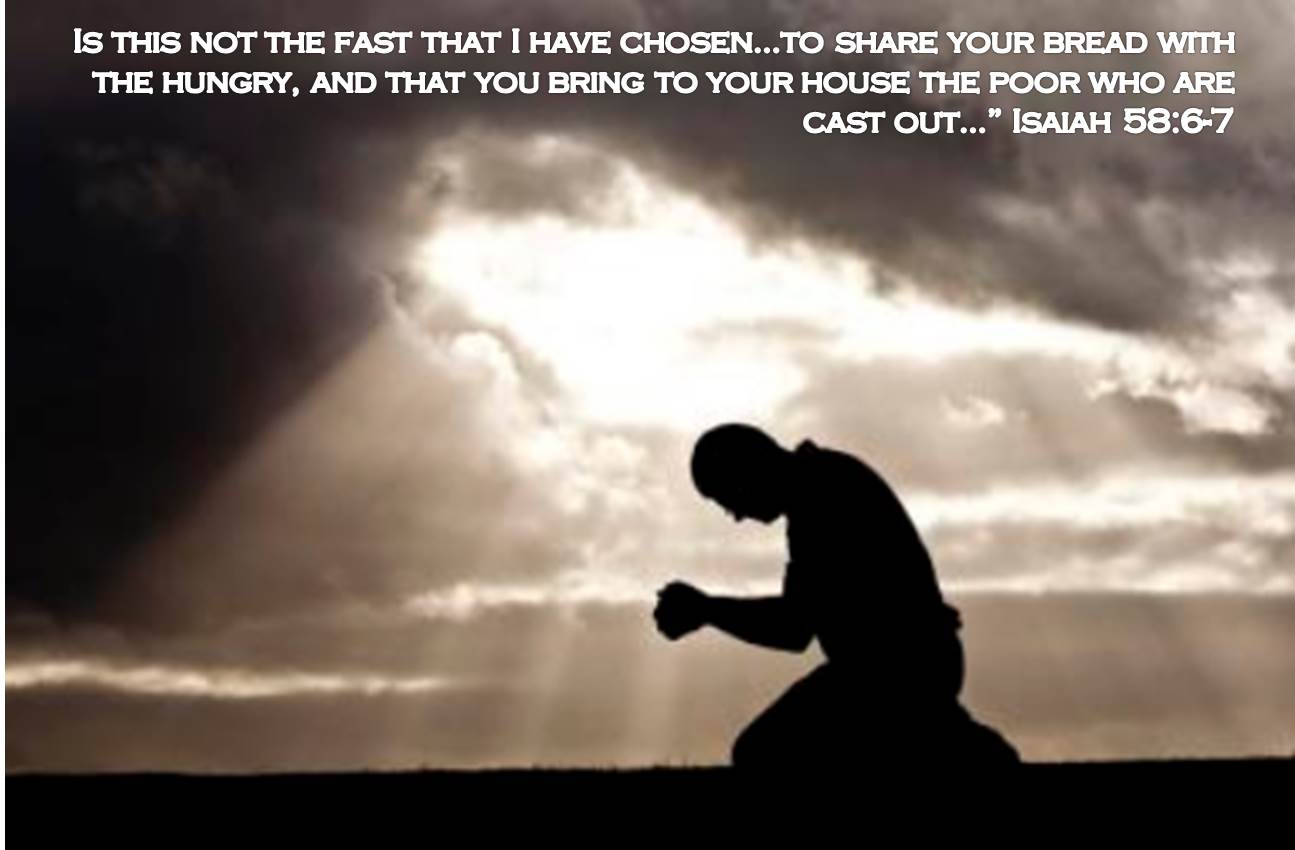
“Is this not the fast that I have chosen: to loose the bonds of wickedness, to undo the heavy burdens, to let the oppressed go free, and that you break every yoke? Is it not to share your bread with the hungry, and that you bring to your house the poor who are cast out; when you see the naked, that you cover them…”  Isaiah 58:6-7

In Isaiah 58, YHVH tells His people Israel that they are not to be hypocrites when they fast, going through the motions with their head and body but not their heart (Isa 58:3-5, Jer 14:12, etc.). In Isaiah 58:6, He is talking about repenting for exploiting their workers. He tells them to turn back to Him and make a genuine change in their lives, showing compassion to others. In verse 7, Yehovah gets more specific when He describes the nature of a truly sincere fast, which would cause the people to exhibit the fruit of the Spirit in their actions, such as taking care of the poor and hungry, and clothing the naked.

To me, this is one of the most beautiful passages in all of Scripture, as YHVH is pointing out to His people how they have fallen short (as we all have in our lives), telling them they need to repent, guiding them (and us) as to what they should be doing, and then promising them wonderful blessings if they will follow His instructions (Isa 58:8-11).

Many Scriptures talk about the positive results of fasting sincerely from your heart:

  • In Joel 2:12, YHVH tells the people to turn to Him with their whole heart, with fasting and weeping; He goes on to say that they are to rend their heart and not their garments, and then Joel says that YHVH is gracious and merciful and will bless them for turning back to Him (Joel 2:13-14). This is similar to what He says through Jeremiah when He tells His people to circumcise their hearts and turn back to Him (also see Deut 10:16 and 30:6).
  • Yeshua adds meaning to these words when He tells people that they need to fast inwardly (in secret) and not outwardly (walking around in sackcloth and showing everyone how they are being so righteous with their fasting). As in Isaiah and other Scriptures, He also says that Abba Father will reward them openly when they fast secretly (Matt 6:16-18).
  • When King Darius had to throw Daniel into the lion’s den because he had broken the decree that no one was to worship a different god than the official god of their kingdom, Darius stayed up all night fasting. When he came down to check on Daniel in the morning, he found him alive and well. What really fascinates me about Darius is that he called Daniel the “servant of the living God” even before he knew that he had been saved from the lions (Daniel 6:18-23). This tells me that Darius was sincerely fasting from his heart and that he was praying to the true living God and not one of his false gods. It is also apparent from this passage that Darius was moved with compassion, which inspired his fasting.

What do these Scriptures teach us about our heart attitude when we are fasting and praying? If we are fasting because we think it makes us a better Christian, or we think it’s the right thing to do to get God to answer our prayers, or we are simply following Abba’s instructions to fast but our heart is not in it, what are we accomplishing? We are only fasting outwardly to convince others (or ourselves) that we are righteous people who are following God’s will. We need to look into our hearts and find out what our true motives are when we fast or pray.

Are we truly seeking to draw closer to YHVH and to be pleasing to Him? If that is true, then the fruit of the Spirit should be evident in our lives, starting with our love and compassion for others.

Look again at Isaiah 58 and ask these questions of yourself: are you helping to undo the heavy burdens of others; are you sharing your bread with the hungry and bringing to your house the poor who are cast out; are you clothing the naked and taking care of the widows and fatherless? If you are, then Yehovah will reward you openly: your light shall break forth like the morning, your healing shall spring forth speedily…Then you shall call, and YHVH will answer; you shall cry, and He will say, ‘Here I am.’ Isaiah 58:6-9

When Yeshua Returns

when Yeshua returns

Is it Rosh Hashanah or Yom Teruah?  What is the meaning of blood moons?  Is this the beginning of the Jubilee of Jubilees? There are currently numerous arguments and speculations concerning the fall feasts and current events.  As we reviewed the Scriptures (Lev 23:23-25, 25:8, Num 29:1) on keeping the feast of Yom Teruah, we began asking questions during our praise and worship time with YHVH.

The Bible indicates that this fall feast is provided so that we may rehearse the sounding of the trumpets as a warning to look inwardly to ensure that we know and are keeping YHVH’s commandments (Neh 8:2-6).  Yom Teruah is not the beginning of another year, but it may signal a new beginning yet to come, the release of all the inhabitants of the land (Lev 25:8-10).  Scripture teaches us that every seven years (smitah) the land must be rested and anyone in the tribes of Israel was to be released from indentured servitude.  Every fifty years is a jubilee (juval) when all debts are forgiven and everything in Israel is restored and every person in Israel is released.  Any land sold to another tribe is to revert back to the original tribe.  All people in Israel are to be set free (Lev. 25:10).  According to the reckoning of others, the next Jubilee will be the 70th Jubilee. Since years were lost during the Babylonian exile, how do we determine which is the correct year to celebrate it?  How will we know?

As we reviewed the Scriptures on Yom Teruah, the shmitah and Jubilee, we began asking questions about how to correctly celebrate the appointed times and how to best understand current events.  We believe that the Holy Spirit provided the following explanation.  Yeshua will return amid the blowing of trumpets and shofars on the Yom Teruah before we are to celebrate the Jubilee of Jubilees (70th Jubilee).  It is Messiah Himself Who will announce release to all the inhabitants not only of Israel, but all the earth.  The King of Kings will judge His enemies and provide covering for His sheep on Yom Kippur.  Our spiritual enemies will be confined for 1,000 years and we will be released from their torment.  There will be joyous celebration and Yeshua will celebrate with us!  We will then know it is time to blow the shofar on Yom Kippur to indicate the Jubilee of Jubilees.  The first time Yeshua came was to provide atonement and a way for us to be released from slavery to the enemy (salvation and deliverance).  The second time, Yeshua will take captive our enemies, both human and spiritual, and remove them from our presence.

We know from Scripture that Yeshua will return to a desolated world (Matt 24:29).  We also know from Scripture that Israel is not to plant or harvest during a shmitah or Jubilee year.  So, if there is much destruction in the land, how will people eat?  Scripture tells us that Israel’s former enemies and oppressors will come bearing many gifts (Is 60:11).  We believe these will be mainly people from the enemy nations who were not personally guilty of oppression against Israel.  We believe the remnants of the enemy nations will be eager to reconcile with Yeshua and with Israel.  Just as the Israelites took possession of Canaan and enjoyed the products of others’ labors, the inhabitants of Israel will now have the products of their enemies’ labors delivered to their doorstep (Is 60:5).

It is useless for us to try to mesh current events and Scriptural prophecy to fit into our own time frame as many people are doing now.  The one thing we know for sure is that YHVH is in control and will do all that He has promised in His own way and in His own time.  It is not our job to predict or even speculate how everything will play out.  It is our job to be working in the harvest and doing our individual assignments from YHVH.  Then, when Yeshua returns, He will find the faithful servants He expects to find (Matt 24:45-51).  What will you be doing when Yeshua returns?

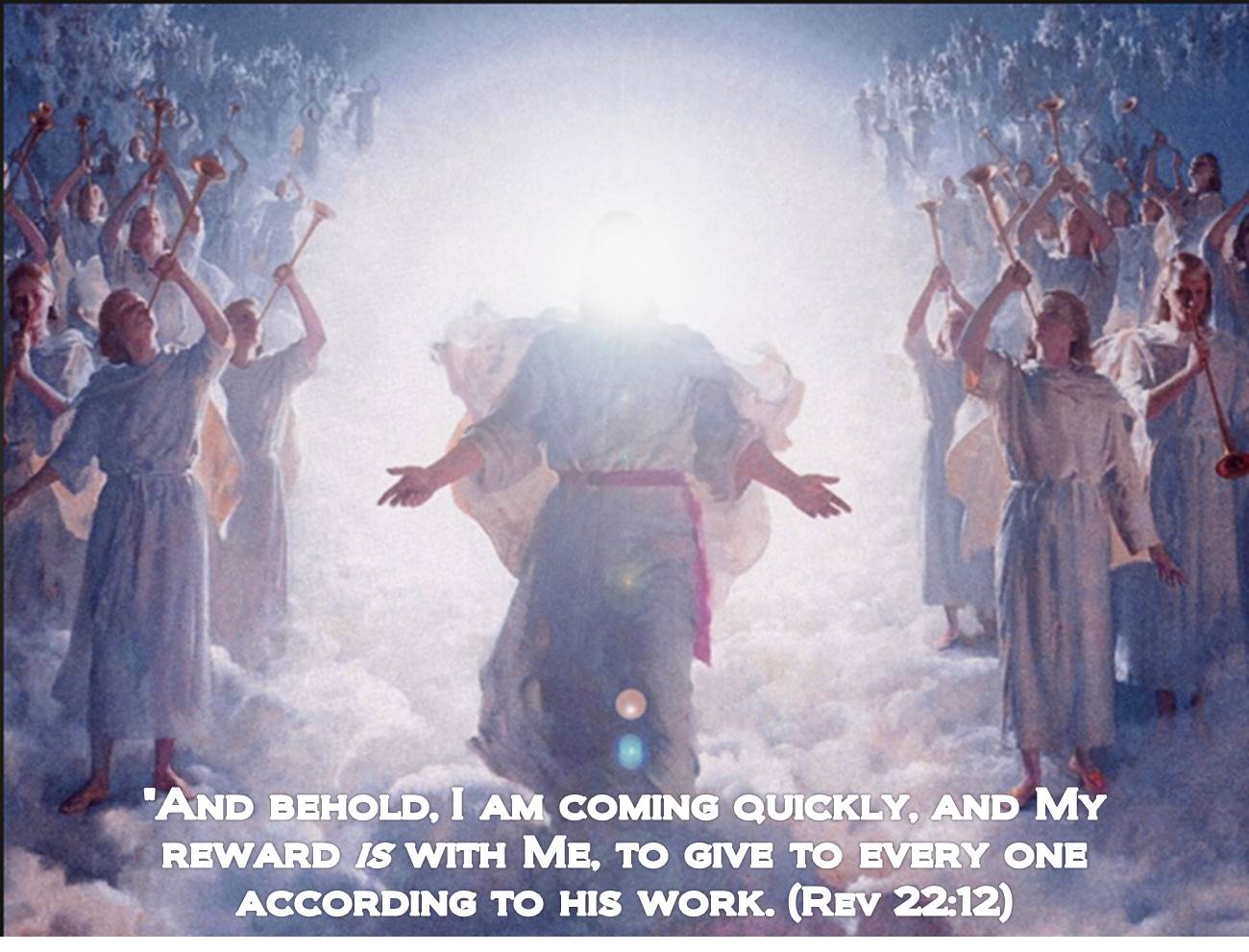
“And behold, I am coming quickly, and My reward is with Me, to give to every one according to his work.  I am the [alef] and the [tav}, the Beginning and the End, the First and the Last.”

 Blessed are those who do [téreó, meaning to keep, guard or observe] His commandments [entolé],  that they may have the right to the tree of life, and may enter through the gates into the city (Rev 22:12-14).

Inside Job

above all elseAs a born-again believer, have you ever tried to explain your experience with YHVH to a non-believer? Have you been met with doubt and misunderstanding or even ridicule?  We can tell others of our experience, but we cannot transfer our experience to another person. No one else can truly experience what another has experienced. They can hear and try to put themselves into the other person’s place, but it isn’t the same thing. They will not truly understand what Yeshua has done for them until they experience His love, forgiveness, and presence for themselves.

At the time I asked forgiveness for my sins and invited Yeshua to be Lord of my life, I was only vaguely aware that I needed Him. It was only after I experienced Him personally that I began to get a glimpse of just how much I needed Him. Through an ongoing relationship with Yeshua for the past 30+ years, I have realized on ever deeper levels just how much I need Him and how much He has done for me. I have learned to love, appreciate, respect, adore, obey and trust my beloved Shepherd. There have been changes in my behavior and attitude that may be perceived by others, but the actual work inside my heart is invisible to others.

When I was baptized in the Holy Spirit, there were outward signs of speaking in tongues and other gifts of the Holy Spirit. The inside work, however, was much more significant. The Holy Spirit worked with me to show me areas where I needed to change and grow, so that I would not be merely a noisy gong as I used the precious gifts I had received. Also, the Spirit emboldened me to step out in faith and take risks in order to work in YHVH’s harvest.

If you have experienced baptism in the Holy Spirit, then you probably understand how difficult it is to convey to others how important it is that they take this step. Many people are satisfied with salvation in Yeshua and are content to have a foot in the door to the Kingdom of Heaven.  We are empowered and equipped by the Holy Spirit in order to develop into harvest workers and soldiers in YHVH’s kingdom. It is not enough to remain spiritual babies any more than we should expect to be human babies forever.

Those of us who have experienced baptism in the Holy Spirit understand what a wonderful gift we have been given, but how do we convey that wonder to others? We cannot convince others by speaking to the intellect. We must speak to the heart and challenge the person to try it for themselves.

The greatest difficulty I have faced is convincing born-again believers of their need for deliverance.   Many believe that once they have been saved, they do not have to worry too much about the enemy.  It is true that Satan had hold of me before I became a born-again believer. He lost control in some areas of my heart after I accepted salvation, but he still had a foothold in areas that I had not yet yielded to YHVH. When I went through prophetic deliverance, I became aware of just how much influence demons still had on me. For one thing, they had clouded my perception of truth. I am now able to see more clearly how demons operate to influence and manipulate us. Now that I better understand how the enemy functions, I have been able to incorporate more effective combat strategies into my spiritual warfare. The greatest discovery for me has been insight into distinguishing the precious person YHVH created from the demon(s) who are working within the person to steal, kill, and destroy in many ways.  However, these experiences and insights are particularly difficult to explain to others.

The best way I can describe it is to ask you to imagine that someone dear to you is being used and manipulated by another person. Wouldn’t you do everything you could to assist that person in getting free? What if the person rejected your every effort and refused to believe that you might have a solution to the problem? What if that person accused you of judging them or criticizing them for getting themselves into such a situation? I experience the same anguish and frustration when I see a demon holding someone I love in bondage. I see the torment that person endures while unwittingly cooperating with the enemy.

If you have not yet repented of your sins and asked Yeshua to be Lord of your life, then I challenge you to try it for yourself. If you have not yet sought the baptism that only Yeshua can offer, then I challenge you to ask Yeshua for this precious gift. If you have not yet sought deliverance so that you can be free from any remaining bondage to Satan, then I challenge you to ask Yeshua to guide you. Yeshua came to set the captives free. The Hebrew name Yeshua means both salvation and deliverance.  We need everything that Yeshua offers to us.  Don’t take my word for it.  Try it for yourself.

I will give you a new heart and put a new spirit in you; I will remove from you your heart of stone and give you a heart of flesh. And I will put my Spirit in you and move you to follow my decrees and be careful to keep my laws (Ezek. 36:26-27 NIV).

Where do we look on Yom Teruah?

blowing of trumpets

Then the sign of the Son of Man will appear in the sky: all the tribes of the Land will mourn, and they will see the Son of Man coming on the clouds of heaven with tremendous power and glory. He [Messiah] will send out His angels with a great trumpet [shofar] blast; and they will gather together His chosen people from the four winds, from one end of heaven to the other.

Yeshua tells us in Matthew 24:30-31 (CJB) that in the last days, He [Messiah] will sound a great shofar, and send out His angels to gather His Body from all the ends of the Earth. YHVH has provided the Feast of Trumpets [Yom Teruah] as a rehearsal to help us prepare for this great End Times event.

When you see phrases like the “blowing of the trumpets” or “loud shouting”, these are translated from the same Hebrew word, Teruah, which simply means a loud noise. One of my favorite uses of this word in Scripture relates to the moving of the Ark of the Covenant in II Samuel 6:15: “So David and all the house of Israel brought up the ark of YHVH with shouting and with the sound of the trumpet [shofar]”. This same event was described in I Chronicles 15:28: “So all Israel brought up the ark of the covenant of YHVH with shouting, to the sound of the ram’s horn [shofar], trumpets, and cymbals, and made loud music on harps and lyres.” In both descriptions, you see the combination of loud shouting and the blowing of the Shofar, which both come from the word Teruah. An occasion like the moving of the Ark elicited many loud sounds from the people in the procession, both from instruments and with their voices raised in praise to Yehovah.

There are many other passages in Scripture that tell us how the Shofar is used: as a wake-up call to turn people back to YHVH (Jer 6:17, Eze 33:3-6), a call to battle (Isa 18:3, Jer 4:19, Josh 6, Judges 7), or the announcement of an appointed time with Yehovah (Ex 19:16-19, Lev 23:23-25, Num 29:1). These last two verses refer to the blowing of the Shofar and “loud shouting” on the Feast of Yom Teruah, or the Day of the Blowing of Trumpets.

Going back to the original Hebrew, a better translation of Numbers 29:1 would be: “On the first day of the seventh month you shall have a holy rehearsal. You shall not do any ordinary work. It is a day for you to blow the trumpets”. Leviticus 23:24 could also be more accurately translated as: “Speak to the people of Israel, saying, In the seventh month, on the first day of the month, you shall observe a day of solemn rest, a memorial proclaimed with the blast of trumpets, a holy rehearsal”. Why would this and other Fall Feasts be described as rehearsals? Most likely because the Fall Feasts have not yet been fulfilled. Putting all these Scriptures together, it seems clear that Yom Teruah will find its ultimate fulfillment in the “great shofar blast” described in Isaiah 27:13 (and quoted by Yeshua in Matthew 24:31): “And in that day a great trumpet [shofar] will be blown, and those who were lost in the land of Assyria and those who were driven out to the land of Egypt will come and worship YHVH on the holy mountain at Jerusalem”.

So, what does all this mean to us as the Body of Messiah? No matter whether or not end times prophecy is fulfilled this year and this is indeed the Great Shofar blast that signals the return of Yeshua to reign on the Earth, the blowing of the Shofar on Yom Teruah is nevertheless very significant for believers. Yom Teruah is always meant to be a special time of awakening for our souls and repentance for our hearts so that we are prepared to be received by Yeshua as the Bride of Messiah when He returns. So on this Yom Teruah, we need to look at our inner selves and take stock of how we are doing at lining up our souls with our born-again spirits (Rom 12:2). I know I have areas that need work based on my report card – how about you?

Accepting the Gifts

on the crossHow many people on earth need salvation through Yeshua? Are there certain categories that are exempt? No, for we read in Romans 3:23 that “all have sinned and fall short of the glory of God”. Every human born on this earth with the exception of the one perfect human, Yeshua, is in need of redemption through Yeshua’s blood so that we can be restored to relationship with YHVH (2 Cor 5:18).

How many people on earth are in need of the baptism of the Holy Spirit? All of us (Matt 3:11, Acts 1:4-5). We need to be fully equipped with all that the Holy Spirit brings to us if we are to be effective workers in YHVH’s harvest.

How many people on earth are in need of deliverance from the oppression and bondage of demons? Is it not all of us? This is the gift that is most often rejected. The most prevalent argument against deliverance for believers in Yeshua is that the Holy Spirit and demons cannot dwell in the same place. How many Christians and Messianic believers, whether water baptized, baptized in the Holy Spirit or baptized in both, are still sinning? If sin dwells in us alongside the Holy Spirit, then so can demons dwell in us and keep us in bondage.

In the deliverance sessions where we have assisted, we are continually astounded at how much damage has been inflicted on people who outwardly seem to be perfectly normal.  In our put-on-a-brave-front society, no one would ever suspect the misery and torment that these individuals are experiencing.

Yeshua announced His mission by reading Isaiah 61 verse 1 and part of verse 2. When comparing the words in Isaiah 61:1 with the recounting of Yeshua addressing the members of the synagogue in Nazareth, we see that a line has been added.

 “The Spirit of the LORD God is upon Me,
Because the LORD has anointed Me
To preach good tidings to the poor;
He has sent Me to heal the brokenhearted,
To proclaim liberty to the captives,
And the opening of the prison to those who are bound; (Is 61:1 NKJV)

 “The Spirit of the LORD is upon Me,
Because He has anointed Me
To preach the gospel to the poor;
He has sent Me to heal the brokenhearted,
To proclaim liberty to the captives
And recovery of sight to the blind,
To set at liberty those who are oppressed; (Luke 4:18 NKJV)

The Orthodox Jewish Bible also records the same addition in Luke 4:18.  Also, the OJB not only makes reference to Isaiah 61:1, but to Isaiah 58:6 as well.

Is this not the fast that I have chosen:
To loose the bonds of wickedness,
To undo the heavy burdens,
To let the oppressed go free,
And that you break every yoke? (Isaiah 58:6 NKJV)

The extra line in Luke 4:18 is talking of spiritual blindness.  Before Peter and I were set free from bondage, we suspected that perhaps something was not quite right with us, but we did not recognize the demons who oppressed us.  However, during the deliverance session, when the Holy Spirit gave our deliverance team revelation, our spiritual eyes started to open. Only after Peter and I were set free from our own bondage to demons, did we began to recognize and understand just how insidious bondage to demons is.

We know that we are called to be faithful witnesses and effective harvest workers as the evil around us becomes more evident. We need to be released from all the bonds with which the enemy afflicted us while we were still members of the kingdom of darkness.  If Yeshua came to set us free from bondage, why do we refuse His precious gift?

“And a servant of the Lord must not quarrel but be gentle to all, able to teach, patient, in humility correcting those who are in opposition, if God perhaps will grant them repentance, so that they may know the truth, and that they may come to their senses and escape the snare of the devil, having been taken captive by him to do his will” (2 Tim 2:24-26).

“Do you not know that when you offer yourselves to someone as obedient slaves, you are slaves of the one you obey–whether you are slaves to sin, which leads to death, or to obedience, which leads to righteousness” (Rom 6:16)?

Witnessing in Love

the truth in love“Though I speak with the tongues of men and of angels, but have not love, I have become sounding brass or a clanging cymbal. And though I have the gift of prophecy, and understand all mysteries and all knowledge, and though I have all faith, so that I could remove mountains, but have not love, I am nothing. And though I bestow all my goods to feed the poor, and though I give my body to be burned, but have not love, it profits me nothing.” I Corinthians 13:1-3

In a recent blog series, I had spoken about Standing Fast to your Convictions, but at the same time remembering to Speak the Truth in Love (Ephesians 4:15) when you are discipling or confronting someone with the truth of YHVH’s word. This week I want to give you a real-life example of this which is etched into my heart right now due to the passing of my only brother.

Over the 27+ years since I have been a born-again believer in Yeshua, I have witnessed to people within my circle of friends and family, as well as casual acquaintances and strangers. However, the two people I witnessed to most fervently over those years were my father (deceased in 2001) and my brother, who passed on earlier this week. As I felt a special burden from the Holy Spirit to witness to these two significant people in my life, I tried a number of different approaches to spiritual seed-planting, attempting to tear down the intellectual and emotional barriers that kept those seeds from taking root and bearing fruit.

Many of my approaches did not bear fruit, because I was trying to prove the truth of the Scriptures and the existence of a Creator God through intellectual debate, which only spoke to their minds and not their hearts. I was far more effective when I stopped trying to “win the argument” with them, and started giving them my personal testimony of how God changed my life and brought meaning and purpose to my brief existence on this earth. This brought our conversations down to a heart level, and even though they still were not ready to accept all the truths I shared with them, they no longer felt threatened that I was trying to change them or prove them wrong.

While I do not recommend experimenting on your family members with different witnessing techniques, we do need to always remember to speak the truth in love and let our words be seasoned with the salt of grace. Once you learn to keep the focus on your own personal spiritual journey and your relationship with Abba Father and His Son, Yeshua, then you have a greater opportunity to break through all the barriers that inhibit people from receiving the truth. With this approach, the people you are witnessing to feel less threatened and are more receptive to your message, since you are just sharing from your own personal experience.

I will not tell you the specific results of years of witnessing to my father and my brother, but I will say that our spiritual conversations brought us closer together in our own relationships with each other. One great benefit of sharing your personal testimony is that people feel closer to you as you share with them in confidence and they get to know you on a deeper and more intimate level. Although I lived 3000 miles away from my brother and did not get to see him face-to-face more than once every few years, I felt very close to him in spirit and soul in spite of the miles separating us. I feel a great empty space in my soul now that he has left his earthly home, but I also feel great assurance that he is with Abba in heaven and is experiencing joy and Shalom as he never could in the limitations of his physical body.

The central mission of our ministry is to help believers stand firm to their convictions and hold fast to their faith under persecution, equipping them to become the overcomers they always wanted to be – and that the Scriptures promise them they can be. We want you to become all that you can in YHVH’s kingdom, and overcome your fears and self-consciousness so that you can share Yehovah’s love with as many people as possible before you depart this planet.